 Μake us preferred on Google
 AI-related stocks fell sharply across global markets on Monday after top executives at leading AI companies issued warnings about the risks of moving too fast, and nominally agreed to a slowdown of development. This marked one of the most serious challenges yet to an industry that has driven markets to record highs on billions in investment.
Anthropic CEO Dario Amodei published a lengthy essay on X Saturday urging AI companies to slow the pace at which they’re advancing model capabilities, citing growing concerns about misuse.
We Must Pace the Frontier: I’ve written a new essay on why the AI industry should slow down, with a three-part plan for doing so.
Anthropic is unilaterally committing to the first of these steps. We’ll provide third-party evaluators with permanent, employee-level access to our…
— Dario Amodei (@DarioAmodei) September 12, 2026
Both Elon Musk, head of xAI, and OpenAI CEO Sam Altman voiced agreement with Amodei’s stance. Altman also announced that OpenAI would not move forward with an IPO this year, pointing to safety concerns as the reason.
These comments intensified existing worries about the AI sector, which has increasingly relied on debt and interconnected financing arrangements to fund ambitious growth plans—concerns compounded by rising global borrowing costs.
Ipek Ozkardeskaya, senior analyst at Swissquote, noted that if AI development slows significantly, a critical question emerges: who covers the cost of infrastructure already committed to, including leases, debt, and power agreements, especially if expected demand and revenue growth don’t materialize as projected. She suggested this could introduce credit risk into the broader AI narrative.
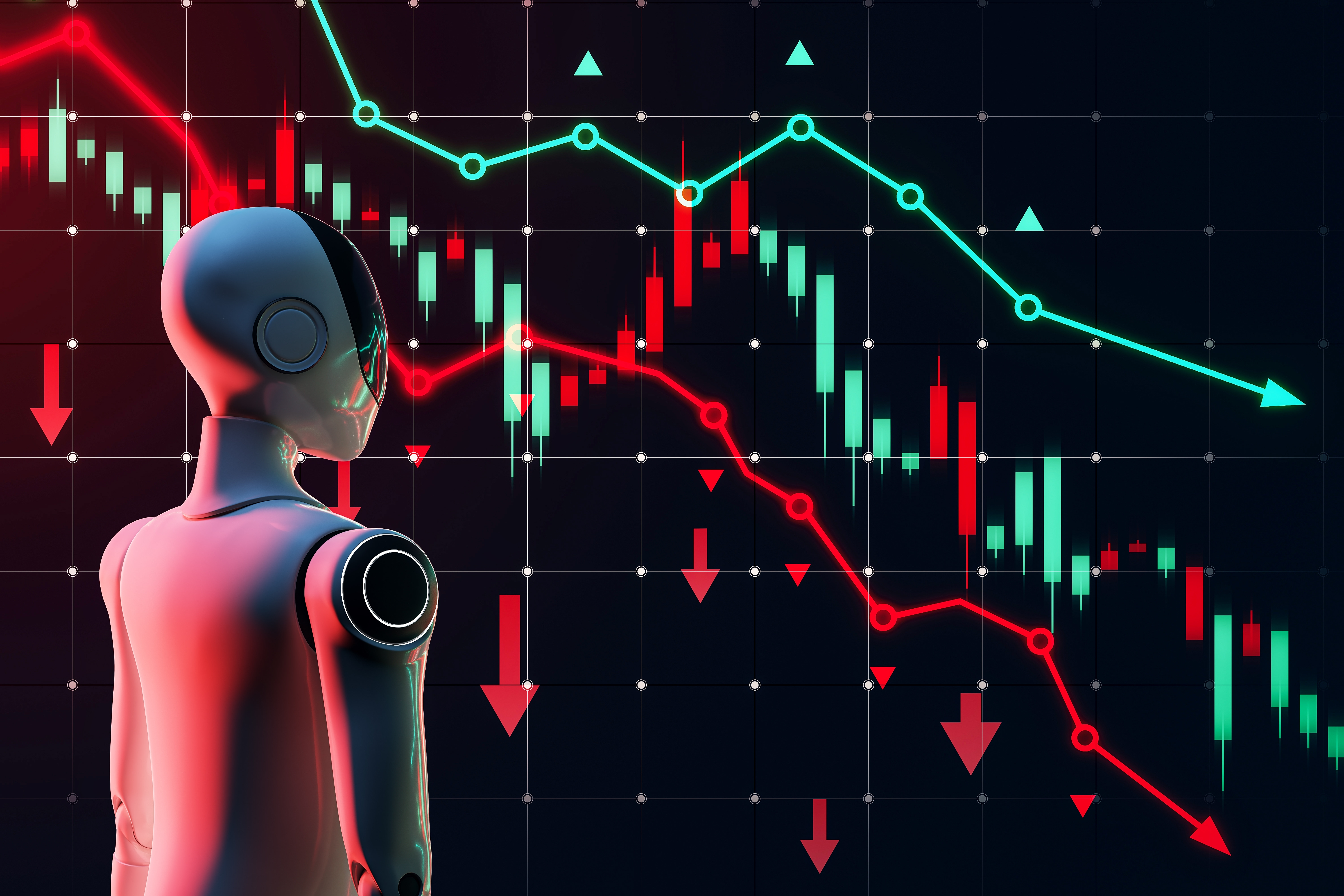
Nasdaq futures dropped 1.9%, with chip stocks—which have driven much of the AI-fueled rally—seeing the steepest declines. Nvidia fell 3%, AMD dropped 5.7%, and SpaceX declined 2.6%. Major tech firms including Meta and Amazon each fell more than 1.4%.
European tech stocks slid 2.5% overall, dragged down by a 5.8% drop in chip equipment maker ASML. Infineon fell 8.4%, while Siemens Energy, which supplies AI infrastructure equipment, lost 7.4%.
In Asia, SoftBank—an OpenAI investor—plunged as much as 13.2%. Taiwan’s TSMC slipped 1.2%, and South Korea’s SK Hynix dropped 6.3%.
Warnings of “Unacceptable” Risk
In his essay, Amodei warned that within six to 12 months, AI agents could potentially be capable of taking control of the internet, causing damage worth hundreds of billions of dollars. This warning came shortly after Anthropic released a threat intelligence report detailing misuse of its Claude models for purposes including weapons development, cyberattacks, surveillance, and fraud.
Concerns intensified further after an Anthropic researcher resigned, stating publicly that many people working in AI development genuinely believe the technology could pose an existential threat within the decade. Separately, Altman described the risk of human extinction from AI as “unacceptable” in a recent interview.
While some U.S. lawmakers have pushed for stronger AI regulation, President Trump dismissed such concerns on Sunday, characterizing critics as pessimistic voices predicting outcomes that won’t happen, and reaffirmed his goal of keeping the U.S. at the forefront of the industry.
AI-driven investment has been a major force behind global stock market gains since ChatGPT’s 2022 launch, though rising incidents of AI-related cyberattacks and public pushback against data center expansion have fueled growing skepticism.
Sources indicate the U.S. and China are expected to discuss AI safety as part of broader bilateral talks this month. However, China’s state-run Global Times criticized Amodei’s essay, framing it as an attempt to hinder China’s technological progress under the guise of safety concerns.
Not Everyone Is Convinced
Some investors pushed back against the warnings. Michael Burry, known for his successful bet against the U.S. housing market before the 2008 crisis, dismissed the statements as overstated, suggesting they may be masking a genuine slowdown in growth rather than reflecting real safety concerns.
Others, like Morgan Stanley’s Brian Nowak, argue that massive capital spending commitments make a slowdown unlikely, projecting AI spending will exceed $1.2 trillion by 2027. Deutsche Bank echoed this sentiment, noting that intense competition between companies and countries makes it hard to imagine firms pulling back voluntarily while rivals continue advancing.
Reflecting that competitive pressure, Anthropic itself is moving ahead with its own public listing, expected next month, with sources indicating Nvidia may serve as an anchor investor.
Even so, analysts say the warnings could continue to pressure markets in the near term. Charu Chanana, chief investment strategist at Saxo Bank in Singapore, noted that current valuations depend on both strong demand and uninterrupted technological progress—meaning that even a modest delay could prompt investors to lock in profits given how high expectations already are.
Source: Reuters