Athens and Ankara are stepping up diplomatic activity ahead of the 81st UN General Assembly in New York, with the two countries’ leaders preparing a series of meetings on the sidelines of the high-level week.
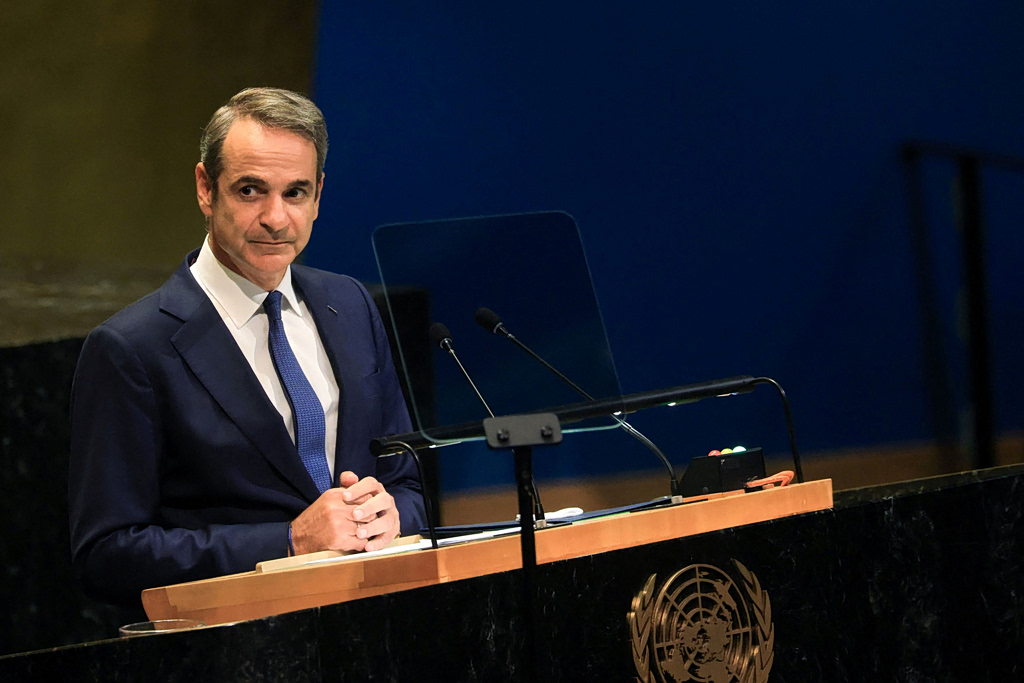
Greek Prime Minister Kyriakos Mitsotakis is scheduled to address the UN General Assembly on Thursday, Sept. 24, and will meet UN Secretary-General António Guterres immediately afterward. The Cyprus issue is expected to be among the topics discussed, with Guterres seeking to keep the issue high on the international agenda ahead of the end of his term.
Turkish President Recep Tayyip Erdoğan is also scheduled to hold meetings in New York, including with French President Emmanuel Macron. A meeting with US President Donald Trump has also been reported by the US ambassador to Ankara, although it had not been formally confirmed at the time of the report.
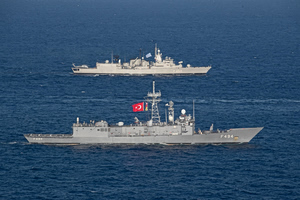
The diplomatic activity comes as Greek-Turkish relations remain strained, as Athens has raised concerns with Washington and the European Union over what it describes as Turkey’s renewed maritime and sovereignty claims, as well as increased military activity at sea and in the air.
A key issue is Turkey’s planned legislation concerning its revisionist “Mavi Vatan,” or “Blue Homeland,” doctrine. According to reports in Athens over the past few days, the legislation is unlikely to have been adopted by October and therefore is not expected to be a new issue during US Secretary of State Marco Rubio’s forthcoming visit to Athens for the sixth round of the Greece-US Strategic Dialogue.
Rubio’s visit is nevertheless expected to underscore Greece’s role as a US strategic partner in the eastern Mediterranean. Regional energy and connectivity projects are also expected to feature, including the Great Sea Interconnector (GSI) linking Greece, Cyprus and Israel, which has faced objections from Ankara.
Mitsotakis is expected to use his UN address to stress freedom of navigation and adherence to international law and the law of the sea, while reiterating Greece’s position that it has the right to strengthen its defenses and does not threaten its neighbors.