 Μake us preferred on Google
The Hong Kong activist has been in custody since 2020 and was expected to be released in early 2027. On 5 November 2026, a Hong Kong court handed him a new ten-year sentence under the national security law. Wong had pleaded guilty: he and others had sought to persuade foreign governments to impose sanctions on China and Hong Kong.
Wong asked for more than a statement of support. Sanctions can hurt people who have no say in their government’s decisions. A fellow citizen has every reason to ask him: “Why should I pay the price for the pressure you’re calling for?” That question deserves an answer. Ten years in prison is not an answer.
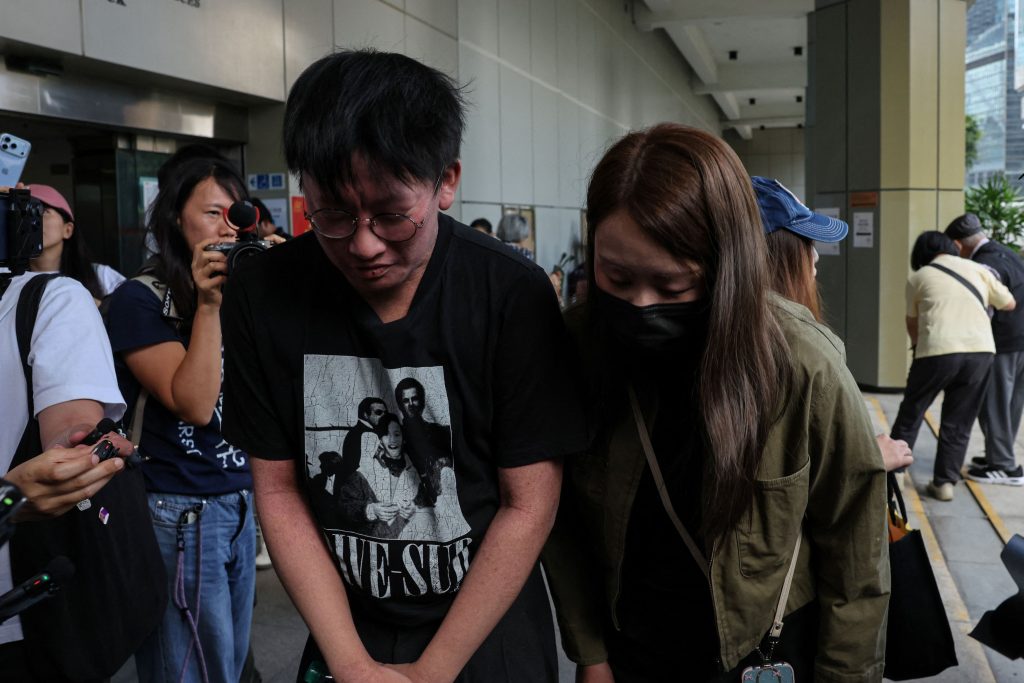
Former Scholarism members Louis Lee and Tiffany Chin leave the High Court after jailed pro-democracy activist Joshua Wong is sentenced to 10 years in prison in a national security case in Hong Kong, China, November 5, 2026. REUTERS/Tyrone Siu
Hong Kong’s Secretary for Security cited the guilty plea and defended the trial as fair and open. The European Union called the conviction politically motivated and urged Wong’s immediate release. Between those two statements, a simple distinction risks getting lost. Someone who admits “I did this” is not saying “I deserve to have this many years of my life taken from me.” The state made that second judgement. It is still the state’s to justify.
Human rights matter precisely when a fellow citizen does something we would not do ourselves. As long as we agree with him, his freedom is easy to defend. The test comes when we think what he is asking for would harm our own community. Then we owe him a clear account of the harm we hold him responsible for. Even those who believe sanctions are harmful can ask the state to explain why the man who called for them should lose ten years of his life.
A constellation of resistances often begins with just such a gesture: someone who cannot get a hearing at home looks elsewhere for someone who will listen. What they ask for may not always be right. None of us, after all, earns the right to be heard by being right. But if the only voice that can safely cross the border is the official one, what reaches the rest of the world is the government’s version, signed in the name of an entire people. Even those who tried to contradict it.
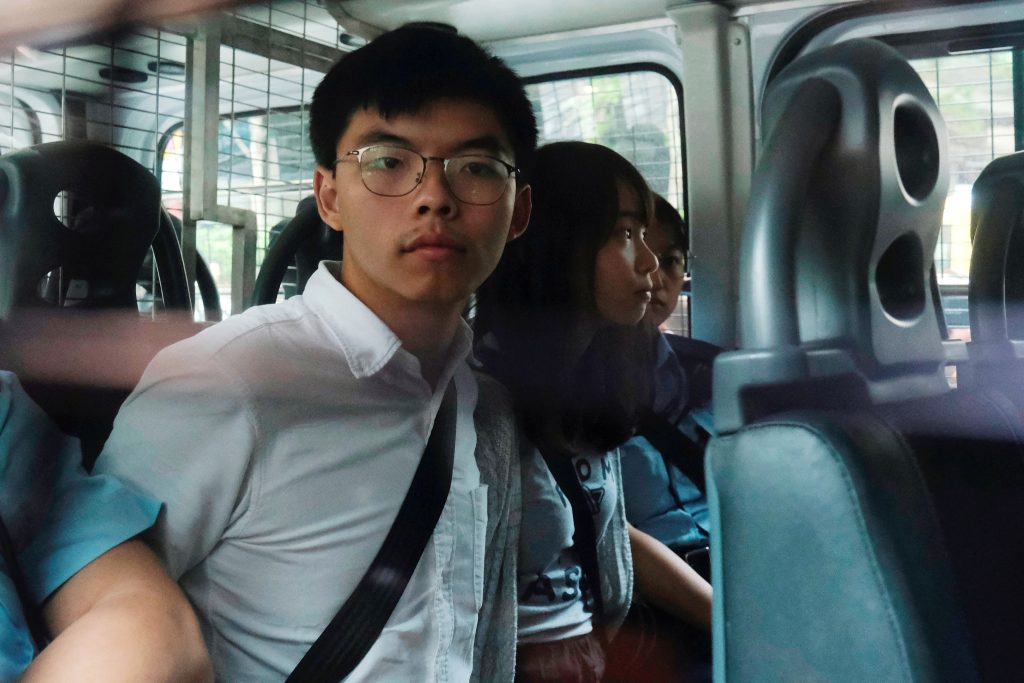
Pro-democracy activists Joshua Wong and Agnes Chow arrive at the Eastern Court by police van after being arrested on suspicion for organizing illegal protests, in Hong Kong, China August 30, 2019. REUTERS/Tyrone Siu TPX IMAGES OF THE DAY/File Photo
I think of a student reading an invitation to testify before an international commission. She wants to say what she saw. She is not calling for sanctions; what she proposes to do is different from what Wong did. Yet before she replies, she must weigh something no one should have to weigh alone: whether the authorities, too, will recognize the difference. She might close the message and go to class. No one will be arrested that day. No court will record the testimony she never gave.
I do not have to agree with the sanctions Wong called for to defend my right to hear why he called for them. Nor do I have to believe that every foreign intervention is innocent to ask a government to distinguish between harm that threatens its citizens and criticism that embarrasses the government itself. If the state has the right to speak to the world on behalf of its citizens, why should a citizen be afraid to speak to that same world in a voice of their own?