
 Μake us preferred on Google
Data centers emerged as one of the quiet losers of Tuesday’s midterm elections. After a campaign season marked by growing public anger over the energy-hungry facilities, voters elected a wave of Democrats who have pledged to tighten the rules on how and where they are built.
The shift could slow the largest investment boom in modern US history, even as President Donald Trump, one of the industry’s strongest backers, remains in a position to block any federal crackdown.
A Map Redrawn
Democrats flipped governor’s offices in Texas, Ohio, Georgia, Nevada and Iowa, several of which are major data center hubs. They also won full control of state governments in Wisconsin, Minnesota, Pennsylvania, Nevada and Michigan.
According to Goldman Sachs, starting in January, states led by Democrats who back expanding or extending construction moratoriums will account for 45% of the country’s planned data center capacity. Texas alone is set to host about a quarter of America’s planned AI infrastructure.
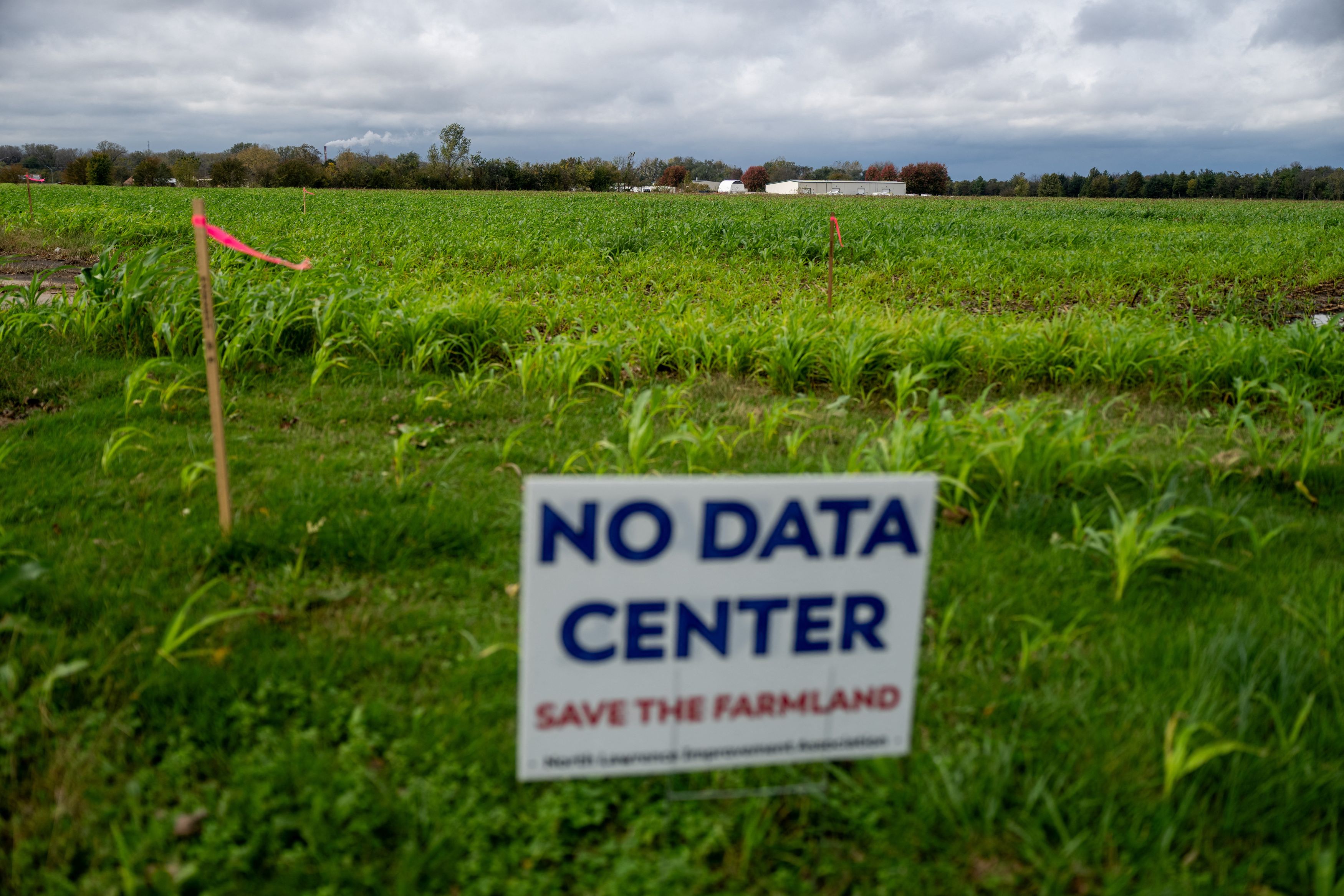
Data center regulation was not directly on most ballots, and it ranked below issues like the cost of living and government corruption for most voters. About a quarter of voters called AI data centers crucial to their vote for Congress, according to The AP Voter Poll. But opposition to the facilities was built into many winning campaigns and often merged with the broader Democratic message on affordability, especially concerns about rising electricity bills.
Campaigns spent more than $380 million on TV ads that mentioned data centers, according to AdImpact, with Democrats outspending Republicans on the topic by more than three to one. Data Center Watch, a project of AI security consultancy 10a Labs, found that 32 of the 34 winning gubernatorial candidates in called races support stronger regulation or restrictions, and 12 support bans or moratoriums.
Public opinion was already moving in that direction. About three in four voters oppose building a new data center in their own community, with majorities in both red and blue states. In local referendums tracked by Redbud Consulting across 12 states, voters approved restrictions in 44 of the 45 races where counting was complete.
Texas at the Center
Morgan Stanley called Gina Hinojosa’s victory over Republican Governor Greg Abbott in Texas the most important result for data center development. Texas is on track to overtake northern Virginia as the world’s largest data center market by 2030, according to JLL.
Abbott had promoted Texas as a hub for AI before imposing a data center moratorium late in the campaign. Hinojosa campaigned on extending that pause until stronger AI rules are in place and said she would block permits for projects that are not a good deal for Texans or that residents have not had a say in.
The issue resonated strongly in the drought-stricken state, where ranchers and residents worried about water and power supplies. Clayton Tucker, the first Democrat elected Texas agriculture commissioner since 1986, said his opposition to data centers was key to his win. Stephen Sanders, a Republican who co-founded a data center protest group in Lubbock, put it simply: “data centers were on the ballot.”
Wells Fargo estimates that every 10% cut in planned Texas data center capacity would reduce Big Tech’s AI infrastructure spending by 1.6%.
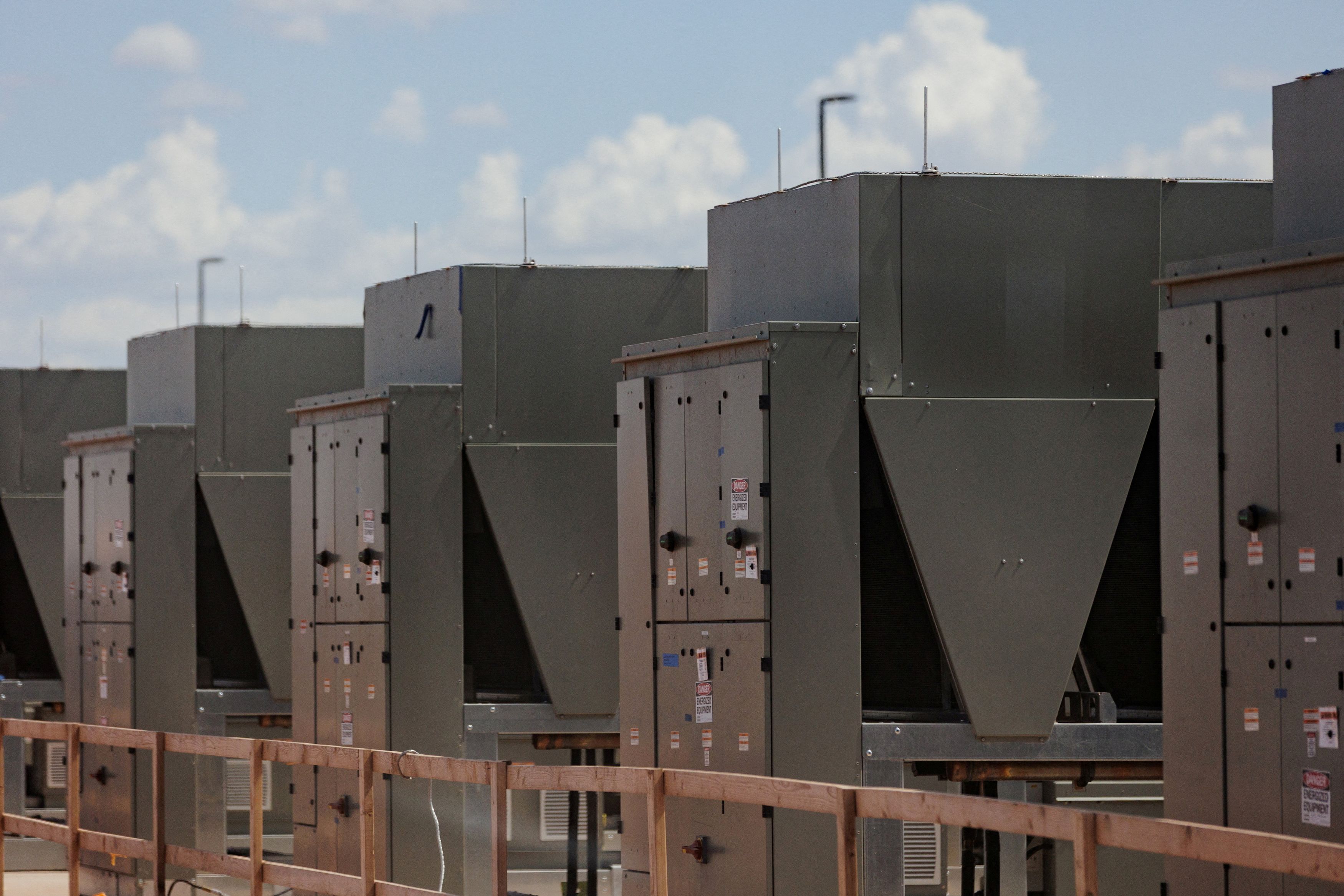
Chillers that cool water are connected to a data center building during a tour of the OpenAI data center in Abilene, Texas, U.S., September 23, 2025. REUTERS/Shelby Tauber/Pool/File Photo
Morgan Stanley also flagged Ohio, where Governor-elect Amy Acton has pledged to block projects that fail to meet certain standards, warning of a significant risk of delays. The bank said new state rules could split the country into regions open to data centers and regions closed to them.
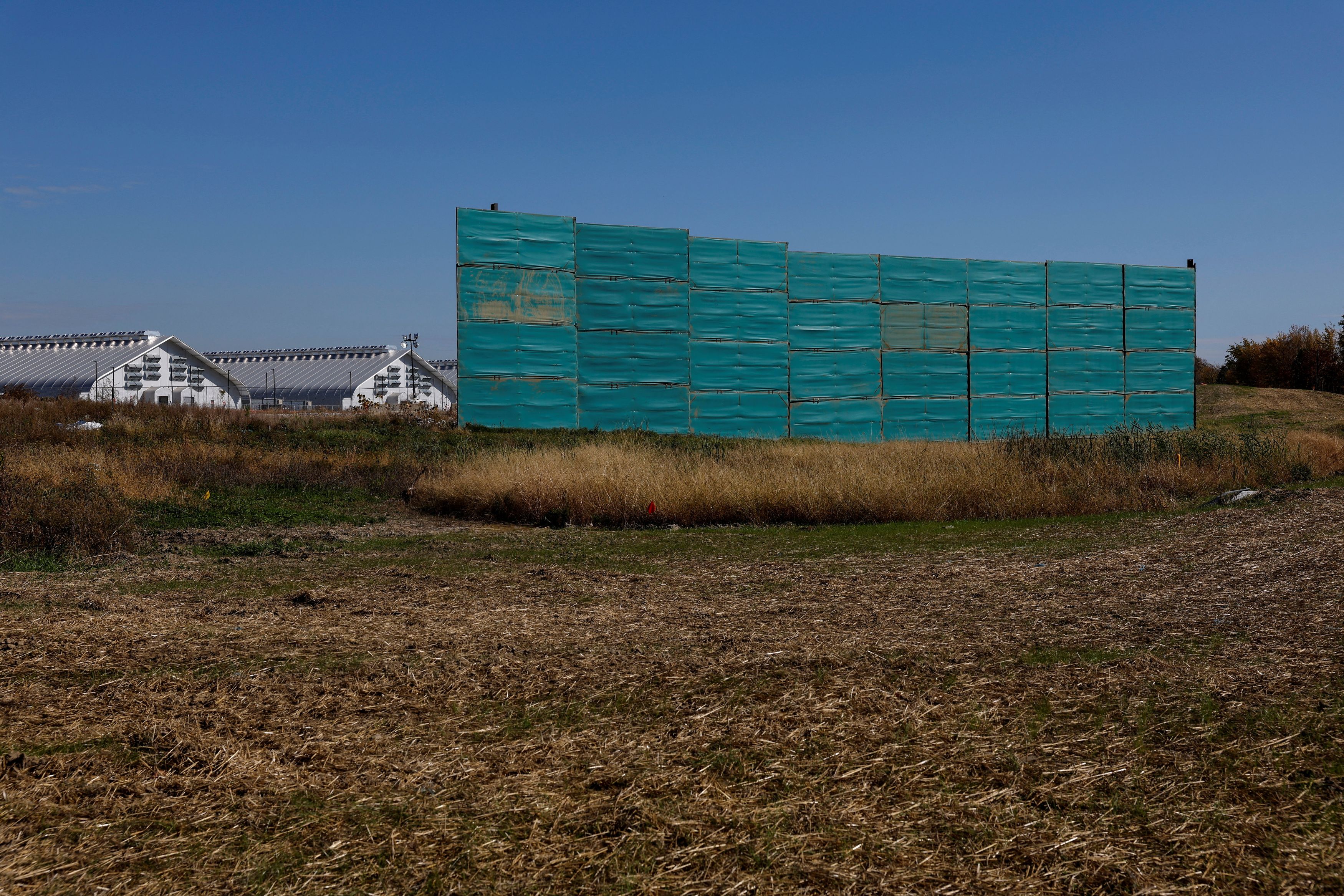
A green wooden fence erected to block the view of Meta’s expanding Prometheus data center campus stands in New Albany, Ohio, US, ahead of the midterm elections, October 29, 2026. REUTERS/Shannon Stapleton
In Wisconsin, Governor-elect David Crowley shifted to a tougher stance during the race, backing a moratorium and an end to the state’s sales tax exemption for data center developers. He told the AP he is weighing proposals such as requiring developers to disclose water and energy use, ensuring community support before projects move forward and shielding ratepayers from the facilities’ energy costs.
What Could Stall
Governors-elect have floated ending tax breaks, tightening climate and electricity rules, and letting local governments impose their own moratoriums. Mona Dajani, co-chair of Cooley’s infrastructure, energy and real estate practice, said state and local officials have enough influence to determine whether some projects get financed.
Hundreds of projects still waiting on permits, utility hookups or tax incentives are most exposed, she said, but even sites under construction could be affected. Texas law protects some local permits from future changes, but not state-level permitting shifts or power-supply guarantees that a new governor could reverse. Delays bring mounting costs in interest, equipment and utilities, and at some point, projects may no longer make financial sense.
Harry Krejsa of the Carnegie Mellon Institute for Strategy & Technology noted that this is a rare case in which state and local leaders hold influence with geopolitical consequences.
The Economic Stakes
AI infrastructure spending is expected to approach $1 trillion a year for the foreseeable future, according to Columbia Business School economist Stijn Van Nieuwerburgh. As a share of GDP, that would surpass every previous US investment boom, including the railroads. ING economists estimate the AI buildout has driven as much as a quarter of US economic growth this year.
Markets are already reacting. On Thursday, the tech-heavy Nasdaq fell to 11% below its all-time high amid concerns that higher borrowing costs and tougher rules could slow construction. Shares of the major hyperscalers (Amazon, Google, Meta and Microsoft) have been hit in recent weeks as investors question spending that may not pay off for years.
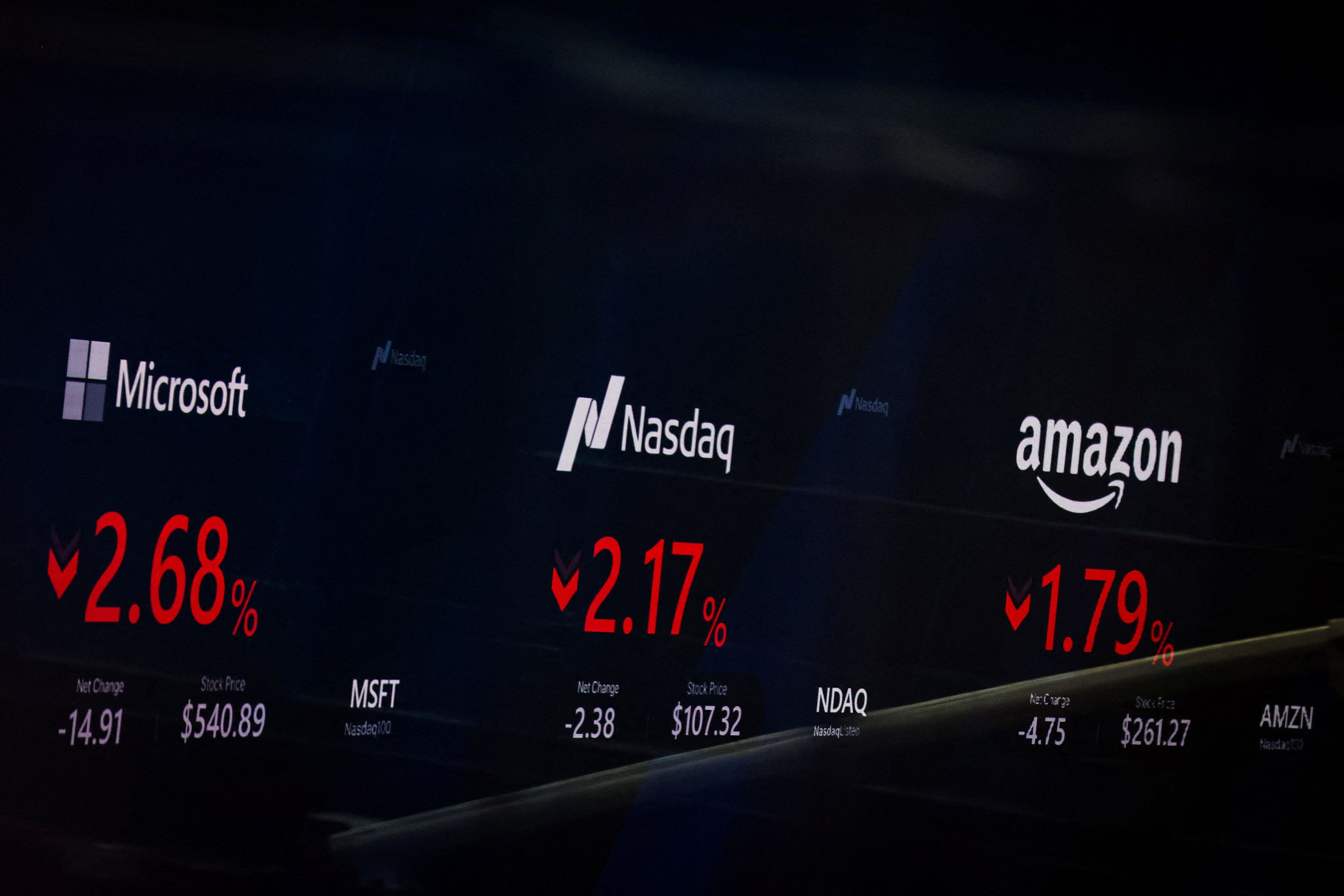
A screen displays Microsoft, Nasdaq and Amazon stocks during the trading day at the Nasdaq Market site in New York City, U.S., November 5, 2026. REUTERS/Brendan McDermid
A Possible Silver Lining
A slowdown may not be all bad. Unchecked growth has contributed to rising inflation and widespread public resentment, and some business models have drawn skepticism on Wall Street. CoreWeave, which rents out computing capacity, recently saw its bond yields jump to 15% after projecting heavy losses, well above its expected return on investment of about 9%.
There are also signs the buildout has outpaced reality. The US had 5,427 data centers at the end of last year, according to Stanford’s AI Index Report, and companies have announced plans for 3,969 more, according to research firm Aterio. But only about 800 are under construction. Data center projects already face $200 billion in delays, according to Mike Mathews of risk adviser Marsh.
“AI is catching a break here,” said Joe Brusuelas, chief economist at RSM US. He expects growth to slow from last quarter’s 3.4% to around 2.4% if AI spending cools, still a solid pace, and said a slowdown does not mean a recession.
The industry itself is acknowledging the need to rebuild trust. OpenAI published a framework Thursday outlining new commitments to communities that host its data centers and urged lawmakers at every level to set clear rules for the industry. The Data Center Coalition said it expects newly elected officials to follow through on their promises, but warned that moratoriums could cost host communities tax revenue and slow broader investment.
Krejsa argued that a more community-focused approach, similar to the renewable energy pledges tech companies made during the cloud computing boom, could give AI firms the long-term political support they need, warning that losing that support at home would hurt America’s competitiveness with China more than slower construction.