 Μake us preferred on Google
“Greece has significantly improved its international standing in logistics. In the latest World Bank ranking, it placed 19th worldwide, up from 42nd in 2018. This is a national success. Our ambition is for Greece to be among the best-performing countries internationally in the coming years and to strengthen its position in global supply chains. For our country, logistics is both critical infrastructure and a source of competitive advantage.”
Deputy Prime Minister Kostis Hatzidakis made these remarks in his speech on Friday at the 27th Panhellenic Supply Chain Conference. He added that geographic location is a major advantage, but not enough on its own. It must be combined with:
- The right strategy
- Ports that are effectively connected to the road and rail network
- Modern freight centers
- Fast customs and administrative procedures
- Digital infrastructure and tools
- A legal framework that allows investments to move forward without unnecessary obstacles
Turning specifically to infrastructure, the deputy prime minister stressed that despite pending issues, “we now have a set of projects that can substantially change the map of freight transport in the country.” These are:
- Thriasio I in West Attica, which is moving into the implementation phase as a modern logistics center, while for Thriasio II, the concession process for the freight rail station and marshalling yard is being completed. “This is an issue that has been discussed for 30 years, and we are determined to close it as quickly as possible.”
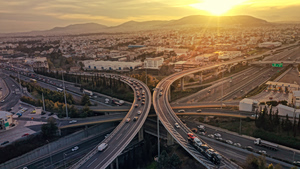
- The construction of the Skaramangas triple interchange, which will significantly improve access to the Piraeus-Thriasio-Aspropyrgos corridor and its connection to the national road network.
- Major private investments, such as the IKEA distribution center in Aspropyrgos and the new freight center at the former Hellenic Steel (Halyvourgia) site in the same area, which are helping create an integrated logistics ecosystem.
- Along the same lines, the relocation of transport companies from Elaionas to another organized site is being considered. This would free up Elaionas for its full redevelopment, while moving transport activities to an area with modern infrastructure.
- In Thessaloniki, the expansion of the port’s Pier 6 is moving forward, along with its rail connection to the national network.
- At the same time, the new Business Park at the former Gonou military camp is in the tender process.
- The completion of the E65 motorway and the connections to the Balkans complete the new freight transport map.
“What matters is that these projects do not operate in isolation, but as a single network: ports, railways, highways and freight centers,” Hatzidakis stressed. “Especially as Greece is part of major European corridors to the Balkans, the Black Sea and Central Europe. This makes it urgent to move faster, especially on rail. We cannot aspire to become a major logistics hub for Southeast Europe without reliable freight connections from our ports to the European hinterland. After the full restoration of the Athens-Thessaloniki line, the connections from Thessaloniki to the northern border and from Alexandroupolis to Ormenio must move forward quickly.”
The deputy prime minister recalled the efforts made in previous years to develop the sector. “As early as 2008, as Minister of Transport, I created the Permanent Logistics Committee. And in 2012-2014, at the Ministry of Development, together with the market and with the support of the World Bank, we drew up the National Supply Chain Strategy, linking logistics policy with the simplification of foreign trade and the upgrading of infrastructure and networks. In 2013, we inaugurated the Ikonio-Thriasio rail link, which was more than necessary, and in 2014, we brought Law 4302/2014 to Parliament, a comprehensive legal framework for the supply chain.
“These measures, combined with privatizations and the transformation of public organizations in the transport sector, laid the foundations at the time for a sector that went on to attract significant investment and gain much greater weight.”
“The next step,” he concluded, “is the most demanding. To bring together all the pieces of the puzzle: infrastructure, networks, investments, technology and people with modern skills. So that our country’s strategic geographic position translates into more investment, more exports, better jobs and greater weight for the country in international supply chains. Logistics is one of the five sectors the country must give high priority to. This is the challenge for 2030, and we have the knowledge, the persistence and the people to win it.”