 Μake us preferred on Google
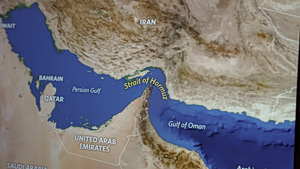
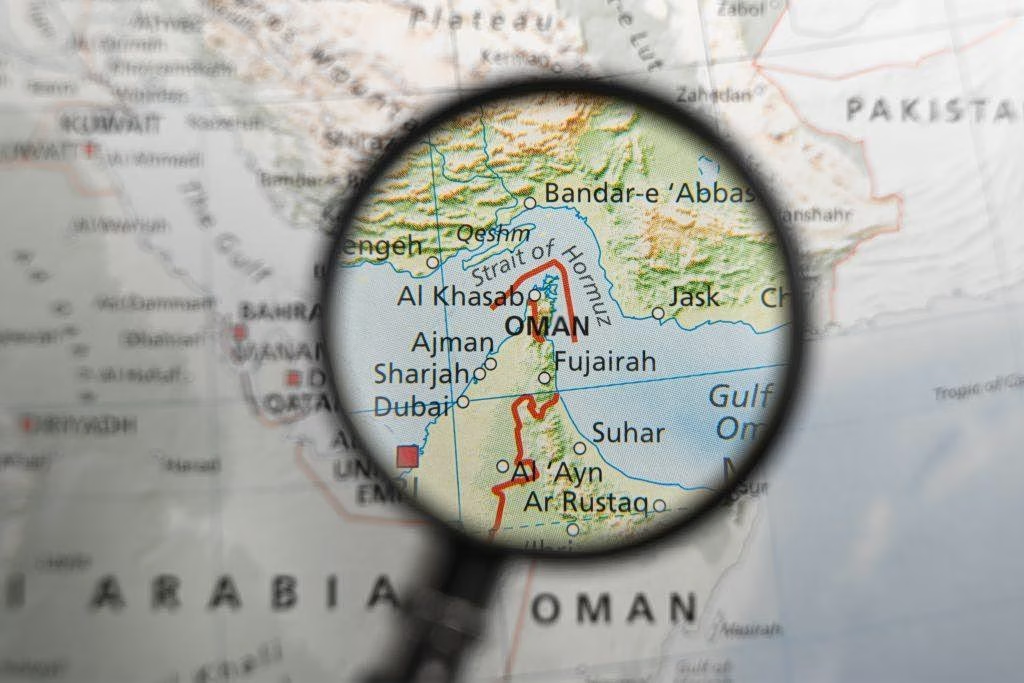
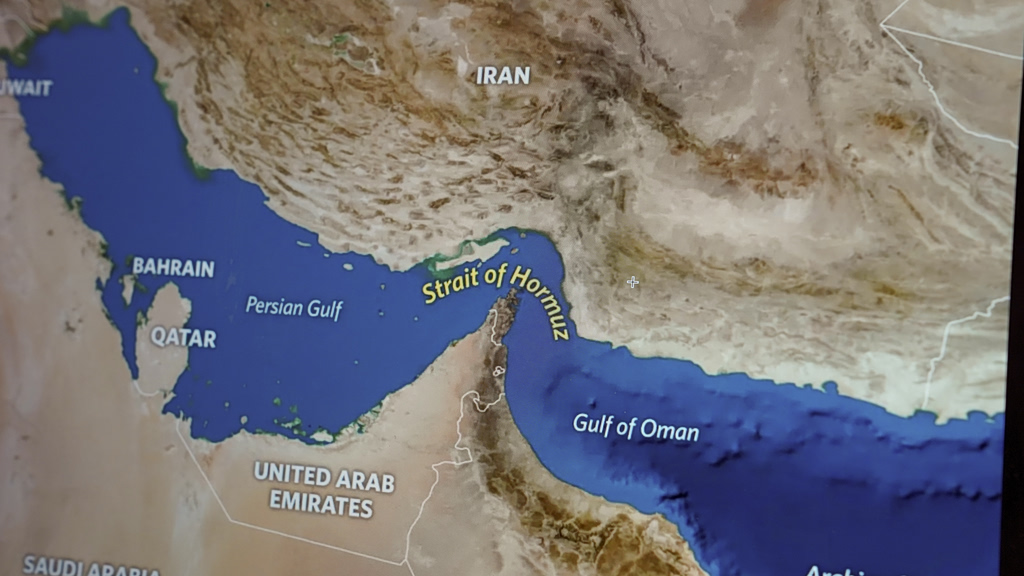
 Iran’s closure of the Strait of Hormuz, in retaliation for US and Israeli attacks, has blocked a crucial sea passage. For Europe and Greece, the current energy crisis is reopening the debate on energy security, posing the dilemma of turning to green energy or returning to traditional options.
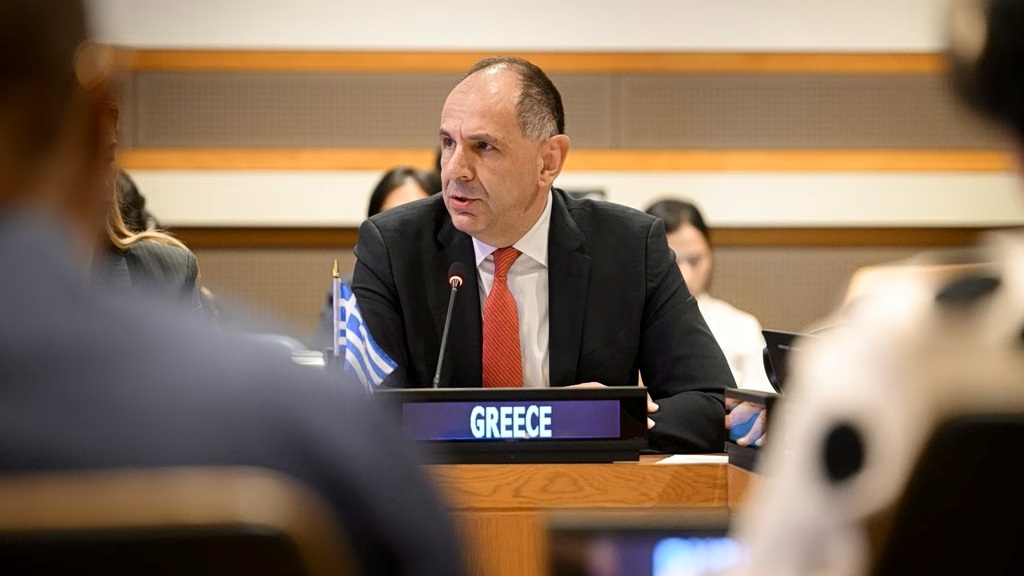
Dan Brouillette, former US Secretary of Energy (2019-21) and former Deputy Secretary of Energy (2017-19), posts in which he served throughout Donald Trump’s first term, and current president of the Edison Electric Institute, spoke to TO BHMA about the US energy strategy and Greece’s position.

Dan Brouillette
Is the US-Iran conflict driven by energy dominance strategy, not impulse?
There is real truth in that framing, but it requires precision. What the United States is executing under President Trump is a coherent strategy built on a simple premise: energy is power. Hydrocarbons, critical minerals, and semiconductors are the new instruments of geopolitical leverage. Iran sitting astride the Strait of Hormuz is not incidental to this conflict. It is central to it.
Roughly 20 percent of the world’s traded oil transits that chokepoint every day. Any nation that can threaten or control that flow holds enormous coercive capacity. The United States does not accept that Iran should have that ability. This is not a new calculation. It is one that successive American administrations have avoided confronting directly. This one has not.
That said, I would push back on the word “war” as a clean descriptor. What we are seeing is maximum pressure backed by credible force. Whether that becomes sustained military conflict depends heavily on decisions in Tehran, not just Washington.
The energy dominance frame also understates the nuclear dimension. Iran’s nuclear program is not separable from its energy and regional strategy. You cannot negotiate one without the other and the Trump administration understands this. The objective is not simply to suppress Iranian oil exports. It is to fundamentally alter the strategic posture of a regime that has destabilized the Middle East for four decades. Energy is the lever. Security is the goal.
Will the Iran conflict push the world toward more or less clean energy?
The honest answer is: it depends on the country, and it depends on the timeframe.
In the near term, energy security concerns will dominate. That means more investment in reliable, dispatchable energy sources, not less. Europe already learned this lesson the hard way after Russia’s invasion of Ukraine. German industrial policy built on cheap Russian gas and accelerated coal and nuclear retirement collapsed almost overnight. The lesson was not subtle. Ideology is a poor substitute for security of supply.
What I expect to see globally is a reaffirmation of the principle I have argued for years: energy expansion, not energy transition. The world needs more of everything. Renewables, yes. But also natural gas, nuclear, and where geology permits, oil. Nations that are energy-secure can afford to optimize their mix over time. Nations that are energy-insecure cannot afford ideology.
For Asia, the calculus is already clear. Japan, South Korea, India, and the major ASEAN economies are not abandoning hydrocarbons. They are diversifying away from Middle East supply dependency by contracting more U.S. LNG and building out storage. That is smart. It is also a validation of American energy diplomacy.
Clean energy investment will continue. The economics of solar and wind are improving. But any serious analyst who concludes that this conflict accelerates a wholesale shift to renewables is confusing aspiration with physics. The world runs on energy that is available, affordable, and reliable. That standard still favors hydrocarbons for decades to come.
For oil-and-gas-dependent countries like Greece, are soaring energy prices inevitable?
Higher prices are a real and serious consequence. I will not pretend otherwise. But the word “inevitable” implies passivity, and passivity is the wrong posture.
Greece sits in a genuinely difficult position. It is a net energy importer with significant exposure to global oil and gas price movements. It has limited domestic production. And it has a Mediterranean geography that historically meant reliance on pipeline gas from sources that are now either unreliable or actively hostile to European interests. That is a structural vulnerability, not a temporary inconvenience.
The immediate price shock from Strait of Hormuz disruptions or Iranian escalation will be felt broadly across Southern and Eastern Europe. Greece will not be insulated from that. Consumers and businesses will pay more. Inflation pressure will increase.
But there are policy tools available. The Trump administration has been explicit: American LNG is available and we want to sell it to European allies. Greece and its neighbors should be moving aggressively to contract that supply, develop regasification capacity, and diversify away from any single corridor. The EastMed corridor, energy interconnections with Israel and Cyprus, and expanded storage infrastructure are all legitimate medium-term answers.
The countries that use this crisis as a forcing function to strengthen their own energy infrastructure will emerge in better shape. The countries that wait for prices to fall and hope for the best will find themselves in the same position the next time a crisis erupts. Greece is capable of the former. I hope it chooses that path.
Is 1970s-style stagflation a real risk?
The concern is legitimate, and anyone dismissing it is not reading the data carefully.
The structural parallels to the 1970s are real. You have a supply shock originating in the Middle East driving energy costs higher across the global economy. You have inflation that was not fully tamed before this new shock arrived. You have a Federal Reserve that has limited room to maneuver because rate cuts to support growth could re-ignite inflation, and rate increases to suppress inflation could push an already slowing economy into contraction. That is the classic stagflation trap.
What is different from the 1970s is also important. The United States is now the world’s largest oil and gas producer. That is a profound structural difference. In 1973 and 1979, America was a net importer with no ability to offset supply shocks. Today, American production can be a global stabilizer if policy supports it. The Trump administration’s approach, removing regulatory barriers, accelerating permitting, and pushing production, is exactly the right response. It will not prevent a short-term price spike, but it will shorten the duration.
The risk of stagflation is highest in economies that are import-dependent, carry high debt loads, and have limited monetary flexibility. That describes much of Europe more than the United States.
My view is this: stagflation is a real risk, not a certainty. The outcome depends on how quickly American production comes online, how disciplined central banks remain, and whether governments resist the temptation to respond with subsidies that delay adjustment and deepen the problem.