
 Μake us preferred on Google
 Could it be that the digitalization of childhood—the wholesale dependency of children and adolescents on screens, social media and AI assistants—is altering the human psyche so profoundly as to erode the very skills that constitute the core of human nature? Could this digital addiction be driving millions of young people toward a state of dehumanization? The epidemic of loneliness in recent years, coupled with the persistent substitution of virtual digital realms and entities for real-world contact and reality itself, offers little cause for optimisms.
It is precisely this scenario of ‘Human Change’ that the Human Change Foundation is now addressing. It was founded by Margarita Louis-Dreyfus, the woman at the helm of the LDC Group, a global giant with 175 years of history behind it. Today, she talks to TO BHMA about the problem, the attitude taken by technology companies, and the role governments and citizens should play in this relatively new battle.
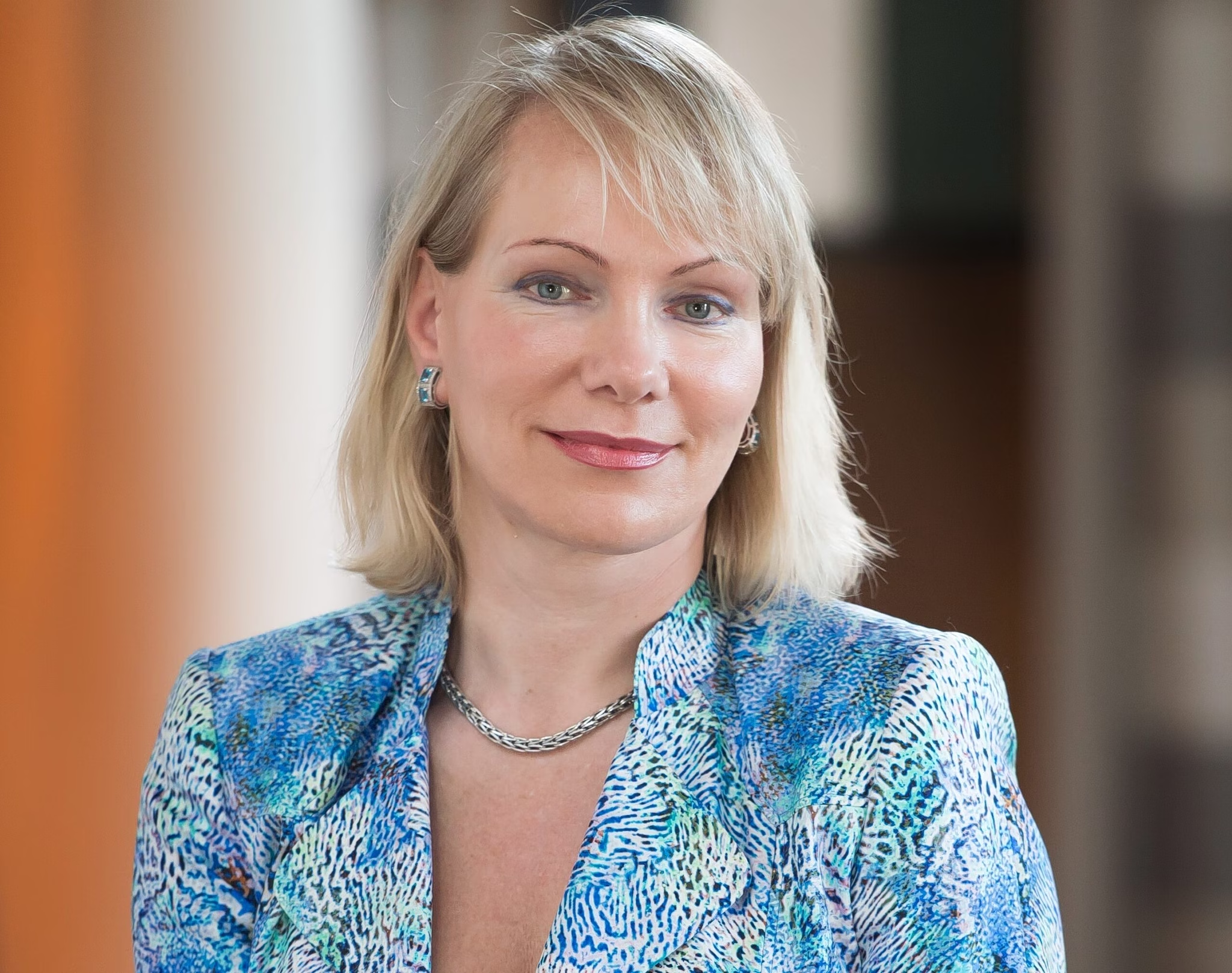
What inspired you to launch the Human Change initiative?
“Many people worry about the consequences of Climate Change—and rightly so—, but I am more worried about the consequences of Human Change: how digital childhood is changing our children and creating a new culture of loneliness in which young people are hyper-connected and yet terribly lonely.
As a mother of five children, I care about the future and worry about the ever growing number of children who grow up isolated from their parents and from real life. These concerns led me to found the Human Change Foundation, which is dedicated to fighting loneliness and screen addiction and to preserving essential human skills in children. Our Foundation works with world experts in psychology, sociology and pedagogy, including Dr. Zak Stein, Jonathan Haidt, Tristan Harris from the Center for Human Technology, and many others. Their research is bringing more and more evidence to light on the harm a digital childhood does to children`s social, emotional and intellectual development. Its consequences include a culture of polarization, the mental health crisis, rising suicide rates and demographical collapse around the globe. I consider Human Change to be the biggest danger facing humanity today.”
Was there a particular moment or experience that made you feel that this was something you had to do?
“Four years ago, my daughters were 6 years old. One day, they came home from school and explained to me that the best solution for every problem is suicide, because life is too difficult. They had learned that at school from older children who spent a lot of time on social media. As their teachers investigated the situation, they discovered that suicide had been the main topic of discussion in my daughters’ class for a full week, but that only two out of the 25 children had told their parents. Around the same time, one of my sons asked me to watch “Social Dilemma” on Netflix, a documentary which made a powerful impression on me. This was when I told myself I had to do something, and remain passive no longer.”
What problem are you trying to address at its core?
“It is important to speak not only about Social Media, but also about e-gaming, digital education and AI companions, because all these technologies are stealing time and real-life experiences from children. A recent study conducted by Common Sense Media found that 72% of US teens use AI chatbots for companionship.
Spending hours in the digital world, isolated by screens from their parents, teachers and reality, how can these teens develop their academic abilities, but even more importantly, their social skills: the skills required to understand other people’s emotions, to care for others selflessly, to commit to a long-term vision, to be able to analyze complex situations and be ready to compromise? A lot of research is now being conducted into the emotional and intellectual degradation of children today.
Five years ago, the World Health Organization declared loneliness and the global Child Mental Health Crisis to be two of the biggest challenges facing our society. New studies have since confirmed that most children can only learn critical social skills during the first 16 years of their lives. Which makes Human Change even more devastating.”
What kind of change do you actually hope to see in society?
“My wish is to stop the growing digitalization of childhood, at least until we know which human skills are impacted by New Technology and how—especially in children. At the Human Change Foundation, we are not anti-tech; we are pro-children. We believe in the power of new technologies to provide great solutions to many of the challenges we face in our lives, but to do so without destroying the most important thing of all for us as humans: the meaning of life.
For me, one of the main changes I would like to see is Tech Companies starting to operate like pharmaceutical companies. Meaning they should analyze every new app or program they develop and transparently present all the long-term side-effects they can have on human skills.”
You’ve been working on this for some time now—what have you seen so far?
“Eight years ago, the negative impact of Social Media was very seldom discussed. Today, there is a lot more awareness of the problem. Many countries are trying to protect children under 15 or 16 from Social Media and smartphones at school.
A recent ruling in the US is the first step toward holding Social Media Companies legally accountable for the harm their platforms do to children. This success is built on the efforts of many organizations like ours, and we are very proud to be part of it. That said, we still haven’t started to discuss the millions of kids who are addicted to e-gaming or replacing the complex learning they receive from a human teacher with the simple tutoring a digital teacher can provide.”
And what has surprised you most along the way?
“I am continually surprised by how easy it is for the Tech Industry to manipulate people and society, and how difficult it is to resist this manipulation. But I am also surprised and inspired by the commitment of the many people who are willing to sacrifice everything to protect children and our future from digital addiction.”
How is Human Change actually tackling the problem?
“Our Foundation tries to raise awareness about the risks of digital childhood within society and among politicians and parents in particular. We work with different grassroots organizations, including MAMA in the US and Smartphone-free Childhood in the UK and Switzerland, and with different teachers’ organizations. We share the data our experts collect from their research with them.
We hope that new regulations for Tech Companies will put a stop to a business model based on the exploitation of children’s natural weaknesses. I don’t know how long it will take. Today, I place my biggest hopes in parents, because most of them are ready to do anything and everything to protect their children.”
Do you believe change starts more with institutions, with culture, or with individuals?
“We need all parts of society to bring about the change we need in our culture. In my search for causes and solutions to the challenges of Human Change, I came to fully appreciate the crucial role family and parenthood play in human culture. For thousands of years, our culture was built on family values; working for our children’s future gave life meaning for most people. Until now, it was the culture of the family that trained people to care selflessly for each other. This care is the main pillar of Democracy. Which is why I call the family the best training camp for Democracy. But the lack of young devoted parents means we are losing that family culture today—which poses a major threat to the social stability of every country in the world.
Governments need to play a role in this effort, in the same way they support parents in protecting their children from other addictive substances and activities, like alcohol and gambling. Even when it comes to driving licenses, governments decide what age is appropriate for children to start driving a car. So protecting children against digital addiction and the degradation of essential skills should also be the responsibility of the government.”
And what about civil society?
“For the time being, communities and citizens, mainly parents, are providing the strongest resistance to the digital childhood. My dream is that all the NGOs who are working to protect the environment will include protecting the humanity in humankind in their mission. Today, all the big companies have sustainability programs. Well, these sustainability programs should include measures to protect their employees’ human skills. The ongoing dehumanization of society poses an unprecedented challenge for our civilization, and we will only be able to find a solution if we work together.”
“It’s a Public Health Crisis And it’s Already Happening”
Dr. Zachary Stein, the influential author, educator, futurist and founder of the AI Psychological Research Coalition, is one of the distinguished scientists who collaborate with the Human Change Foundation. He talks about the impact technology has on the human mind and how we need to approach AI differently from social media.
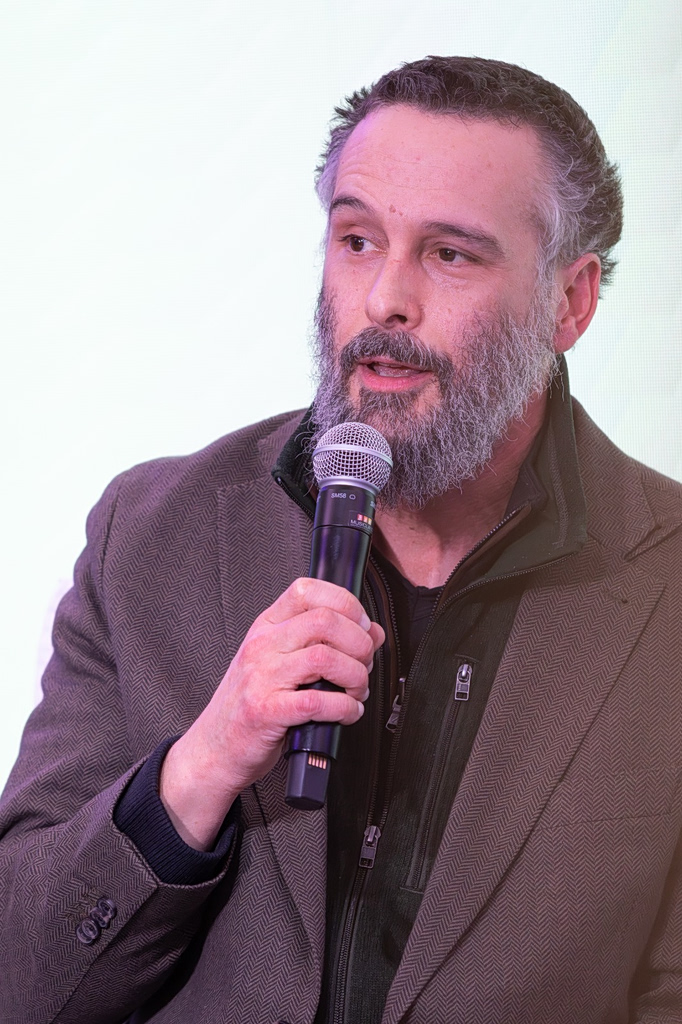
Do you believe that children today are growing up part of the greatest technological experiment in human history?
“I think that’s a good way to put it. If I was a university professor who had created a technology that attacked your attention system, then co-opted your emotional system, then said ‘I’d like to run some experiments to see what effect it has on kids’, the answer would definitely be ‘No, you can’t. That would be unethical.’ What’s happened instead is that we have a multi-million-person experiment in which a bunch of extremely advanced technologies—technologies which have really profound effects on the human mind—are being rolled out at scale. So yes, I would say we’re in the middle of a very large and, I think, very dangerous experiment.”
Can we say that these changes are already located in children and teenagers from a developmental point of view? Do we know for sure?
“For social media, we do, yes. Finally. People have been raising the alarm for a decade, but people like Jonathan Haidt have now convincingly demonstrated powerful correlations between the decline in youth mental health and the increased penetration of digital technologies. But when it comes to AI, and especially anthropomorphic AI, there is almost zero research. Our team was the first to systematically gather data on that, and the early indications are that it is extremely dangerous.”
In what way?
“In the media, they talk about ‘AI psychosis’. And while it’s not technically a psychosis, the results do resemble profound delusional states. Here’s a case study for you: A psychiatrist sees a patient—a 20-year-old woman with no previous history of mental illness. She’s lost her brother. In the context of her grief, she had begun to talk with an AI app, and it did not dis-confirm her belief that she was talking to her brother through the machine So she ended up having an extended interaction with what she thought was her brother, but was actually just this machine capturing her emotional attachment. This sent her into a delusional spiral and she ended her on a psychiatric ward on anti-psychotic medication After she’s discharged, she goes straight back to the AI app in search of her brother. Needless to say, in cases of diagnosed schizophrenia, the pathology will be deepened. But this can also happen to a healthy person.”
Do you think the bans that are coming into force will work?
“I think we have to find a way to make them work. It’s kind of like asking ‘do you think not letting kids drink until they’re 18 will work?’.”
But the measures relate to Social Media. What about AI?
“With AI, it’s the opposite. And that’s the real irony for me. Because, after a decade figuring out that social media is very, very bad for kids, pretty much the same crowd are now trying to push their AI tools on us. Meaning that, as our schools are banning mobile phones and Social Media, they’re simultaneously introducing AI.”
What advice would you give to parents?
“First off, I’d tell them it’s not their fault. I’d say: ‘You’ve been thoroughly tricked by an enormous industry that has addicted to you to these technologies.’ Then I’d urge them to start distancing themselves from those technologies. To approach them pretty much like they would a drug. Parents need to wean themselves off the tech first, and then work to wean their children off, too.
And this is a public health crisis. It is not something that might happen in the future. It’s already happening. In the past, we used to focus on global mental health statistics—we didn’t really look at children, because children were well, generally speaking. Now the opposite is true. People over 55 are doing way better than the kids.”
Are you optimistic?
“I can muster an optimism of sorts, because every time I come out and say these kinds of things I get the same reaction, which is: ‘My God, how can this be happening?’ It’s a very small number of people who are pushing this agenda. The vast majority do not want it. My optimism stems from that: if you talk about mass movement potential, this has huge potential.”