 Μake us preferred on Google
 A new opinion poll suggests Greece’s political landscape is entering a period of flux, with shifting voter allegiances and the emergence of new political forces reshaping the opposition.
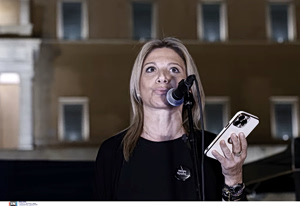
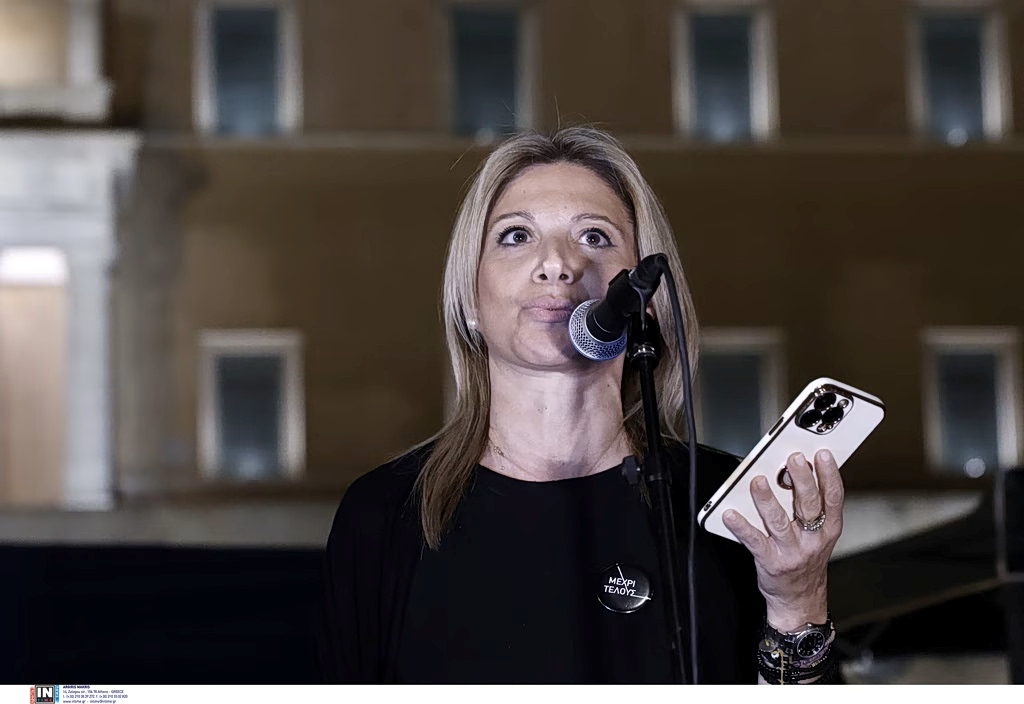
According to the latest survey conducted by Interview for Politic.gr, a party led by Maria Karystianou appears for the first time in voting intention rankings and immediately claims third place with 7.9%. The result signals a strong debut and points to growing momentum among voters seeking alternatives.
A shifting opposition field
The rise of Maria Karystianou’s party comes as Zoe Konstantopoulou’s Plefsi Eleftherias drops sharply to 3.3%, pointing to possible voter movement and highlighting ongoing volatility within Greece’s opposition space.
At the top, the ruling New Democracy remains in first place, though with notable losses. The party stands at 25.7%, down from 28.7% in March, indicating some erosion of support.
The center-left PASOK holds second place at 13.5%, showing only a marginal dip from its previous 13.9%.
Further down, Elliniki Lysi and the Communist Party of Greece are tied at 5.4%, followed by MeRA25 at 3.4%. Meanwhile, SYRIZA continues to struggle, polling at just 3.1%, placing it behind several smaller parties. Other groups, including Foni Logikis (2.9%) and Democrats (2.8%), remain below the parliamentary threshold.
One of the poll’s most notable findings is the drop in undecided voters, now at 14.8%, down from 17.4% in the previous survey. The decline suggests that a segment of the electorate is beginning to re-engage and settle on political preferences after a period of uncertainty.
Leadership ratings and voter sentiment
In terms of suitability for governing, Prime Minister Kyriakos Mitsotakis retains a clear lead with 29.8%. However, the second-most popular response — “no one” — follows at 26.6%, underscoring broader dissatisfaction with the political class.
Among opposition leaders, Nikos Androulakis ranks second with 11.4%. Karystianou follows at 6.4%, ahead of Konstantopoulou (4.8%) and Kyriakos Velopoulos (4.6%), further reinforcing her rising profile.
Public demand for early elections appears to be strengthening. According to the poll, 56% of respondents favor going to the ballot box before the end of the government’s term, while 40% prefer completing the full four-year mandate.
Scandal and systemic concerns
On the issue of the OPEKEPE scandal — involving Greece’s agricultural payments authority — 35% of respondents attribute responsibility primarily to political interference, while 28% point to long-standing structural weaknesses in the state.
The survey also highlights ongoing debate over changes to Greece’s electoral system. A plurality of respondents (45%) support a mixed system combining preference voting and party lists, while 44% favor retaining the traditional preference vote.