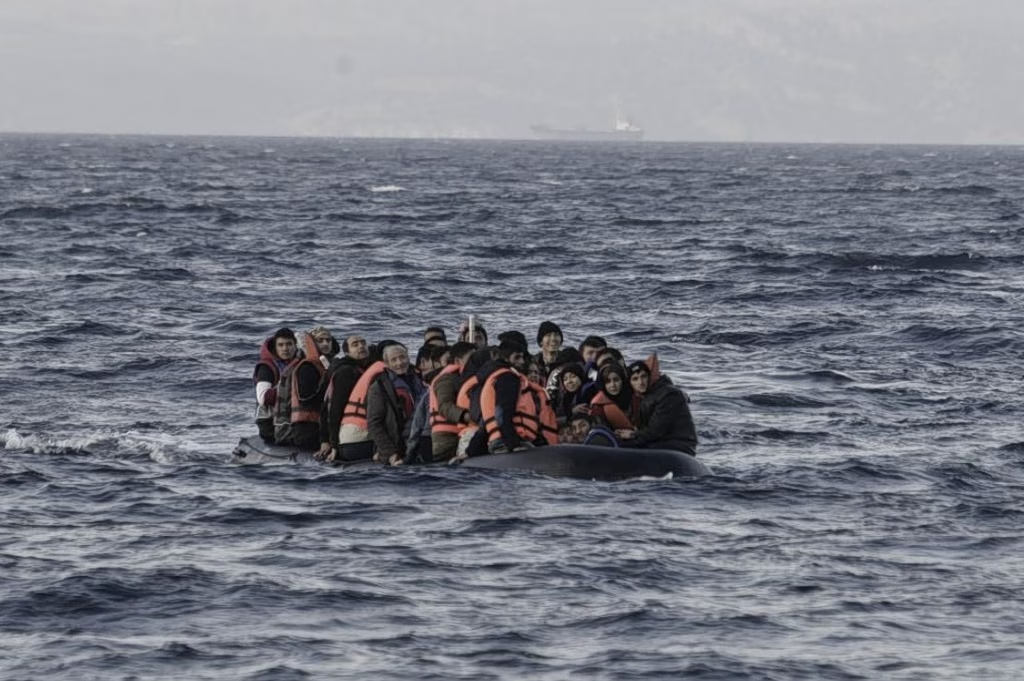
The European Union has agreed to establish a Maritime Rescue Coordination Centre (MRCC) in the eastern Libyan city of Benghazi as the bloc seeks to curb migrant arrivals along one of Europe’s busiest migration routes.
EU Ambassador to Libya Nicola Orlando announced that the procedures to establish the center had been finalized under the EU naval mission Operation IRINI, with funding provided by Italy and Malta.
“We finalized the procedures to establish a Maritime Rescue Coordination Centre in Benghazi under Operation IRINI, with funding from Italy and Malta,” Orlando said in a post on X.
Cooperation With Eastern Libya
The announcement followed a meeting in Rome attended by Operation IRINI Commander Rear Admiral Marco Casapieri, Malta’s ambassador to Italy Daniel Azzopardi, and General Khairy Tamimi, secretary-general of the command of the Libyan Arab Armed Forces.
Libya has remained a major transit route for migrants attempting the dangerous Mediterranean crossing to Europe since the 2011 NATO-backed uprising that overthrew Muammar Gaddafi. The country remains divided between rival authorities in the west and east.
Although the European Union formally recognizes only the Tripoli-based government, it has increased contacts with authorities in eastern Libya since last year as migrant departures from territories controlled by military commander Khalifa Haftar have increased.
Rights Groups Raise Concerns
The proposed Benghazi rescue center has drawn criticism from rights organizations, which argue that strengthening Libya’s maritime capabilities could result in more migrant boats being intercepted and returned to Libya.
The United Nations and human rights organizations have for years documented abuses against migrants and refugees returned to the country.
EU officials, however, say cooperation with Libyan authorities is necessary to improve maritime safety, combat migrant smuggling networks, and reduce deaths at sea.