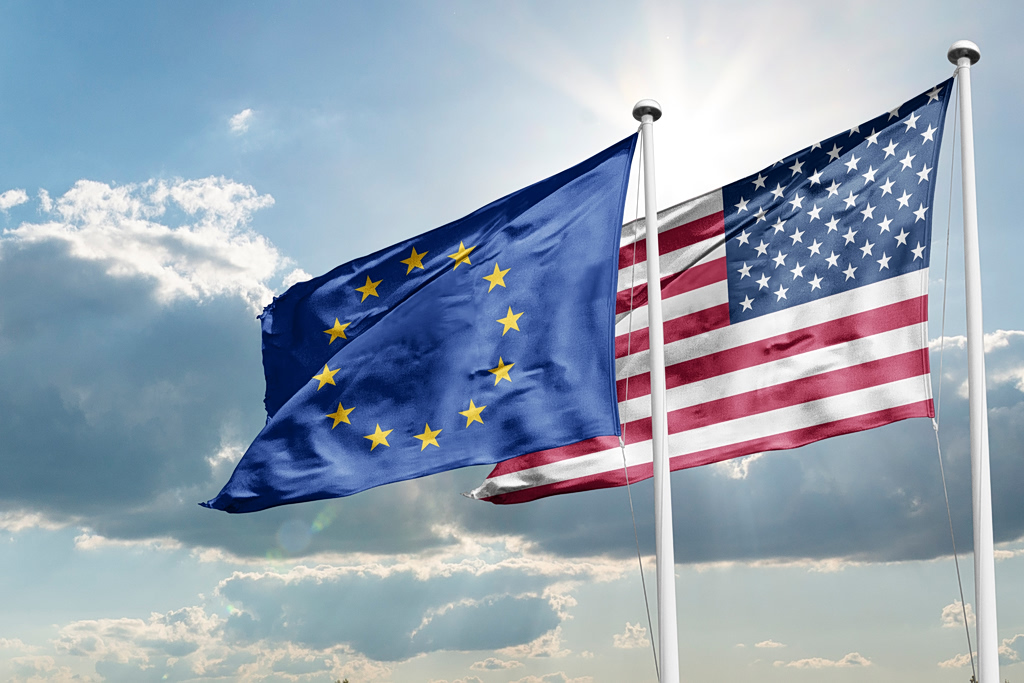
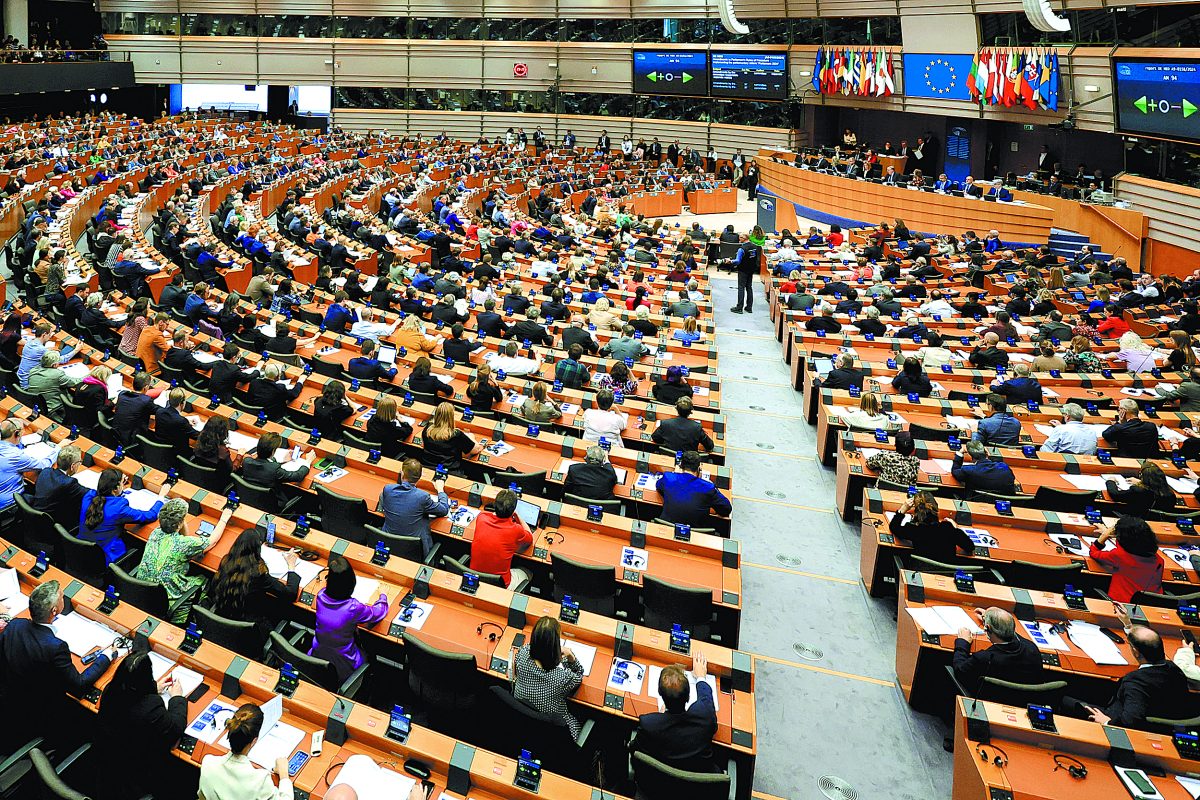
The European Union is facing unprecedented challenges at a time when the multipolar international order, as established by the United Nations, is under constant attack. Russia’s war of aggression against Ukraine and Donald Trump’s confrontational stance toward the EU—as confirmed by the recently published US National Security Strategy—constitute existential threats to the future of European democracy and our fundamental freedoms.
European leaders and EU institutions must stand firmly in defense of our values, thereby demonstrating the Union’s strength and its usefulness in safeguarding European security, prosperity, the rule of law, and human rights—all the values Europeans rightfully expect from their Union.
However much we may wish to believe that the United States remains an ally, the public statements of President Trump and senior members of his administration clearly show that unilateral concessions have neither curbed unpredictable behavior nor strengthened transatlantic stability.
On the contrary, we are confronted with open hostility toward the EU and everything it represents, as well as a coordinated attack against our democratically elected governments and European institutions. The declared objective is to undermine the foundations of the European project, to dismantle our democratic Union—which is grounded in the rule of law and respect for human rights—and to promote extremist, populist forces that would lead Europe toward division, fragmentation, and nationalism, rendering it weak and subordinate.
Europe must therefore draw the necessary conclusions: our security and defense, our prosperity, and our democracy can only be safeguarded if we move forward together. Strategic autonomy is an absolute necessity. The EU must adapt swiftly, capable of acting as an independent actor, fully assuming responsibility for its own security and defense, defending its interests, and protecting its fundamental values both internally and globally, while at the same time seeking to renew political and economic cooperation with like-minded countries.
Only by supporting democratic governance, human rights, economic prosperity, and social rights will the EU be able to strengthen social cohesion and the resilience of democracy against efforts to divide and weaken it. Moreover, the EU can—and must—fill the gap left by the United States in the global multipolar system by actively defending international law and protecting organizations such as the United Nations.
A prerequisite for both geopolitical strength and social security is the pursuit of a more competitive Europe, capable of delivering prosperity to its citizens. The full implementation of the Letta and Draghi reports on completing the Single Market and enhancing European competitiveness by 2028 can make a substantial contribution to achieving this goal. A competitive Europe also means a sustainable Europe; efforts to simplify European legislation must not come at the expense of essential rules protecting the environment and society.
We also need a European budget of sufficient scale, capable of financing European public goods—including defense, research and innovation, housing, education, and skills—while at the same time safeguarding social and environmental protection, regional cohesion, and agricultural policy. The EU budget should also continue to support a vibrant civil society and a global Europe whose external relations and development assistance are grounded in European values. This new, strengthened budget should be financed through ambitious EU own resources.
However, restoring competitiveness and modernizing the budget are not enough to build a geopolitical Europe. EU member states must move swiftly toward a Common European Defense, as provided for in Article 42 of the EU Treaty. In the absence of unanimity, this can be achieved through a new Permanent Structured Cooperation among willing member states or through an ad hoc treaty, as was the case with the Schengen Agreement. The objective should be the creation of a genuine European Defense System, capable of coordinating armed forces in the event of an attack against any member state.
To achieve this goal, we must boldly pursue deeper integration, ensuring European sovereignty and respect for fundamental values and rights. Ambitious decisions and political leadership are required—beyond narrow national interests and personal ambitions. If we fail—if we do not show the courage to confront this challenge together—we risk disappearing, divided and forced to accept that the fate of the world is determined by the political power of Donald Trump, in questionable partnership with Vladimir Putin and Xi Jinping.
For this reason, Europe must finally overcome the regime of national vetoes, which typically paralyzes decision-making on common foreign policy, defense, and shared economic matters. The government of a single member state cannot be allowed to prevent the EU from defending its collective interests or from acting when Europe’s security is at stake. Abolishing the veto would strengthen our ability to act jointly, encourage consensus and compromise, and restore EU decision-making to the democratic principle that decisions are taken by majority rule. The Treaties provide the means for this change; what is required is the political will to use them.
The EU has faced critical moments before; each time, it moved forward by choosing unity over fragmentation. Today is another such moment. If we act together, with determination and courage, Europe will not only withstand these challenges but will emerge stronger, more sovereign, and better able to protect the rights of all Europeans.
Guy Verhofstadt is President of the European Movement International, former Prime Minister of Belgium, and former Member of the European Parliament, where he led the Liberal group.
Petros Fassoulas is Secretary General of the European Movement International.