
 Μake us preferred on Google
 For more than seven decades, the German car was something far bigger than a successful export product. It was material proof that a defeated, ruined country could rebuild itself through technology, work, and industrial discipline. Volkswagen, Mercedes-Benz, BMW, and Porsche offered more than transportation. They embodied Germany’s promise that quality, reliability, and engineering excellence could secure prosperity at home and influence abroad.
That promise is now being called into question. The auto industry crisis isn’t an ordinary economic downturn. It’s a symptom of a deeper shift, one in which Germany risks losing its technological lead, its favored markets, and its cheap energy advantage all at once. Along with them, an entire social structure is being tested: well paid industrial jobs, strong unions, vocational training, and the certainty that each generation would live better than the last.
Since 2019, Germany’s auto sector has shed more than 140,000 jobs. Behind that number are entire regions, from Lower Saxony to Baden-Württemberg and Bavaria, whose economies revolve around the factories, suppliers, and research centers of the carmakers. The threat isn’t confined to the big assembly plants. It extends to thousands of small and medium sized businesses that make parts, gearboxes, exhaust systems, and machine tools.
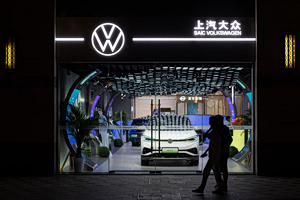
Volkswagen, the strongest symbol of Germany’s industrial miracle, is facing the largest restructuring in its history. Management warns that its operating costs remain noticeably higher than its competitors’, and is weighing further cuts, while workers and local governments worry about the future of plants in cities like Hanover, Emden, Osnabrück, and Zwickau. Talk of tens of thousands of additional departures shows the scale of the pressure, even as final decisions remain the subject of tough negotiation.
At the same time, BMW plans to cut several thousand positions by the end of 2027, mainly through voluntary departures, while Porsche is scaling back staff and operations. That’s a far cry from the era when Germany’s auto industry could take Chinese market growth, US market access, and European political protection for granted.
For years, China was the great profit engine for German carmakers. Wealthy Chinese consumers bought German cars as symbols of social status. Today, though, the country that was once a customer and manufacturing base has become a formidable competitor. Companies like BYD don’t just offer cheaper electric vehicles. They develop new models at high speed, control a significant part of the battery supply chain, and build digital features that better match what younger buyers want.
German companies remain industrially strong. In 2025, Germany produced roughly 1.67 million electric and plug-in hybrid vehicles, holding onto second place worldwide behind China. In total, 4.15 million passenger vehicles were built, and the industry generated more than 527 billion euros in revenue. Cars and auto parts still account for more than 16 percent of German exports.
That’s exactly why this crisis is so dangerous. It doesn’t concern some declining regional sector, but the heart of Europe’s largest economy. The shift to electric vehicles requires fewer mechanical parts and different skills, and it moves value away from the engine and gearbox toward the battery, software, and semiconductors. The advantage Germany built over decades hasn’t disappeared, but it’s no longer enough on its own.
Layered on top of the technological challenge are expensive electricity following the energy break with Russia, bureaucracy, delays in charging infrastructure, and US tariffs. The old model relied on a near perfect equation: cheap Russian energy, Chinese demand, American security, and open international markets. Every term of that equation has now changed.
Ultimately, what’s at stake is political. When a factory closes or shrinks, more than income is lost. Trust in institutions erodes, strengthening forces that promise a return to a past of industrial certainty. The insecurity in auto industry towns can curdle into anger at the green transition, the European Union, and the political establishment.
Germany hasn’t stopped being an industrial power. It has capital, engineers, research infrastructure, and globally recognized brands. But it’s now being called on to prove it can turn that legacy into an economy fit for the new era. Because the battle over the car is no longer just about who builds the most vehicles. It’s about whether a country that learned to recognize itself in the sound of a German engine can hold onto its confidence once that engine falls silent.