 Μake us preferred on Google
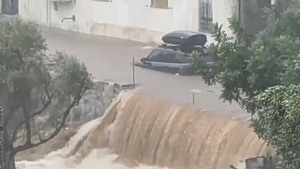
 Hundreds of tourists were missing and 19 people were killed after flash floods tore through towns and villages along the border between Nepal and China, officials said Wednesday.
The Nepal Tourism Board said more than 380 tourists were missing in the affected areas, including nearly 300 foreign nationals. More than 100 Indian nationals are among the missing.
Chinese leader Xi Jinping has ordered an all-out effort to evacuate and relocate people threatened by the floodwater. Chinese authorities have sent hundreds of people to carry out rescue operations in the affected areas of theTibetan region.
Abi Narayan Kafle , a spokesman for the Nepalese police, said 19 bodies had been recovered from the banks of the Trishuli River in the northern Nepal district of Rasuwa, which borders China’s Tibet region. More than two dozen police officers posted at stations in the district were out of contact or missing, he said.
Rescue operations are still in the early stages in both countries and officials expect casualties could be significantly higher given the reported damage to bridges, hydropower plants and roads.
Drone footage showed buildings in Gyirong Port, the largest land trading hub connecting China and Nepal, buried in mud. Roads leading from China’s side of the border were cut off, state news agencies said.
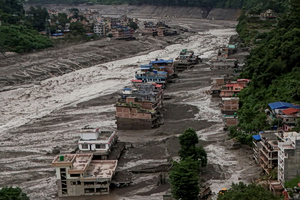
A drove view of mud covered properties following a flash flood at Trishuli in Nuwakot district, Nepal, August 26, 2026. REUTERS/Navesh Chitrakar
Beijing is preparing to send some 30,000 tents, folding beds, stoves and other relief materials, indicating officials expect large numbers of people will need to be evacuated from the affected areas in Tibet.
Scientists are looking at the possibility that an ice-rock avalanche fell into a tributary of Rasuwa district’s Trishuli River, displacing a large amount of water.
“The same site devastated by last year’s Rasuwa flood is once again under threat,” said Qianggong Zhang , head of climate and environmental risks for ICIMOD, a Kathmandu-based intergovernmental organization focused on climate risks for mountain communities. “An ice-rock avalanche in the Lhende Khola [River] was the trigger, but the cause remains unconfirmed.”
A flash flood in the same region last year was traced to a glacial lake in Tibet that overflowed, highlighting an increasing risk in Asia’s mountainous areas.