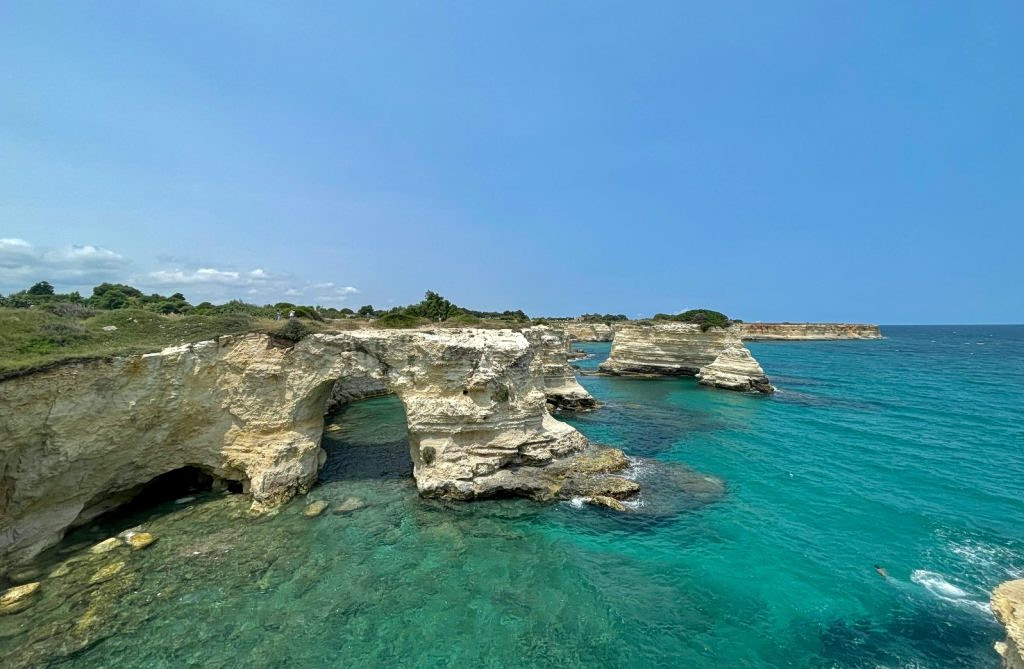
A beloved natural landmark on Italy’s Adriatic coast, known as the “Lovers’ Arch,” collapsed on Valentine’s Day following days of heavy storms and rough seas. Located in Sant’Andrea di Melendugno, the rocky formation had been a popular backdrop for marriage proposals and a symbol of the Salento region.
Local authorities reported that strong winds, torrential rain, and turbulent seas gradually weakened the rock structure, ultimately causing it to fall. The mayor of Melendugno, Maurizio Cisternino, described the event as “a devastating blow” and lamented the loss of one of Italy’s most iconic coastal landmarks. The city’s deputy mayor for tourism, Francesco Stella, likened the collapse to “a funeral.”
Experts point to an increase in extreme weather events in the Mediterranean as a contributing factor. Recent “medicanes”—Mediterranean cyclones—such as Cyclone Harry in January, have caused widespread damage to ports, homes, and road networks, reshaping coastal landscapes. Christian Mulder, a professor of ecology and climate emergency at the University of Catania, emphasized that record-high sea temperatures in 2025 are fueling these severe storms.
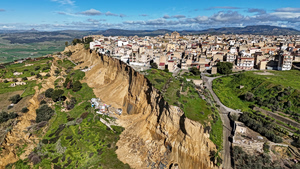
The collapse of the Lovers’ Arch follows other extreme weather incidents in Italy. In late January, heavy rains from Cyclone Harry triggered a massive landslide near Niscemi, destroying roads, submerging vehicles, and creating a four-kilometer gap in the urban landscape.