 Μake us preferred on Google
 The Trump administration is exploring ways to reset ties with a reclusive and autocratic state controlling prime geopolitical real estate along the Red Sea as Iran threatens to choke off a second vital maritime corridor against the backdrop of war with the U.S.
A senior Trump official, Massad Boulos, has told foreign counterparts that the U.S. aims to begin lifting some sanctions on Eritrea, a small African country with more than 700 miles of Red Sea coastline, according to current and former officials familiar with the matter. It is part of an effort by the Trump administration to restore higher-level diplomatic relations with the country for the first time in decades. Other officials said the plan to normalize ties with Eritrea and lift sanctions on the country is undergoing review and hasn’t yet been finalized.
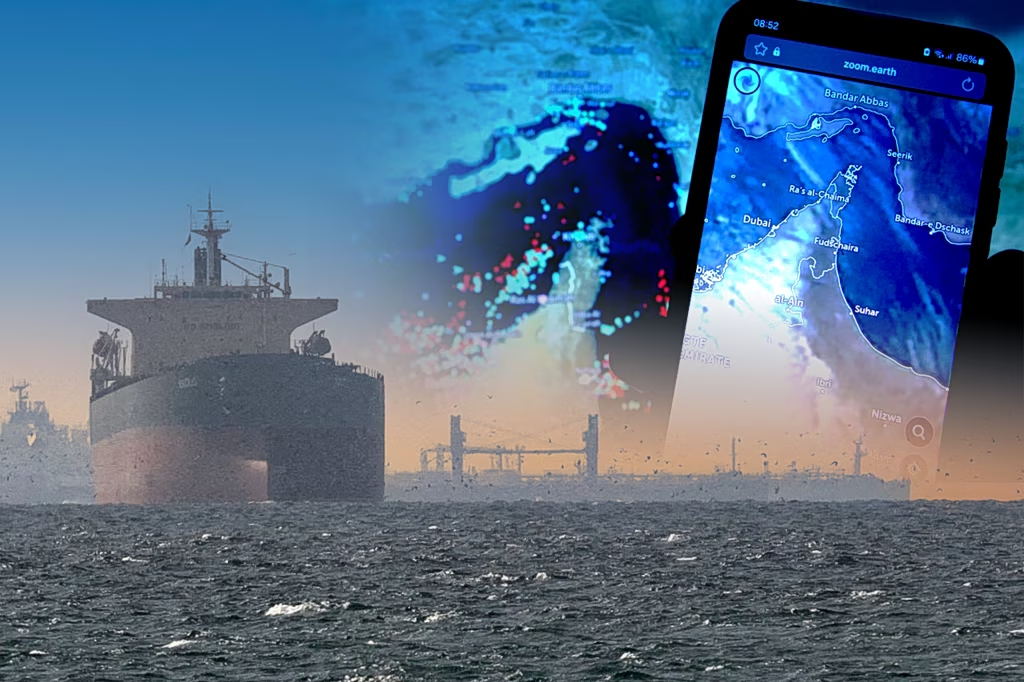
The U.S. diplomatic push comes as an Iran-backed rebel group in Yemen, the Houthis, has threatened to shut down maritime traffic in the Red Sea amid Tehran’s efforts to cut trade through the Strait of Hormuz since the start of its war with the U.S. and Israel.
The plan to reset ties with Eritrea predated the U.S. war in Iran, but Tehran’s moves to close the Strait of Hormuz has elevated the importance of U.S. policy on the Red Sea, a crucial chokepoint used by some of the Middle East’s main oil exporters to bypass the Persian Gulf.
The Strait of Hormuz is the gateway to the Middle East’s vast oil wealth on the east side of the Arabian peninsula. The Red Sea is on the western side, and a vital route for military and commercial maritime traffic from the Mediterranean to the Indian Ocean. The Houthis have repeatedly threatened to shut the Bab al-Mandeb strait at the mouth of the Red Sea to support Tehran.
Boulos, President Trump’s envoy for Africa, met privately with Eritrea’s president, Isaias Afwerki , late last year in Cairo, officials and other people involved in the talks said. The goal of the meeting was to discuss an easing of U.S. sanctions and kick-start higher-level dialogues about resetting U.S.-Eritrea ties.
On Monday, Boulos met with Egyptian President Abdel Fattah Al Sisi in Cairo. Egypt is helping facilitate the dialogue between the U.S. and the Eritrean leader, officials said. During that meeting, Boulos told Sisi the U.S. plans to begin lifting sanctions on Eritrea soon, officials familiar with the matter said.
Boulos previously met with Eritrea’s foreign minister, Osman Saleh Mohammed, in September on the sidelines of the U.N. General Assembly in New York, officials said.
A State Department spokesperson said the Trump administration looks forward to strengthening U.S. ties with the people and government of Eritrea. The spokesperson didn’t address specific questions related to an easing of U.S. sanctions on Eritrea and the department didn’t make Boulos available for an interview.
The Egyptian foreign ministry and Eritrean embassy in Washington didn’t respond to a request for comment.
A final decision to reset U.S.-Eritrea ties has lurched forward and stalled at various points in recent months, in part because the administration’s top decision makers have their hands full with other major foreign policy crises, including the Gaza conflict and war with Iran.
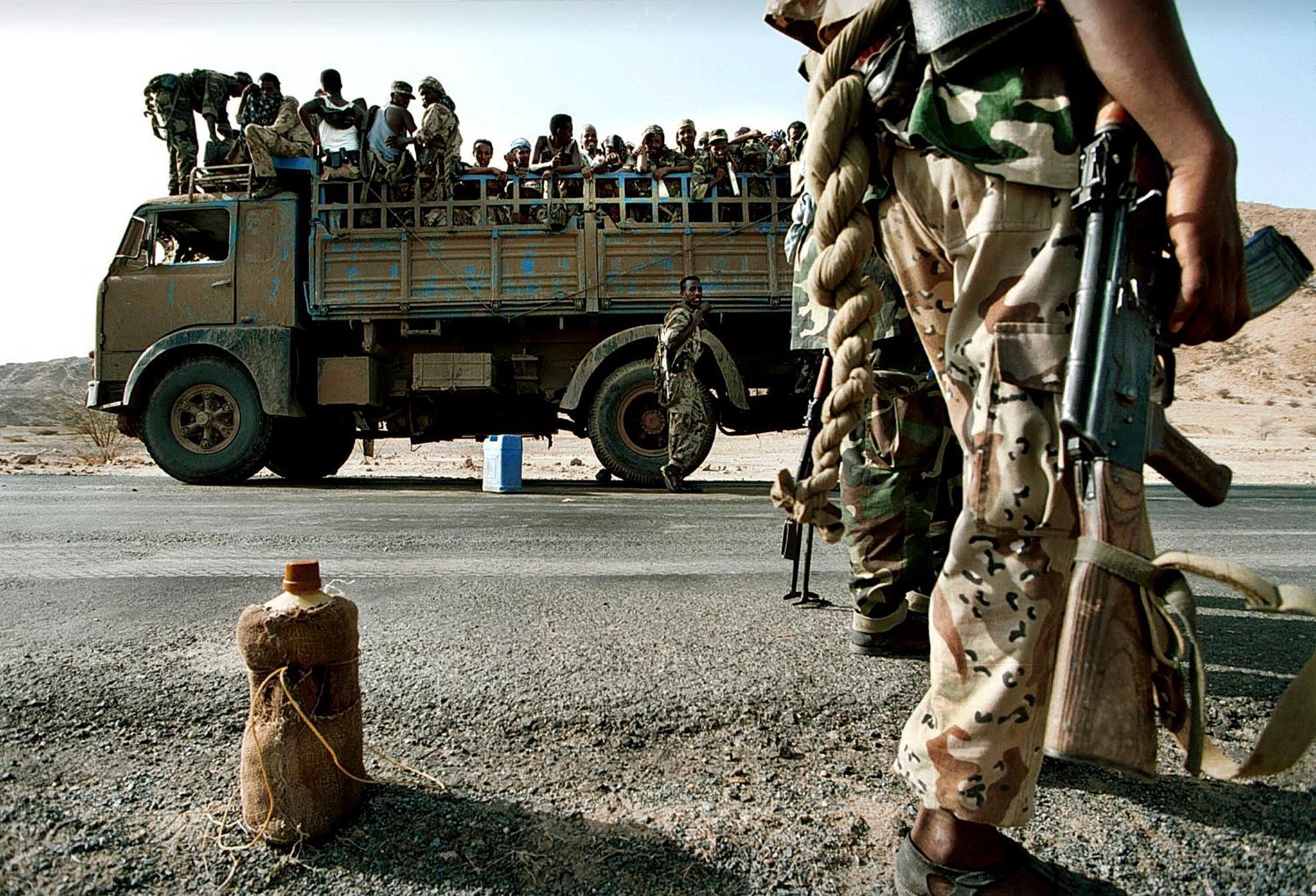
The Eritrean leader has ruled his country since it first gained independence from Ethiopia in 1993, and has since consolidated power to create one of the world’s most repressive dictatorships. U.S. congressional commissions have referred to Eritrea as the “North Korea of Africa” for its systemic repression of political dissidents and religious freedom, as well as the torture of prisoners and forced conscription of a bulk of the country’s youth into military service.
Freedom House, which rates political rights and civil liberties worldwide, ranks Eritrea and North Korea side-by-side as two of the most authoritarian countries in the world.
Eritrea is rich in mineral resources and its Red Sea coast is across from Saudi Arabia and Yemen. Neighboring Djibouti is home to the densest cluster of foreign military bases in the world—including from the U.S., China, France, Japan and Italy—underscoring the strategic importance of the Red Sea to foreign powers.
U.S. naval vessels, including carrier strike groups, typically use the Red Sea to transit between the Mediterranean and Indian Oceans, though the ships have come under attack in recent years by the Houthis.
The Trump administration launched a two-month-long military air campaign against the Houthis in 2025 after the group targeted commercial shipping in the Red Sea with missile and drone attacks. Trump halted the campaign in May after he said the Houthis agreed to stop attacks on the commercial shipping lanes. Still, the Houthi threat to reopen hostilities has fueled new concerns about maritime traffic through the Bab al-Mandeb strait.
A U.S. carrier strike group led by the USS George H.W. Bush recently sailed around the southern cape of Africa to join U.S. operations against Iran, rather than taking the shorter route transiting through the Red Sea.
Some U.S. officials have concluded that the status quo of sanctions and minimal engagement with Eritrea isn’t working, and dangling the prospect of lifting sanctions to begin dialogue could yield the U.S. long-term benefits in the Red Sea region. These officials said the Red Sea region is too strategically important for the U.S. not to try to reopen ties with Eritrea, despite Eritrea’s human rights record.
Some analysts have questioned this logic. “Normally, when we lift sanctions, the country has done something to merit it,” said Cameron Hudson, a former U.S. intelligence and State Department official who tracks the region. “Eritrea has done neither of those. In fact, it is the exact same militarized, autocratic state that it has been since 1993. If we are going to reward them with lifting sanctions then what are we getting for it?”
A U.S. reset of ties with Eritrea could affect conflicts and rivalries elsewhere in the war-racked Horn of Africa region, officials said. U.S. officials have privately raised fears that Ethiopia is gearing up for a war with Eritrea as its government says the landlocked nation has historic claims to Eritrean coastlines.