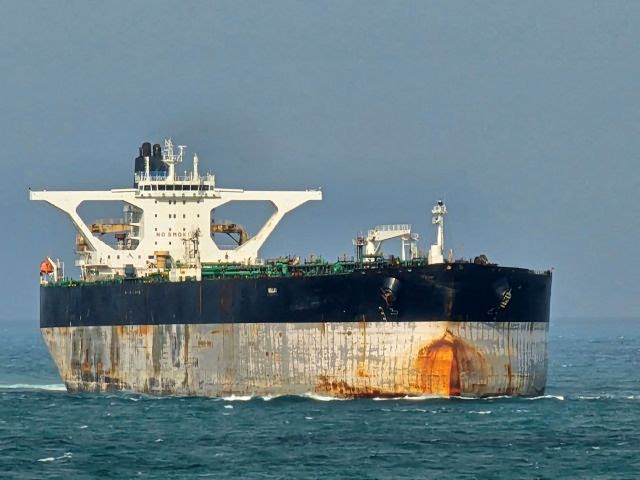
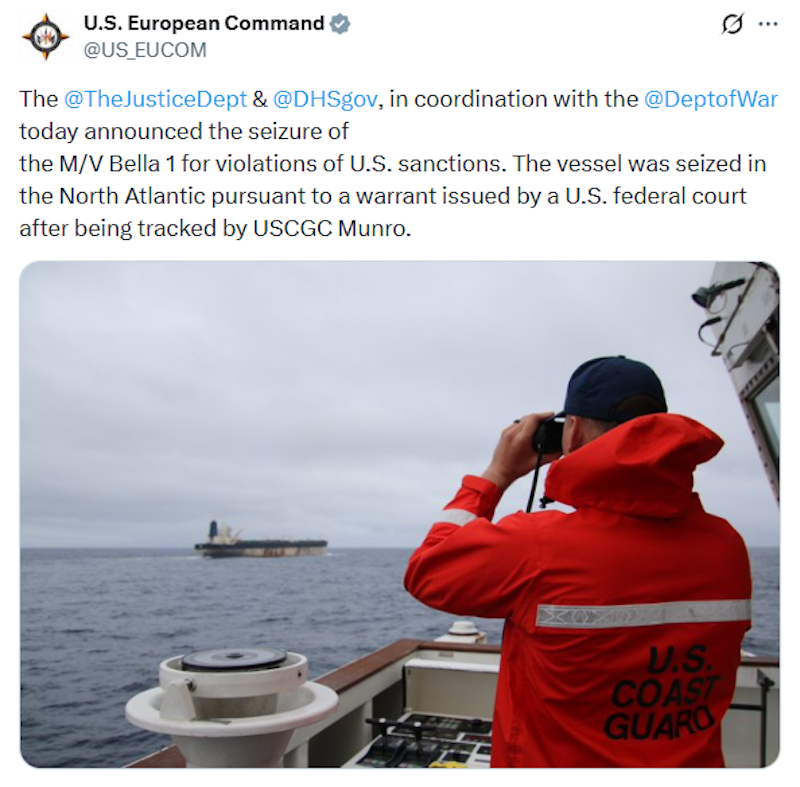
The United States seized a Venezuela‑linked oil tanker after a pursuit spanning more than two weeks, U.S. officials first told Reuters, in the latest effort to enforce sanctions and disrupt crude shipments connected to Caracas. Since, the U.S. European Command officially announced on X, the seize of M/V Bella 1.
View this post on Instagram
The vessel, formerly known as the Bella‑1, has been chased by the U.S. Coast Guard and military across the Atlantic after slipping through a U.S. maritime “blockade” of sanctioned tankers and resisting boarding attempts. It is now registered under the Russian flag and renamed Marinera, complicating the legal and diplomatic situation.
The Operation
The operation, carried out near Iceland, involved the U.S. Coast Guard and the U.S. military. Officials said Russian military assets, including a submarine, were in the general vicinity of the tanker during the operation, though there were no signs of a direct confrontation between U.S. and Russian forces. The Pentagon and the Coast Guard did not immediately comment, and there was no immediate response from Moscow. Russian state media outlet RT published an image showing a helicopter hovering near the ship.
The Bella‑1 evaded earlier interdiction efforts and a boarding attempt by the U.S. Coast Guard in Caribbean waters, then sailed northward, drawing close surveillance from U.S. forces as it approached European waters.
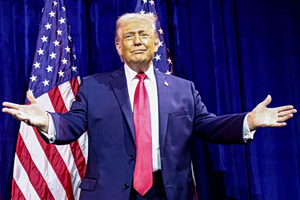
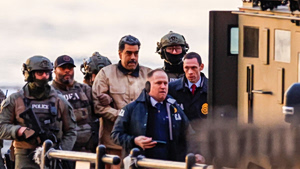
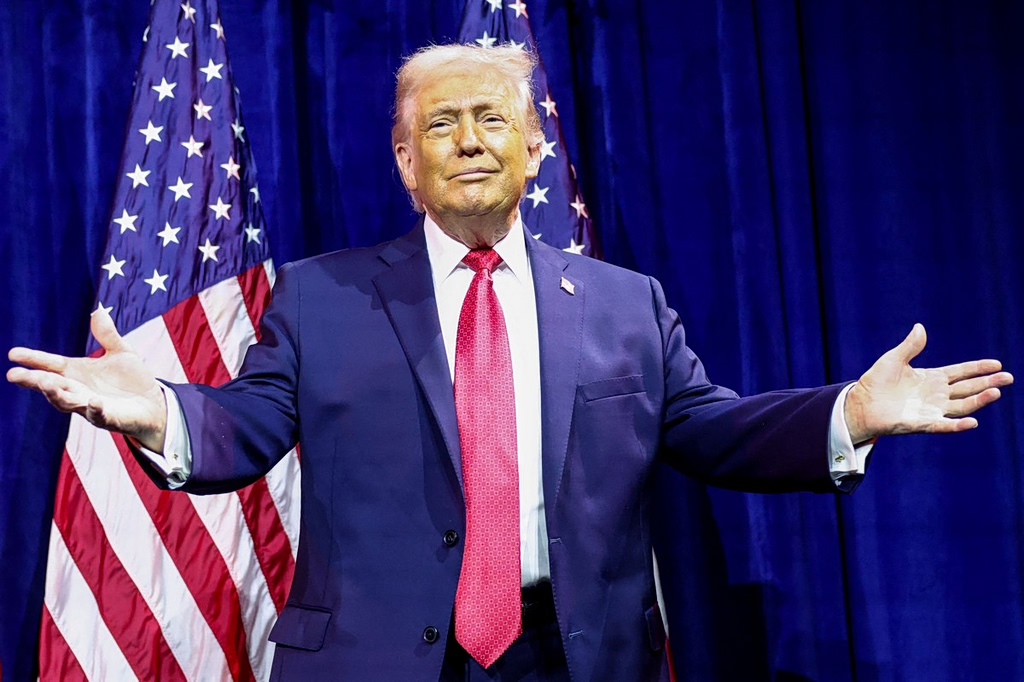
The seizure attempt comes amid heightened U.S. pressure on Venezuela under President Donald Trump, who has imposed an effective blockade on Venezuelan oil exports since mid-December. The move also follows a U.S. special forces raid in Caracas days earlier in which Venezuelan President Nicolas Maduro was seized and taken to the United States for prosecution on charges related to alleged drug trafficking — an action Venezuelan officials have condemned as a kidnapping.
View this post on Instagram
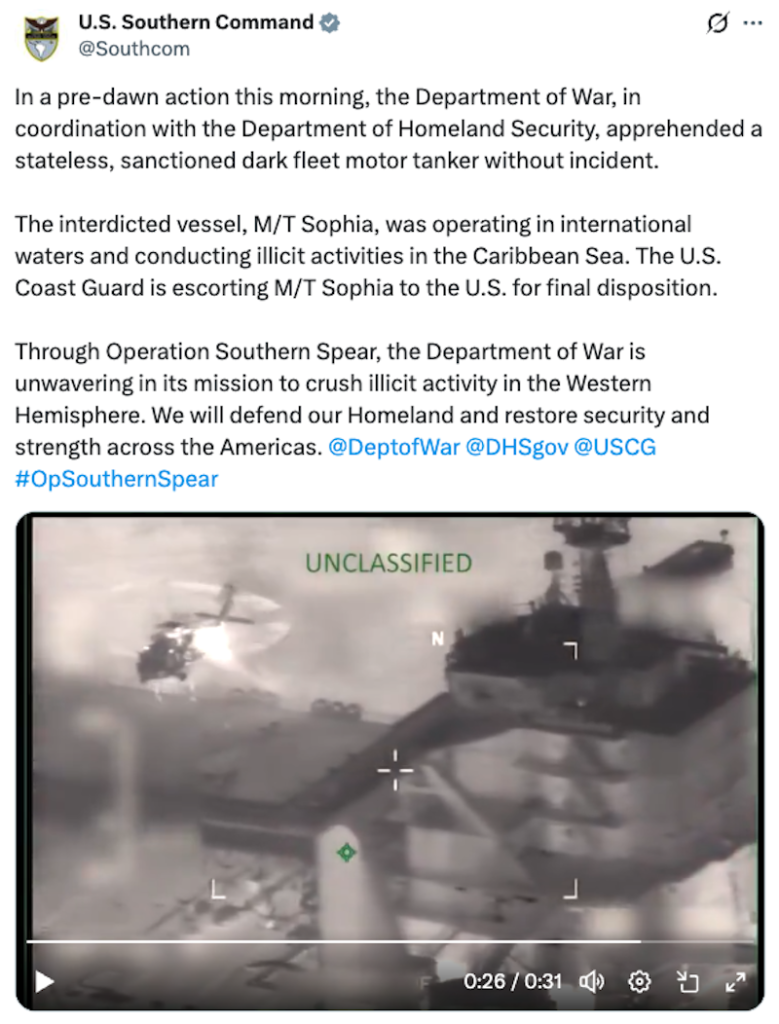
U.S. authorities say the Marinera is the latest in a series of vessels targeted as part of Washington’s campaign against Venezuela’s oil trade. Separately, the Coast Guard has intercepted another Venezuela-linked tanker in Latin American waters. Sources identified that vessel as the Panama-flagged supertanker M Sophia, which is under sanctions and had departed Venezuela earlier this month as part of a fleet carrying crude to China while operating in “dark mode” with its transponder turned off.
Trump has accused Venezuela of stealing U.S. oil — a reference to the country’s past nationalization of its energy sector — while top Venezuelan officials have accused Washington of seeking to seize the world’s largest proven oil reserves. Venezuela currently has millions of barrels of crude stranded on tankers and in storage due to the U.S. blockade.
On Tuesday, Trump said the United States and Venezuela had reached a deal that could allow up to $2 billion worth of Venezuelan crude to be shipped to U.S. ports, potentially diverting supplies from China and easing pressure on Venezuelan production. He has said the agreement depends on Venezuelan authorities granting U.S. companies broad access to the country’s oil industry.
Since U.S. energy sanctions were imposed in 2019, traders and refiners handling Venezuelan crude have relied heavily on a “shadow fleet” of tankers that obscure their movements or are already sanctioned for transporting Iranian or Russian oil — vessels analysts say remain vulnerable to U.S. enforcement actions.