 Μake us preferred on Google
 Donald Trump launched a military campaign against Iran promising a better nuclear deal than the one Obama had signed. Yet according to an analysis by Bloomberg, the agreement now taking shape appears to be weaker than its 2015 predecessor.
According to Bloomberg, the new deal, expected to be formally negotiated within 60 days, is based on a memorandum of understanding that states only that Iran’s uranium stockpile, enriched to levels close to those needed for a nuclear weapon, must be “adequately addressed.” The memorandum does not clarify the fate of already existing highly enriched uranium, a gap that raises serious questions about the new agreement’s effectiveness compared to the 2015 deal.
Trump has sent contradictory signals about the importance of the enriched uranium, which he has taken to calling “nuclear dust.” Speaking at the G7 summit in France, he appeared uncertain about whether access to Iran’s uranium stockpile is even decisive for ending the war with the Islamic Republic, which began on February 28.
“You could make the case: ‘Why do you even bother?’ since it actually doesn’t have much value,” Trump said during his meeting with the Emir of Qatar, Sheikh Tamim bin Hamad Al Thani. “Psychologically, we want to get it.”
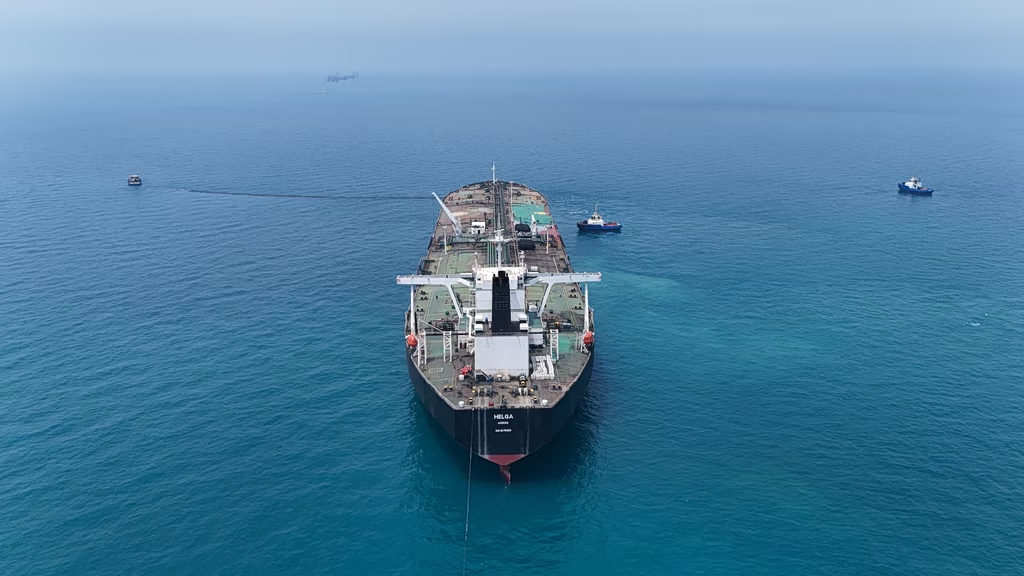
Bloomberg notes that the failure to account for the fuel needed to build nuclear weapons could undermine the entire purpose of the military operation. IAEA inspectors have not yet assessed the condition or location of the material following the American-Israeli bombing campaign from the previous June.
Iran stands to gain significantly from the memorandum, as the United States has agreed to lift all sanctions, including those imposed by the UN Security Council, and to unfreeze billions of dollars in Iranian assets. Tehran will also gain access to $300 billion earmarked for “reconstruction and economic development” and will be able to resume oil exports.
A Weaker Deal Than 2015
The 2015 nuclear deal, from which Trump had withdrawn, had placed strict limits on Iran’s nuclear program. It capped the enriched uranium stockpile at 300 kilograms of low-enriched uranium, halted the development of new technologies, and gave the IAEA the authority to conduct surprise inspections.
While the new agreement has not yet been finalized, Trump declared that the Joint Comprehensive Plan of Action (JCPOA) was “the worst deal,” insisting his own represents “a wall against a nuclear weapon.”
According to the memorandum expected to be signed in Switzerland, Iran “reaffirms that it will never produce nuclear weapons.” That commitment, however, has been made many times before, as the country is already a signatory to the Nuclear Non-Proliferation Treaty (NPT).
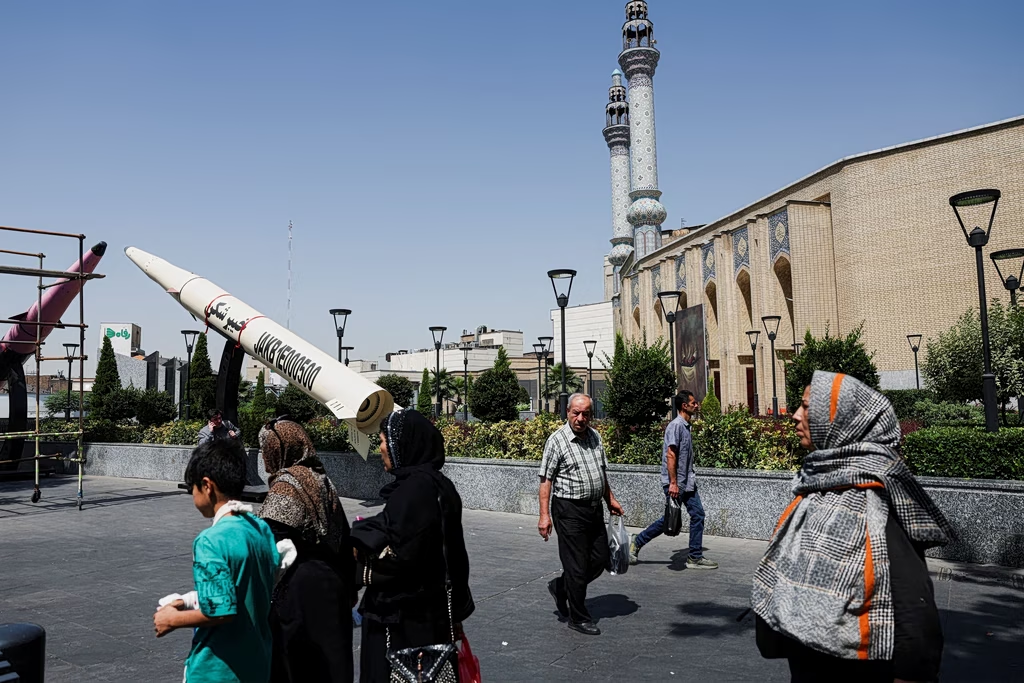
The Trump administration appears to be making a strategic pivot with potentially far-reaching long-term consequences. Whereas just months ago it was considering an operation to seize Iran’s uranium, it now seems willing to accept ambiguity around its fate in order to restore energy flows from the Middle East and bolster the global economy.
Vance Pushes to Make the Deal Public
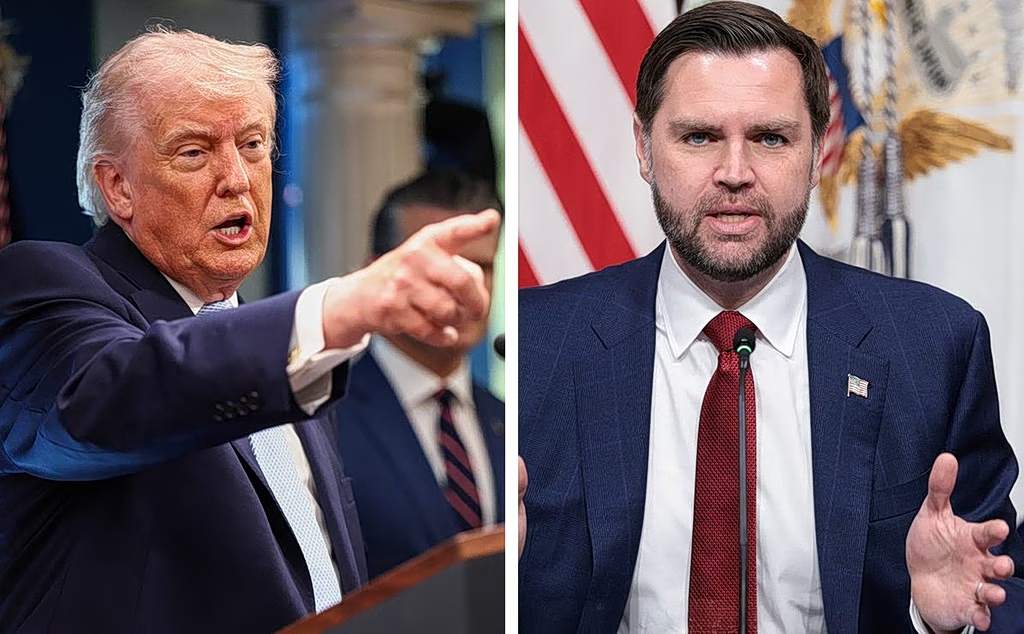
Vice President JD Vance stated that the United States is pressing Pakistan and Qatar to allow the memorandum of understanding to be made public within the day, in order to give a clear picture of its contents.
“They’ve asked us not to release the text for a little while longer; it will be released by Friday at the latest. We’re actually trying to pressure them to release it today, because we want to tell the American people that this is essentially a good deal for them,” Vance said on CBS.
Vance added that the delay is due to “diplomatic protocols” requested by the Qataris and Pakistanis, which he said he does not “fully understand.” CNN reported that it has obtained a draft of the memorandum, though it remains subject to changes.
Trump said at the G7 that “the text is not final” and disputed some of the details that have already been made public. Vance meanwhile told the Megyn Kelly Show that the Pakistanis and Qataris asked the United States to “handle the matter the right way,” citing “sensitive issues in the Arab and Muslim world.”