 Μake us preferred on Google
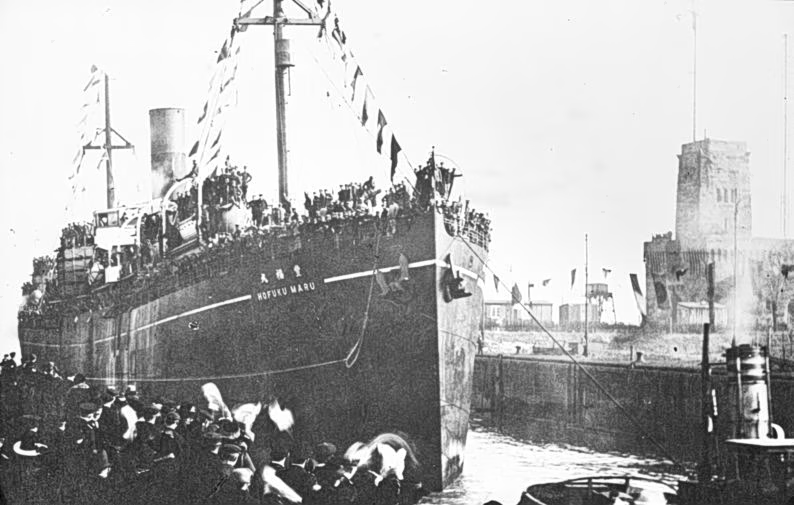
 The wreck of a Japanese prison ship that was sunk by American warplanes in 1944, with more than 1,000 Allied prisoners of war on board, has been discovered in the Philippines.
The vessel was one of the notorious “hell ships” the Japanese used to transport prisoners of war between camps.
Many of the prisoners who perished when the ship went down had been forced to work on the infamous Death Railway between Burma and Thailand.
“Unfortunately, many of these prisoner transport ships were sunk by the Allies,” said Josh Gates, the expedition leader and American television host, in a statement to Live Science. “The ships were painted to look like military vessels and were positioned within Japanese convoys, so the Allies believed they were legitimate military targets.”
Gates worked with the Hellships Memorial Foundation, a U.S.-registered nonprofit based in Subic Bay in the Philippines, to investigate the sinking of the hell ship Hofuku Maru. Its wreck had never been located, possibly because researchers had been relying on inaccurate American records and were searching much farther north, he explained.
Japanese wartime records, however, were more precise about the ship’s location, which helped the team pinpoint the remains of the Hofuku Maru in January.
Since then, the team has conducted five dives on the wreck, which lies a few miles off the western coast of Luzon, the Philippines’ main island, at a depth of roughly 160 feet (50 meters).
Prison Ships
Japan used more than 130 hell ships during World War II, but the wrecks of only a few have been found. Many of these vessels, including the Hofuku Maru, were converted cargo ships.
The Hofuku Maru was used as a prison ship from 1942 until it sank approximately two years later.
Gates noted that the ship was part of a Japanese military convoy sailing from the Philippines toward Japan when it came under attack on September 21, 1944. American warplanes spotted the convoy, and one of them fired a torpedo that split the Hofuku Maru in two. The ship sank quickly.
It was carrying approximately 1,200 Allied prisoners of war from the British and Dutch armies, many of whom had been forced to labor on the Death Railway. Some managed to swim to shore, but were recaptured by Japanese forces. Around 1,040 people lost their lives in the sinking.
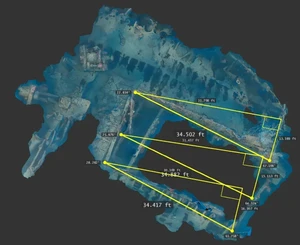
Underwater drone mapping has identified three separate sections of the wreck.
Prisoners of War
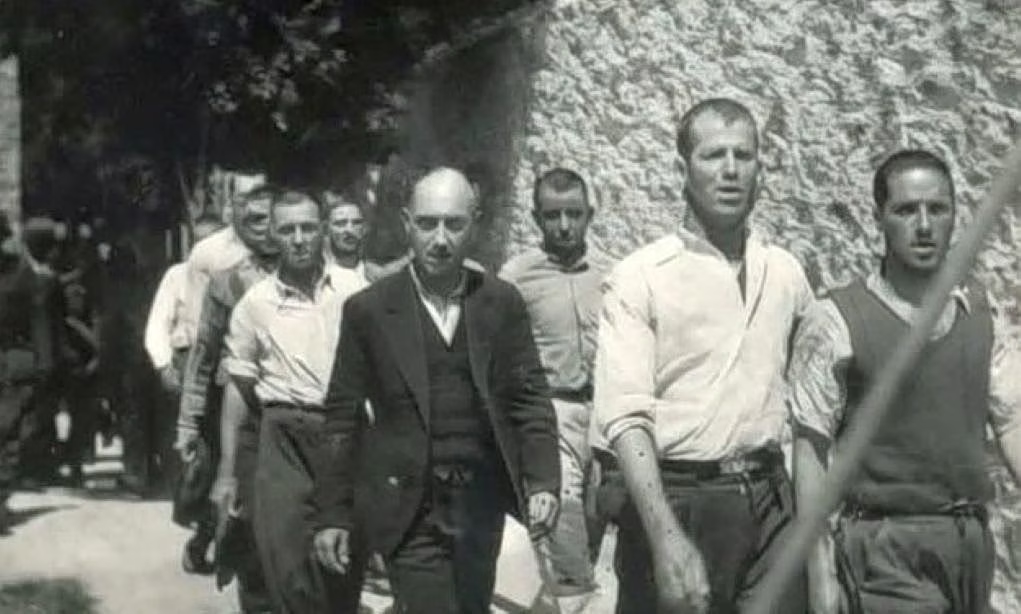
The 1929 Geneva Convention imposed strict limits on the use of prisoners of war as labor, but Japan was known to violate those rules during World War II, claiming it had never ratified the convention and that wartime conditions made prisoner labor essential.
Japan used POWs for forced labor on railroads and docks, as well as in factories and mines. Of the roughly 132,100 prisoners captured from the armies of the United States and the United Kingdom, nearly one third of them — approximately 35,000 people — died from exhaustion, malnutrition, and disease.
Gates noted that the Japanese ships used to transport thousands of prisoners between labor camps were miserable places in their own right: there was barely any light, air, or food, and prisoners could be held there for months.
Human remains have been identified at the newly discovered wreck, which will now be treated as a war grave, he added.
The team initially located the wreck using sonar, then dove to identify structural elements that confirmed it was the Hofuku Maru. They also mapped it using a remotely operated underwater vehicle, which helped them determine that the ship had broken into separate sections, exactly as accounts of the sinking had described.
The Hellships Memorial Foundation will now work to locate the families of the victims, Gates said.