 Μake us preferred on Google
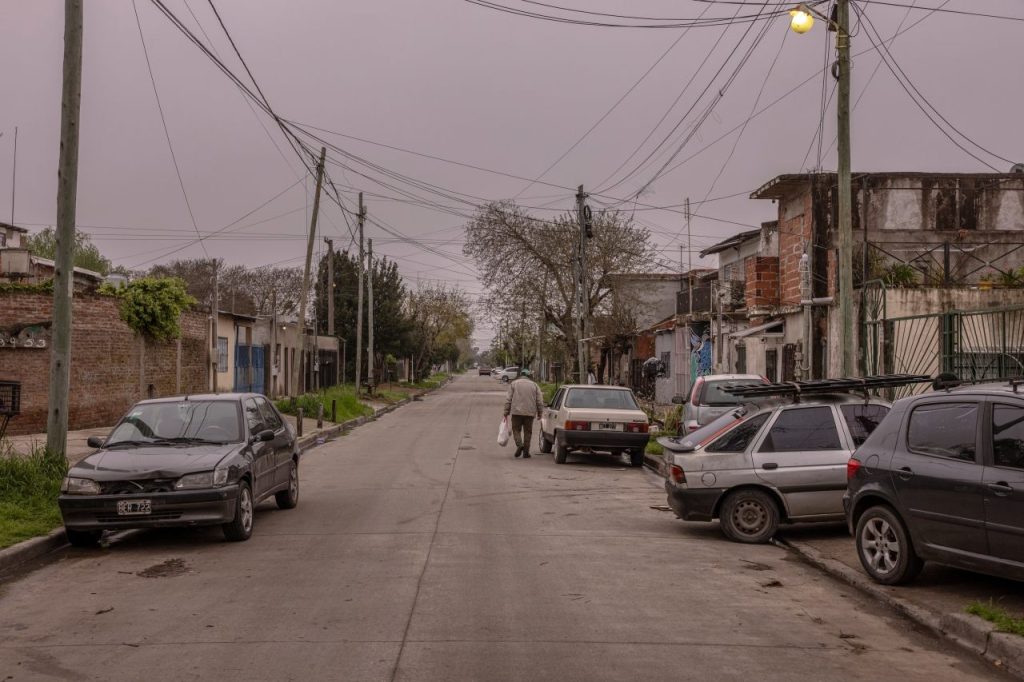
 BUENOS AIRES—For decades, the poor suburbs that ring Argentina’s capital Buenos Aires powered the leftist Peronist movement. On Sunday, they made a historic shift against Peronism that propelled President Javier Milei to a surprise victory in midterm congressional elections.
The Argentine poor whom Eva Perón lionized as the country’s heart and soul largely stayed home in a stinging rebuke to the Peronist movement that has dominated politics here for 80 years. At the same time, middle-class voters mobilized to rescue Milei and his free-market revolt .
With the promise of a $40 billion bailout from President Trump behind him, Milei gave voters a choice: stick with his brand of self-described “shock therapy” for Argentina’s ills or face the familiar economic ruin seen under the Peronists in the past.
“Trump was important in consolidating the anti-Peronist vote,” said Joaquín de la Torre, who represents a conservative neighborhood organization in the provincial legislature. “The future of the economy emerged as the main issue.”
Milei, a wild-haired libertarian economist who won a shocking victory in 2023, beat out the Peronists in their stronghold of Buenos Aires province, winning by less than 1 percentage point. Nationwide results gave Milei 41% to their 32%. He got an unexpectedly strong mandate to overhaul an ailing economy with the financial firepower of the Trump administration.
Milei’s radical economic changes are now more likely to get a strong U.S. backstop. The Trump administration offered Argentina a $20 billion currency swap this month to prop up Argentina’s battered currency and promised to raise another $20 billion from private banks and sovereign-wealth funds, conditioning the $40 billion bailout on Milei’s success in the pivotal midterm elections.
Milei’s Freedom Advances party played on voters’ fears of a potential return of the Peronist movement, warning Argentines that a vote for the left was a vote for higher inflation, a tanking peso and even more financial turbulence.
The victory was stunning because, less than two months ago, Milei’s party lost by almost 14 percentage points in local elections held by the Province of Buenos Aires, the Peronist stronghold that is home to half of the country’s poor and 40% of Argentina’s electorate.
But rather than set up the Peronists for another win, it scared enough people to come out to vote against them seven weeks later, analysts said.
“Those who didn’t go out to vote were the disenchanted Peronists,” said Juan Negrí , head of the political science department at the Torcuato Di Tella University in Buenos Aires. “Low turnout favored the ruling party.”
Milei’s alliance with Trump was a risky strategy. When Trump first announced his bailout plans for Latin America’s third-biggest economy, he faced skepticism both at home and in Argentina. Many Argentines said they feared the country was ceding too much power to Washington. U.S. farmers also balked at the idea of propping up a major agricultural competitor. Others pointed to the irony of supporting libertarianism with a bailout from U.S. taxpayers.
But in Argentina, where almost one in three people lives in poverty, it paid off. Voters said they had more urgent concerns, namely feeding their families.
“People were terrified,” said Laura Amoedo, a retiree who helped out at a polling station in Buenos Aires province on Sunday. Voters didn’t want to see the Peronists back in power, she said.
Investors rewarded their decision, piling into Argentina’s assets Monday. Argentine stocks and sovereign bonds surged and the peso strengthened against the dollar after weeks of volatility over concerns about Milei’s ability to overhaul the economy and fight inflation, a crucial issue for voters.
Milei and his party have now emerged with a renewed mandate, said Kathryn Exum, co-head of sovereign research at Gramercy Funds Management, which manages about $7 billion in emerging market assets. “The initial market reaction has been rightly quite constructive as electoral risk is removed and the governability outlook has improved,” she said.
On the campaign trail Milei, who fronted a short-lived band in his teens, took to the stage and improvised as a rock musician. He appealed to voters to leave the “cockroach risk” behind, referring to the Peronist movement and the vested interests that emptied government coffers.
If not, Argentina could end up like Venezuela or Cuba, he said.
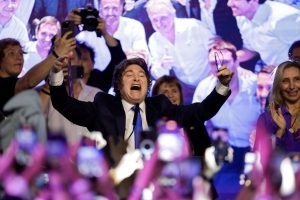
“The entire country chose to irreversibly change the destiny of the nation,” a jubilant Milei told a crowd of supporters late Sunday.

Argentina’s President Javier Milei speaks after the La Libertad Avanza party won the midterm election, which is seen as crucial for Milei’s administration after U.S. President Donald Trump warned that future support for Argentina would depend on Milei’s party performing well in the vote, in Buenos Aires, Argentina, October 26, 2025. REUTERS/Cristina Sille
His decisive victory can open the doors to alliances with non-Peronist forces to fix Argentina’s dysfunctional economy, analysts said. So far, Milei has largely acted as a lone wolf, ruling by executive orders and making little effort to build a multipartisan congressional coalition.
“It’s an unbeatable situation for Milei,” said Negrí, the political scientist. “He shouldn’t waste this opportunity.”
Over decades, Peronism built up strong loyalty and territorial control in the province by forging close ties to organized labor and grassroots organizations, handing out pensions for retired manual laborers and stipends for young mothers.
But this time around, Peronist mayors and grassroots activists known as “point men” made little effort to persuade swaths of their most loyal working-class voters to go out to vote. They had little incentive because they had secured their jobs in September’s local election, which was moved ahead of the congressional elections.
“They decided not to spend their political capital,” said Ernesto Calvo, who tracks Argentine polling data at the University of Maryland.
Mobilizing working-class voters by deploying thousands of vehicles can be expensive for the Peronist political machinery, said Rodrigo Zarazaga , a Jesuit priest who has worked as a chaplain for decades in the slums of Buenos Aires province. “Local leaders spend money when their governability is at stake,” he said.
The poor performance of the Peronist movement is likely to widen cracks between former President Cristina Kirchner, who is now serving a six-year house arrest sentence for corruption, and Axel Kicillof , the leftist economist and governor of Buenos Aires province.
Kicillof said that Sunday’s outcome didn’t represent a blank check for Milei at a time when many impoverished Argentines are suffering and businesses are closing because of his austerity policies.