
 Μake us preferred on Google
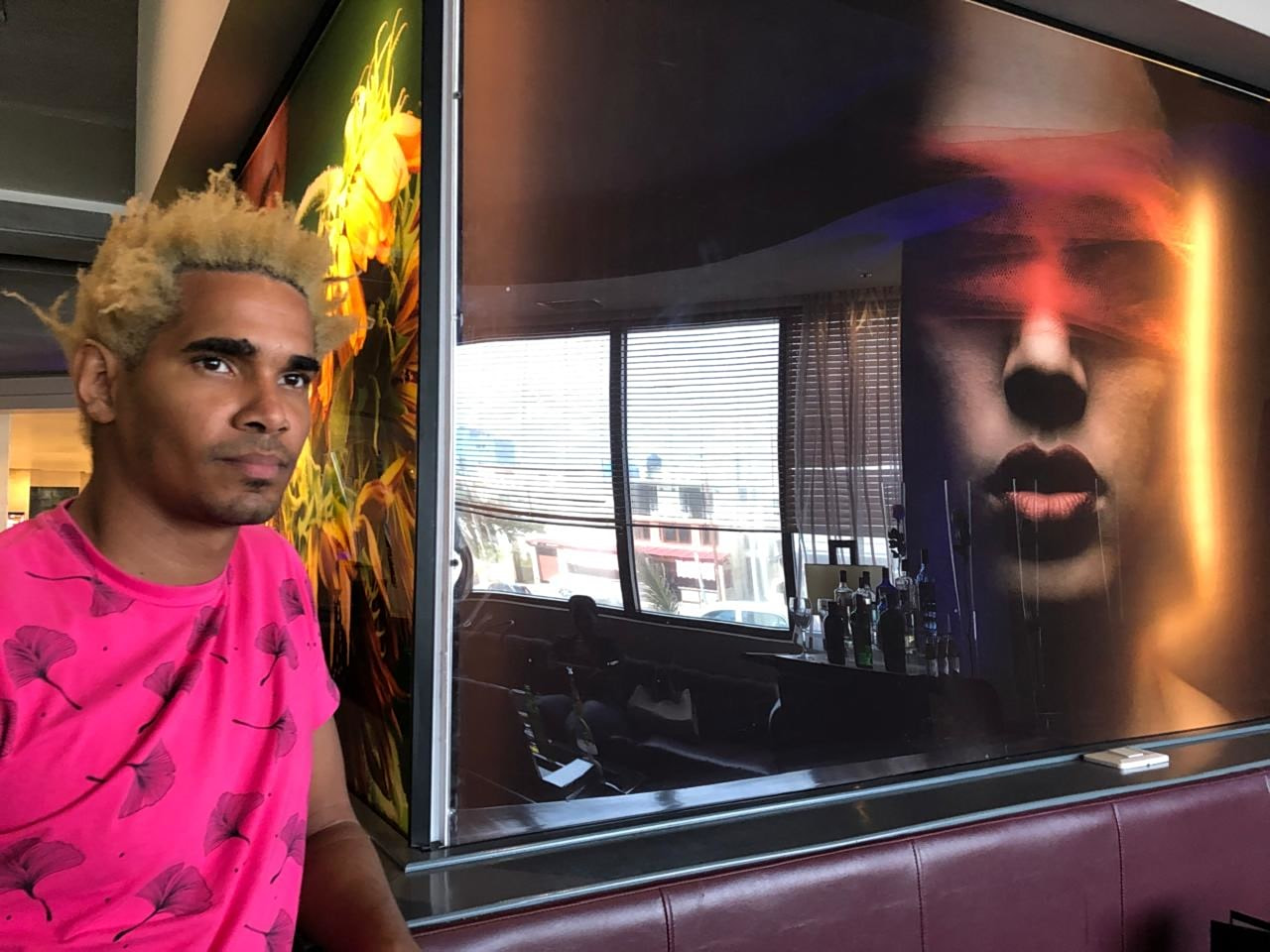
 Five years ago, Cuban rapper Maykel “Osorbo” Castillo co-wrote a song called “ Patria y Vida ,” or “Fatherland and Life,” that became an anthem for the youth protests that rocked the island that year. It went on to win two Latin Grammy awards .
It also landed him in prison, where he was joined a short while later by his close collaborator, performance artist Luis Manuel Otero .
They are among the roughly 1,200 political prisoners who are a bone of contention between the U.S. and the communist regime as Washington presses its oil blockade and President Trump threatens to take control of the island. More people could join them behind bars as Havana, which denies holding political prisoners, intensifies its crackdown on protests and dissent as living conditions collapse.
The fate of Castillo and Otero and others like them has grown in importance to both the U.S. and Cuban governments as the standoff drags on. The two, well known in Cuba, are the face of resistance to the regime. While their persecution has been an issue for years, they recently gained resonance because the Trump administration made the liberation of political prisoners a condition to ease its pressure on the Cuban government as it pushes Havana to implement deep economic and political changes.
In April, for instance, the Cuban government sent security agents with an offer the two couldn’t refuse: stay in prison or go into exile, people close to them said. Castillo and Otero agreed to exile, but the government has yet to make a move.
The two Black Cubans, self-taught artists from the crumbling and densely populated colonial heart of Havana, are the face of an art movement that inspired the largest peaceful protests in the regime’s history. They broke the barrier between art and civic action, linking freedom of expression to longstanding demands for civil liberties for the general population in a country where surveillance is pervasive.
“They are the street,” said Alejandro de la Fuente, a Cuba expert at Harvard University.
Castillo and Otero are among the founders of the San Isidro Movement, a collective of rappers, poets and visual artists who began to demand freedom of expression in 2018, when the government issued rules to determine who was an artist and what was art. Known as Decree 349, the rules made it illegal for artists not vetted by regime commissars to sell their work or perform. It was the first executive order signed by Cuban President Miguel Díaz-Canel , who had just taken office.
Known for their in-your-face and irreverent work, the two staged vigils and put on street performances mocking the government. They tapped into the island’s deep, syncretic, Afro-Cuban culture, criticized harsh living conditions and gave voice to people’s resentment of daily censorship and the pain of families whose loved ones emigrated.
When the Cuban authorities allowed cellphones to connect to the internet in 2018, they posted their material and performances on social media, raising their profile and spreading their message.
The rapper and artist went a step further a few months before the 2021 protests.
After eluding security officers who routinely followed them, they met in an abandoned house in Havana and tapped into a power line to turn on the lighting and video recording equipment smuggled in by a friend to tape a song. In Miami, Yotuel, the rapper and founder of Cuban group Orishas, coordinated production, stitching together images recorded by rappers in both cities to give birth to “ Patria y Vida ,” a direct challenge to the regime’s decades-old slogan of “Patria o Muerte ”—“Fatherland or Death.”
The song became a viral sensation, and the anthem of mass protests that erupted that summer. “ Patria y Vida ” was immediately banned by Cuban authorities. People still risk arrest and fines if they are caught playing it.
Castillo has been in prison since May 2021 on charges of contempt and public disorder. Otero was arrested weeks later, when he was on his way to protests after he called on social media for people to join him on the Malecón, Havana’s iconic seafront avenue. Both already had been arrested dozens of times for their performances.
“Otero is the new face of the Cuban transition,” said Ernesto Fundora , a Cuban filmmaker who directed “We Are Connected,” a documentary about Otero. “He represents the last generation that fought for a peaceful reform.”
Prison hasn’t silenced them. Otero has continued drawing and painting, producing hundreds of artworks. Castillo has composed and recorded dozens of rap songs.
“Prison changed everything for me,” the 38-year-old Otero said in a written response to questions from The Wall Street Journal. He said that he hopes to be released in July, when he finishes serving his five-year sentence for contempt, public disorder and desecrating national symbols.
“The regime is an illegal system that simply kidnapped and imprisoned me,” Otero said. “By virtue of its power, it has kept me behind bars for five years, and they could extend my confinement without justification.”
Castillo, 43, was sentenced to nine years for contempt, assault, public disorder and desecrating national symbols. He had been in and out of jail since he was a child, said Anamely Ramos , a Cuban activist and close friend who talks to him regularly. Having had a hard life, Castillo tends to be pessimistic, Ramos said.
“The government had the option to send me into exile from the beginning, and as we know, that hasn’t happened. So I don’t think it will happen now,” Castillo said in response to questions from the Journal.
In a recording that he sent to Ramos from prison, Castillo sang in Spanish:
I knew the dictatorship like no one else, undefined I endured brutal beatings like no one else, undefined I never asked why my warriors left, undefined I simply stayed in my homeland to endure the blows.”
Activists who have spent several years behind bars in Cuba say being imprisoned for so long leaves a permanent scar.
“It’s a wound that marks you for life, especially if you go to prison without committing a crime,” said Alejandro González Raga , founder of the Cuban Observatory of Human Rights who was jailed for five years on the island and now lives in Spain.
As tensions rise and living conditions continue to deteriorate, the Cuban regime fears that the two men who have resonated with the country’s most disenfranchised youth could channel rising anger into collective action, said Coco Fusco, a New York-based artist and writer who is in constant touch with Otero.
“They are being punished for putting popular discontent into words that every Cuban understands,” said Fusco.
Write to José de Córdoba at jose.decordoba@wsj.com and Santiago Pérez at santiago.perez@wsj.com