 Μake us preferred on Google
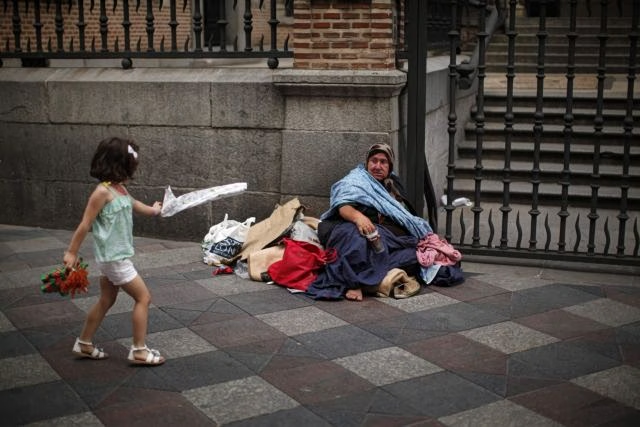
 Around two million people in Greece are currently at risk of poverty or social exclusion, according to figures from the Hellenic Statistical Authority (ELSTAT), highlighting the continued impact of rising living costs on households across the country.
Data covering the period from 2015 to 2025 shows that the share of Greeks facing the risk of poverty or social exclusion remained high over the past decade. The rate stood at around 32% between 2015 and 2017, improved to approximately 27% between 2017 and 2019, and remained at similar levels in the years following the COVID-19 pandemic.
In absolute numbers, around 800,000 households in Greece are currently living below the poverty threshold, affecting approximately two million people.
Who is most affected
The groups facing the highest risk include:
- Children under the age of 15
- Women
- Older people
- Residents mainly in Central and Northern Greece
The financial pressure has been intensified by increases in the cost of food, energy and housing, according to estimates cited by Professor of Medicine at the National and Kapodistrian University of Athens, Athina Linou.
A person living alone may require between €950 and €1,400 per month for a basic standard of living, depending on their location and whether they own a home. For a four-member family, the estimated monthly amount rises to between €2,400 and €2,700.
Minimum wage falls short of basic living costs
The current minimum wage is estimated to be around €200 below the lowest level needed for basic living expenses. The same income level also applies to newly appointed professionals, such as teachers.
For families with children, a worker earning the minimum wage would need approximately three times that amount—equivalent to three minimum salaries—for the household to live with basic financial security.
Calls for new social measures
Several proposals have been discussed to ease pressure on households, including reducing VAT on food products, lowering fuel taxes and making greater use of available public funds to support society.
At the same time, Professor Linou argues that innovative social policies are needed, including the introduction of free universal meals for all students in public schools.
According to the Organization for Economic Co-operation and Development (OECD), school meal programs represent one of the largest social safety nets worldwide, reaching hundreds of millions of children. Research has linked free school meals with improved educational outcomes, reduced social inequalities and better health indicators.
School meals as a social safety net
Studies cited in the article suggest that universal school meal programs can help reduce household food expenses, particularly benefiting vulnerable families. They may also contribute to reducing childhood obesity, improving long-term health outcomes and increasing children’s future earning potential.
The estimated return on investment for such programs ranges from 4:1 to 7:1 for every euro of public spending, according to research cited by Professor Linou.
She stressed that hundreds of thousands of Greek children currently live below the poverty line and that many families struggle to secure even basic nutrition.
“Two million Greeks living below the poverty line in today’s Greece is not acceptable,” Linou said, arguing that targeted and socially focused policies could significantly improve the current situation.