 Μake us preferred on Google
 GOING TO DINNER at David Geffen’s house has never been a typical evening. He lives in a 19,000-square-foot mansion above Sunset Boulevard, in a home filled with original art. The screening of a newly released movie might follow dinner held at a table where diners are surrounded by his trophies, which have included an iconic David Hockney painting, worth tens of millions of dollars, depicting a splash breaking the surface of a Los Angeles swimming pool.
Yet guests to Geffen’s home in recent years had found themselves whispering afterward about something stranger than infinity pools or artistic masterpieces—a declaration of Geffen’s own, repeated over and over again.
He was in love.
This from a man whose reputation in business was one of complete ruthlessness, who was once called the “merciless Macbeth” of Hollywood’s “gay mafia” and who one ex-girlfriend (Cher) described as being able to “out-yell” anyone.
“Kind of stunned me,” says Carole Bayer Sager, a friend of Geffen’s for more than 50 years who knows something about the emotion—she helped write the songs “Nobody Does It Better” and “A Groovy Kind of Love.” “At that point in his life…. It was a surprise. And he was happy.”
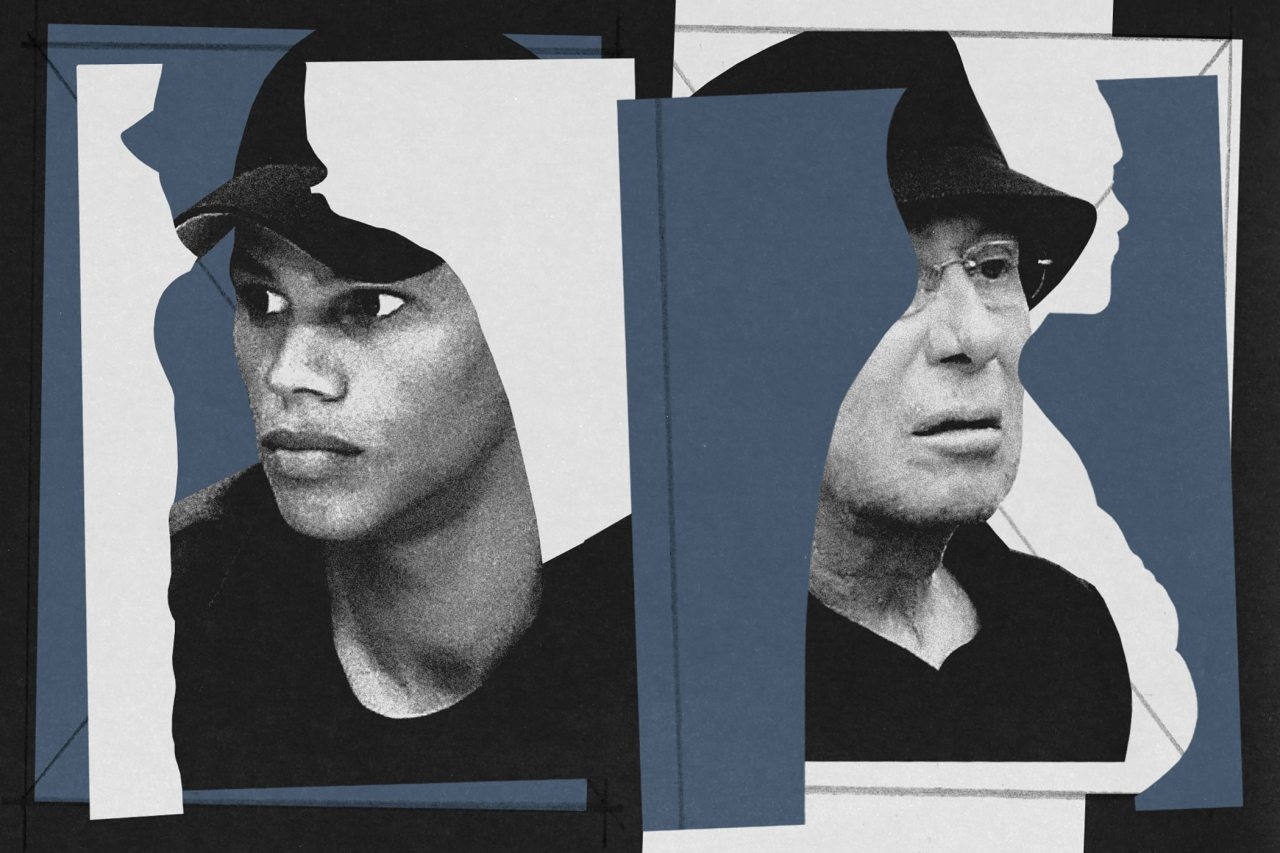
The object of the billionaire’s affection: Donovan Michaels, a handsome model 50 years his junior who says they met in late 2016. When they first got together, Michaels was described as Geffen’s personal trainer, eliding what Michaels would later claim in legal filings were the actual details of their first date: a sexual encounter, arranged through a website, that cost Geffen $10,000. Over the course of a relationship that culminated in a marriage of just under two years, Geffen told old friends he was crazy about the guy. When Michaels was out of town, Geffen counted down the days until he returned.
They’d first met when Geffen was in his 70s, a retired entertainment legend coasting on a vast fortune that he was giving away to cultural institutions from New York’s Lincoln Center to the Los Angeles County Museum of Art. Michaels, in his mid-20s and only a few years from an adolescence as one of 16 kids, raised in a depressed Michigan town, joined the rarefied world of Geffen’s golden years, a youthful injection to dinner tables that gathered the country’s most famous people—Bruce Springsteen, Oprah Winfrey and Paul McCartney among them.
Then, this summer, Geffen filed for divorce—the documents revealing, for the first time, that the couple had not secured a prenuptial agreement. Since then, the dispute has exploded into a public he-said, he-said dispute over matters small (Michaels’s ingrown hairs) and large (who gets what of Geffen’s $9 billion).
Michaels didn’t comment. Reached for this story, Geffen replied: “I have no interest in talking to you.” The two men have since traded claims in court—with Michaels depicting the marriage as a twisted power play by Geffen that collapsed when he got sober, and Geffen rebuffing that dynamic and saying the relationship ended with Michaels’s exorbitant spending and drug use.
Today, as in the Hockney painting, the placid waters that Geffen had maintained in his later years have been hit with a splash, one that threatens to warp a legacy built over eight decades. This is the love story of two men—one a late-in-life billionaire who believed he’d found someone to sail the world with, and the other a much younger man whose arrival capped a Horatio Alger–esque tale of Rust Belt towns, gay-for-pay porn and what he says were promises, which Geffen disputes, to take care of each other forever.
WHAT BEGAN as a routine divorce announced through cursory public filings is now a high-stakes game of chicken. Family members, business associates and longtime friends of both men say they are astounded to watch this unfold.
Because until the events of this summer, no one had retired into tranquility quite like David Geffen. Now 82, he has spent the past decade cruising the world on Rising Sun , a 454-foot-long super-yacht with a basketball court, wine cellar and crew of 45. Geffen’s public Instagram shows off his various friend groups (Bradley Cooper and Lloyd Blankfein) and vintage moments from his career working alongside legends in pop music (Michael Jackson and Liberace).
The good life had followed a career marked by insatiable ambition. He’d grown up in Borough Park, Brooklyn, the second son of Jewish immigrants. His mother supported the family and even put her husband to work sewing custom-made bras for the local community. She loomed large, an eccentric who corrected the posture of strangers and eventually required institutional help for delusions, according to The Operator , a biography by the late Wall Street Journal reporter Tom King.
Geffen was the favorite of her two boys—she called him “King David,” but the myth she ascribed to him was of different royalty: King Midas. Misdeeds were forgotten, like the time he stayed at a theater to watch Singin’ in the Rain so many times she reported him missing.
After graduating from high school, he left New York for Los Angeles so quickly he didn’t bother to pick up his diploma. A young boy in a hurry, Geffen lied his way into the mailroom at the William Morris Agency, according to the biography, telling its manager that he was record producer Phil Spector’s cousin (he wasn’t) and that he had graduated from UCLA (he hadn’t). Wealth was the goal—when his father died, Geffen spent part of the funeral pointing out to his brother that those passing their funeral limousine would assume the passengers inside were rich.
Then, the 1970s. When you fill in the mental soundtrack of the decade, it’s likely led by an artist Geffen helped become an icon: the Eagles, Joni Mitchell, Bob Dylan. A career in the star-making machine translated into broader cultural and political power. He released John Lennon’s last album three weeks before the Beatle was killed, co-founded the studio behind American Beauty and helped Barack Obama’s presidential campaign against Hillary Clinton gain much-needed credibility with an early endorsement.
Along the way, Geffen became known to the public, and the inspiration for songs of the era, like Joni Mitchell’s “Free Man in Paris,” whose title character feels liberated in France, far from the phone calls and obligations back home.
“There’s a lot of people asking for my time / They’re trying to get ahead / They’re try- undefined ing to be a good friend of mine,” the song’s subject sings.
Geffen was part of a fraternity of gay men who operated in Hollywood from closets of one size or another, though his was roomier than most. He’d first noticed he was attracted to boys when he was 15, the time of Rock Hudson and the Lavender Scare, and later told his biographer that when asked the question, “Do you have any homosexual tendencies?” he answered yes to avoid being drafted in the Vietnam War.
In 1992, at a fundraiser for a Los Angeles–based AIDS organization, Geffen took the stage wearing tennis shoes. “As a gay man, I’ve come a long way to be here tonight,” he said in a public coming-out that prompted cheers from the crowd.
The audience had just spent much of the past decade trying to get Ronald Reagan to even acknowledge the disease wiping them out. Geffen took the stage with 341 Rolodex cards wrapped in a rubber band—each bearing the contact information for a friend who had died of AIDS.
Friends would meet boyfriends over the years—President Obama met one in 2009, when Geffen took Jeremy Lingvall, then 26, to a state dinner.
Few knew he’d met someone new until Christmas Day 2022, when Geffen posted a photo of himself on a boat under the arm of a tall, strapping model named Donovan Michaels, whose wide stance led the eye to a prominent bulge in the bottom right corner of the frame. Geffen sat under his right arm. “Merry Christmas indeed!” his caption read.
At 79 years old, the don of the gay mafia was settling down. Who was the mystery man?
BEFORE HE STARTED calling himself Donovan Michaels, Donovan Michaels was a young boy named David Armstrong, born into a troubled home in Port Huron, Michigan. As a youth, Michaels was moved to an adoptive home in a small town 36 miles away called Imlay City.
Conversations with family members and neighbors who knew him there paint the portrait of a childhood that didn’t venture far from city limits. He would spend much of his first 20 years in that small town—a place of factory jobs, coin laundry and tractor-pulling contests.
He was among the first children adopted by Patrick and Wendy Armstrong, a Christian couple who, over time, would house 16 biological and adopted kids of various ethnicities. They crowded into a house on Main Street, where three corroded ceiling fans now spin on a front porch and where the steps sag with rot.
Mom worked as the church music director in a town where the Vlasic pickle factory sometimes still makes the whole area smell like sauerkraut. A diverse family with 16 kids would have stood out in any town, let alone one with a population of 3,700 with few Black residents. Everyone knew the Armstrong kids, who arrived at church in an 18-passenger van and sang gospel songs on the local Christian radio station—few more passionately than Michaels. Years later, an elderly neighbor’s eyes would light up at the mention of his name. He was the kind of kid, she says, who “wasn’t shy about talking about the Lord.”
Certain childhood rites weren’t permitted in the Christian home. As a teenager, Michaels was ordered to take down a bedroom poster of a woman in a bikini. Halloween wasn’t celebrated most years—though when it was allowed, Michaels and his siblings would dress as characters from Star Wars, with him starring as Yoda. Michaels’s younger brother Chaz Armstrong looked up to him—the cool older brother with Michael Jordan posters on his wall and a reputation as a ladies’ man. “It always came to him, or he went and got it,” says Chaz, remembering his brother’s ability to charm. “He’s like a magnet.”
Michaels’s brothers remembered he got in trouble as a teenager, enough to cycle through a boys’ home, but he managed to graduate from high school. He was then free to leave an adopted hometown that itself had been founded, in 1870, as a midpoint between larger cities. He left for Florida.
“This was too small-town for him,” one of Michaels’s younger brothers, Moses-Michael Armstrong, says as he sips a Powerade over a break from a job handling home repairs on a muggy summer morning. He hadn’t gone far—the house was down the street from his parents’ place.
Around the time Michaels left Imlay City, he boasted online of the new life he wanted to create for himself.
“Crazy thing is most people can’t even fathom that where I know I’m gonna be is even possible, but then again they’re not about that lifestyle either,” he wrote in a Facebook post in October 2014. Six days later, he posted a new update: “Millionaire at 25.”
In Florida he found work in nightlife—he was already uncommonly handsome as a teenager, and his physique in Miami tightened into airbrush proportions. After moving to New York, he found sporadic work as a model, posing in a 2016 spread for BuzzFeed titled, “We Gave Adoptable Dogs to These Hot Guys and This Is What Happened.”
His more discreet work was done under yet another name—Brandon Foster, which he used for work with the Randy Blue gay porn production studio. Randy Blue’s models are often toned to perfection, starring in scripted fantasies that turn hardcore. Michaels starred in a few videos released in 2014 and 2015, at least two featuring sex scenes with co-stars. In one video, his character, “Straight Stud Brandon,” helps a friend, Zane Porter, with workout tips before the two end up having sex in the weight room. For years after, fans on message boards swapped rumors on what had happened to Michaels after he stopped making videos. They scoured his social media for clues.
“I think he might have gotten a rich gay to be his boyfriend because he’s been on private jets recently lol,” noted one commentator.
MICHAELS HAD INDEED found a rich boyfriend.
According to Michaels’s complaint, the relationship began on SeekingArrangements.com, which he joined shortly before receiving his first message from Geffen. Their first night together cost Geffen $10,000, the complaint alleges. Not long after that, Geffen asked Michaels to get a passport so he could more easily join him and the jet-set crew aboard Rising Sun , where a month before the couple’s meeting Geffen had hosted Disney chief executive Bob Iger and Tom Hanks. The yacht became a second home, one with an estimated value of $400 million. (According to Redfin, the total proceeds from the 1,361 homes sold in Imlay City since 1992 equal less than half of that—$179 million.)
In March 2023, they got married in a small ceremony in California. As newlyweds, they dined with Kris Jenner at Funke in Beverly Hills, sat courtside with Elon Musk at an NBA playoff game and hosted Mariah Carey for a party.
The Armstrong siblings, now out of the house and scattered across the country, kept in touch with one another on group text threads. The news that Michaels had married Geffen was difficult to process, since it carried three concurrent revelations: that Michaels was married, that he was married to a man and that he was married to a very rich man . They didn’t seem to know who David Geffen was before learning he was their in-law.
In Imlay City, where it’s hard to drop by for a visit without neighbors noticing, word of Michaels’s new life spread in whispers. “Everybody wants to know why I’m broke,” says Moses-Michael.
What he and his siblings knew of their brother’s life, they pieced together from news reports and the photos he shared, like the one snapped in France in early 2022, not long before he and Geffen would announce their relationship. He wears a white fedora and lounges in a park near the Eiffel Tower. A free man in Paris.
FRIENDS WHO SPENT TIME with both men during their marriage struggled to describe their dynamic, saying Geffen was smitten and Michaels was amiable and charming. One drew a contrast between the easy demeanor of the two men and Geffen’s more biting relationships with friends who needled him, like the late writer Nora Ephron. There was no such tension here.
Their divorce was as surprising to some as their marriage had been. The couple quietly separated in February, according to Geffen’s divorce filing, a week after Valentine’s Day. Geffen filed for divorce in May.
The situation escalated in July, after Michaels rejected a financial offer from Geffen. He sued Geffen in a legal filing that included alleged personal details that Geffen’s allies have interpreted as blackmail for a bigger payout. The suit was not over the division of property, as is most common in a divorce. It was instead a breach-of-contract accusation that claims Michaels is entitled to financial security since Geffen promised it to him while the men were married. A person close to Michaels claims such a conversation did take place—to the point that Michaels challenged Geffen upon learning he didn’t plan to leave him the yacht. Geffen, claims Michaels, said he wouldn’t want such a “money suck.”
“Geffen never promised to share ownership of any assets” with Michaels, his attorneys said in the filing, and his financial managers could attest that Geffen never mentioned such an intention. “Simply put, there were no promises.”
The denial of any financial promise was part of a broader rebuttal to Michaels’s claims filed by Geffen’s attorneys in August. The competing complaints, along with conversations with people close to the men, compose opposing views of the short-lived marriage.
In Michaels’s version, Geffen used him as a prop in a “theater of virtue” that traded on his poor upbringing as karmic currency. Behind closed doors, Geffen insisted on an intense sex life in which he “gained satisfaction from causing pain,” the latest complaint alleges, insisting on total dominion over the poor Black boy he’d rescued. He molded Michaels in his image, paying for painful dental surgery and laser treatments that kept his skin nubile. “The existence of an ingrown hair was enough to raise Geffen’s ire and trigger a flurry of instructions to correct the imperfection,” alleges Michaels.
Michaels says he wanted to pursue a career, only to have Geffen say there was no need for him to work, and he was left to manage Geffen’s various properties as a glorified house husband. When Michaels, newly sober, started to assert his own independence, he says Geffen couldn’t handle the shift in power dynamics.
“He wanted to be the savior, the white knight, and the ‘top,’ ” the complaint reads.
In Geffen’s version of events, Michaels was treated like a king, even as he took advantage of his kingmaker. Geffen instructed his staff to give Michaels what he wanted, a generosity that Michaels exploited by spending hundreds of thousands of dollars on clothes, cosmetics and trips with friends. It was Michaels, not Geffen, who requested the painful dental surgeries and laser hair removal. Geffen was not the domineering spouse that Michaels describes, but one happy to let his husband have his independence: “The couple never spent a night in the same bed, let alone the same room.” Michaels passed much of his time in an apartment in New York that Geffen had initially purchased for his housekeeper. Any idea that Michaels helped manage Geffen’s homes is “laughable,” the attorneys added, considering how many people Geffen employs to do just that.
The end of the marriage, according to Geffen’s complaint, came not after Michaels received drug treatment and discovered a newfound independence. It came after Geffen and his staff made several discoveries: drugs in Michaels’s bedroom; exorbitant spending on OnlyFans subscriptions and male prostitutes; and “extensive relationships with numerous other people.”
There are several allegations made by Michaels that Geffen’s response didn’t address and that his legal team didn’t comment on, such as the initial meeting on SeekingArrangements.com.
FOR MONTHS it has been the lack of a prenuptial agreement, disclosed in the first divorce filings, that has occupied much of the public fascination with the case, since it seemed pro forma for a man of Geffen’s holdings. But legal experts say Geffen was right to assume that much of his estimated $9 billion fortune was protected in a divorce, since in California earnings that predate the marriage do not become communal property. Since Geffen’s income is now largely passive—in the form of investment earnings or interest—the argument goes that Michaels is not legally entitled to any of it.
But it has also left him open to the dispute he now finds himself in. After reading Michaels’s complaint, Geffen’s allies wonder why their friend—now in a chapter of his life where he is securing his legacy—would allow this man to sully it. They fear he has fallen prey to a talented Mr. Ripley who is willing to embarrass him to get a piece of his fortune.
Since Michaels and Geffen split up, the Hollywood set has been engaging in a kind of mental math, calculating what percentage of a $9 billion fortune it would take to make Michaels sign a nondisclosure agreement and retreat. Even $90 million is only 1 percent of $9 billion—cupholder change for a man of Geffen’s wealth—and $500 million doesn’t crack 6 percent. Either amount is a life-changing sum for anyone. Why doesn’t he just write a check?
To apply such rational thinking to the situation fails to appreciate the irrationality that can possess Geffen when he feels he has been wronged or treated unfairly, say friends. Furthermore, Geffen is retired and answers to no board of directors or shareholders who might want this to go away quickly.
The fight could end several ways: with a quiet settlement, more countersuits or even a jury trial to determine whether Geffen’s alleged promise for Michaels’s financial security entitles a big payout. Geffen’s friends say the months after the separation in February were tough—he didn’t want to leave the house. Now they read Geffen’s legal responses and observe he’s a man in steely “game on” mode. The same person who came out as gay when few would and endorsed Obama when the establishment steered clear seems to have little regard for what the public thinks of him.
Michaels’s family, meanwhile, has tried to protect him with a clan’s instinct. His biological mother and his adopted mother declined interviews, the latter saying, “He’s already hurting.” His brothers think back to the last time they saw him, in October 2023, when he came to town for a family reunion that gathered the band of adopted children, now adults, who’d bonded as the Armstrong kids.
It had been years since Michaels had been back to Imlay City. It was also seven months after he and Geffen had gotten married, but Michaels didn’t mention that—nor did anyone else at the party, even though some knew of the nuptials. Nonetheless, there were signs that more had changed for David Armstrong than simply his name. One brother noticed he was wearing “tight-ass jeans.” Michaels insisted on paying for professional catering and a troupe of Jamaican stilt-walkers and fire-eaters who took over the suburban backyard. Privately, Michaels shared that he’d wanted the performers there as a distraction if conversation with his family proved awkward.
For Chaz, who’d idolized Michaels as a boy, his older brother’s modeling gigs and big-city living seemed hard to picture.
“You got famous,” Chaz remembers thinking to himself as Michaels wrapped him in a hug. “Good for you.”
Chaz told him of his plan to become a police officer, and Michaels encouraged the idea, pointing out that it could lead to work in private security, too. As the evening wound down, Michaels had a final surprise for the Imlay City crew. He handed out small boxes wrapped in off-white paper and professionally tied with a brown bow.
Chaz didn’t know what was inside until he and his wife returned to the house they share with his mother-in-law.
“Your brother just gave me $1,000,” his wife told him. “And you have one too.”
Sure enough, inside his box was a prepaid gift card with $1,000 on it. Chaz did the mental math, calculating how many tens of thousands of dollars his brother must have spent on the piles of boxes he’d seen on the kitchen counter back at the party. He did mental math for his own household, too, on the groceries this windfall would help him buy.
Inside was a card from the brother he still called “David” by mistake.
“This is for you,” he remembers the note reading. “I love you guys.”
It was signed, “Donovan.”