President Trump has criticized Europe for staying on the sidelines in the Iran war. But many European countries are quietly playing a crucial supporting role.
While many European leaders have publicly decried the U.S. attacks on Iran, behind the scenes their military bases are facilitating one of the most logistically complex operations the U.S. military has been involved in for decades.
In recent weeks, U.S. bombers, drones and ships have been fueled, armed and launched via bases in the U.K., Germany, Portugal, Italy, France and Greece, officials say.
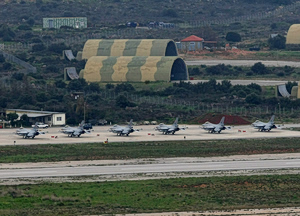
Attack drones are being directed from a sprawling U.S. base at Ramstein in Germany, the nerve center of America’s operations against Iran, according to German and U.S. officials. Heavy B-1 bombers have been photographed loading munitions and fuel at RAF Fairford in the U.K. The USS Gerald R. Ford, the world’s largest aircraft carrier, is currently docked at a naval base in Crete to undergo repairs after suffering damage from a fire.
U.S. Air Force Gen. Alexus Grynkewich , the North Atlantic Treaty Organization’s top military commander, said in recent Senate testimony that most European allies “have been extremely supportive.”
The continent, which is home to around 40 U.S. military bases and 80,000 U.S. service personnel, is a launchpad for U.S. operations in both the Middle East and Africa. “The distances are shorter, it’s less expensive, and it’s much easier to project power with our network of bases and allies,” he said.
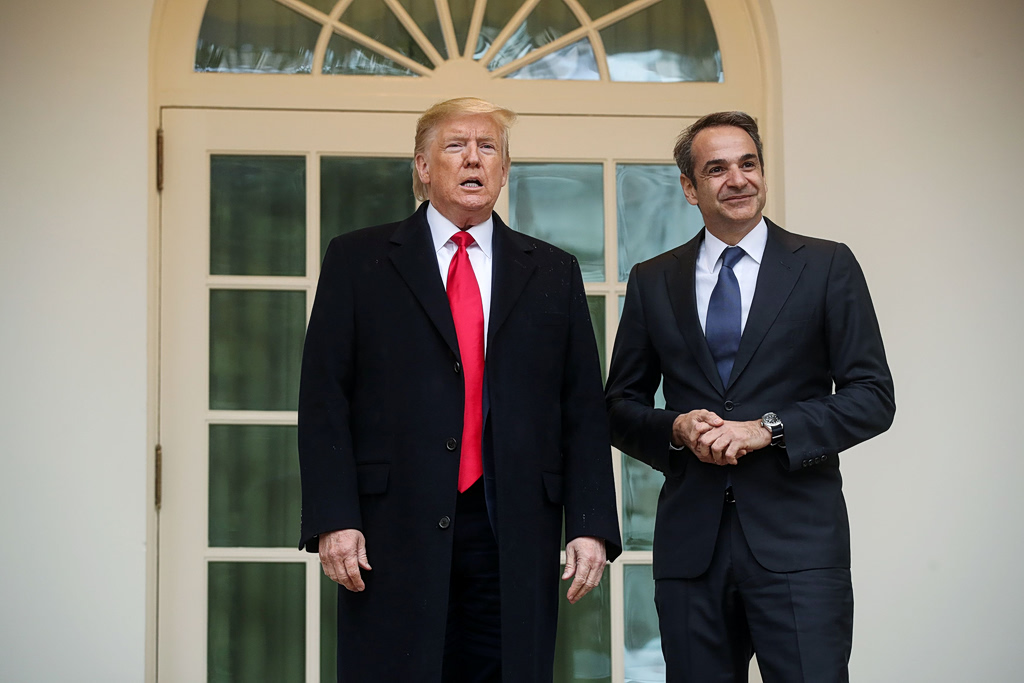
For years, Trump has berated his European counterparts for failing to invest in their militaries and hinted that America might pull support for NATO, including most recently when Europeans initially refused to answer his calls to escort shipping through the Strait of Hormuz . “COWARDS, and we will REMEMBER!” Trump posted on social media Friday.
Operation Epic Fury shows the price that America would pay if it fully withdrew its military presence from the continent.
While European militaries have shrunk since the end of the Cold War, they remain trusted allies. A network of bilateral agreements with European governments, largely forged during the standoff with the Soviet Union, allows U.S. ammunition, technology and personnel to be positioned at European bases.
“Europe’s location—at the intersection of Africa, the Middle East and Central Asia—makes it ideal for rapid deployment in all directions,” retired Maj. Gen. Gordon B. Davis , a former director of operations at U.S. European Command, told the Center for European Policy Analysis last year.
Bases in Europe house critical U.S. intelligence and reconnaissance capabilities. Aircraft can refuel and rearm on the ground, rather than flying many extra hours back to the U.S. The bases allow the U.S. to quickly detect threats headed toward the homeland, deter Russia and project force abroad, analysts say.
This setup has been stress-tested by the current conflict. European leaders are wary of being seen to directly support the war, which is driving up energy costs and proving deeply unpopular with voters. They also want to avoid alienating the U.S., which underpins their security.
So far, political dissent at the top hasn’t translated into operational constraint on the ground. The exception is Spain , which has denied the U.S. permission to use jointly operated military bases on its territory to attack Iran. Some U.S. aircraft stationed there have been relocated to bases in Germany and France instead.
British Prime Minister Keir Starmer also barred the U.S. from using U.K. air bases during the initial assault on Tehran. He later changed his position, saying the U.S. could fly “defensive” bombing missions to target Iranian missile launchers from both RAF Fairford and the Diego Garcia base in the Indian Ocean.
German officials have repeatedly stressed that the country isn’t participating in military action against Iran. Chancellor Friedrich Merz and Defense Minister Boris Pistorius have both ruled out direct involvement, emphasizing that “this isn’t our war.” Yet Germany hosts and facilitates the infrastructure that makes those operations possible.
Germany’s Ramstein Air Base, one of the largest U.S. bases in the world, is now a critical hub of the entire Middle East operation. Military officials say it is a central node for command, communications and data relay, particularly for drone operations and long-range strike coordination. The base anchors a constant air bridge between the U.S., Europe and the Gulf, with transport aircraft like the C-17 and C-130J ferrying personnel, munitions and equipment into the Gulf region. The biggest U.S. military hospital outside America is located nearby.
Other U.S. installations in Germany, including Spangdahlem Air Base and the command headquarters in Stuttgart, play supporting roles in force deployment and strategic planning.
A spokesman for Merz said that the U.S. was able to use Ramstein and other bases in its war against Iran and that the German government had no influence over U.S. operations under legal agreements going back decades.
Some European countries have been eager to cast their role as merely logistical. The Aviano air base in Italy is a major U.S. Air Force installation that hosts refueling aircraft, which facilitate long-range bombing missions against Iran, officials say. Italian Prime Minister Giorgia Meloni said earlier this month that the U.S. operations in Italian bases “do not involve bombing.”
Similarly, France allowed U.S. refueling aircraft to be based in its Istres-Le Tubé Air Base, according to the French military. “A refueling aircraft is a gas station, not a fighter jet,” said French Defense Minister Catherine Vautrin earlier this month. Romania also agreed to host U.S. logistics and intelligence assets.
The Portuguese Lajes Air Base, on Terceira Island in the Azores, has served as a major logistics hub for U.S. operations and recently hosted dozens of U.S. refueling aircraft.
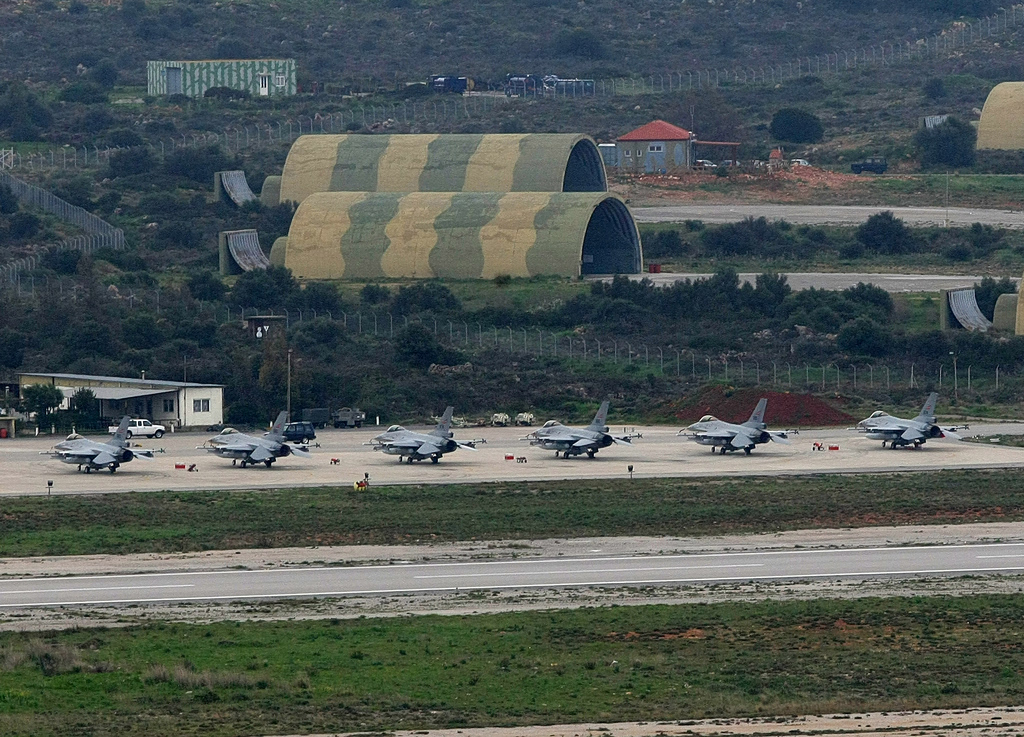
On the Greek island of Crete, Souda Bay isn’t only a vital deep-water port, it is also one of the few forward bases in the Mediterranean with secure communications that can launch U.S. Rivet Joint spy planes. They have been flying over Iran to gather signals intelligence, according to open-source information.
Europe remains the bedrock of U.S. force projection in the world and any action to cut those ties with Europe “would be a huge loss to the U.S.,” said Bence Nemeth , a defense expert at King’s College London. “It would cost time, money and resources.”
Write to Max Colchester at Max.Colchester@wsj.com and Bojan Pancevski at bojan.pancevski@wsj.com