The faint booing began as soon as Israel’s Noam Bettan took the stage to perform his country’s entry in this year’s Eurovision Song Contest, a song in English, French and Hebrew about a girl named Michelle.
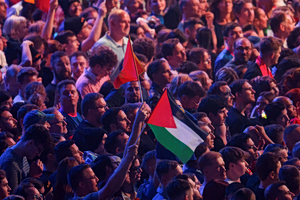
The superfans in the Vienna audience seemed more interested in the next acts in Tuesday’s semifinal, which included a leather-clad metal band from Serbia and a cameo from British ‘80s icon Boy George. The chants of “Free, free Palestine” quickly faded as security bundled away four protesters and Bettan swept into another chorus.
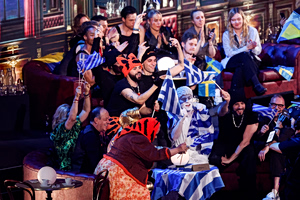
The conflict in Gaza has consumed much of Europe’s media in the run-up to this year’s edition after broadcasters from five countries boycotted it over Israel’s inclusion. Ireland’s RTE said taking part would be “unconscionable given the appalling loss of lives in Gaza and the humanitarian crisis there.” Slovenia’s national broadcaster said Israel’s participation would “conflict with its values of peace, equality and respect.” Iceland, Spain and the Netherlands also chose to sit out the show.
But veteran devotees can reasonably argue to have seen it all before as Saturday night’s grand final approaches.
“I expected more booing,” said Barbara Barreiro Leon, a professor at Scotland’s Aberdeen University who attended the semifinal and who has written extensively on the contest. “In previous years there were probably more protests.”
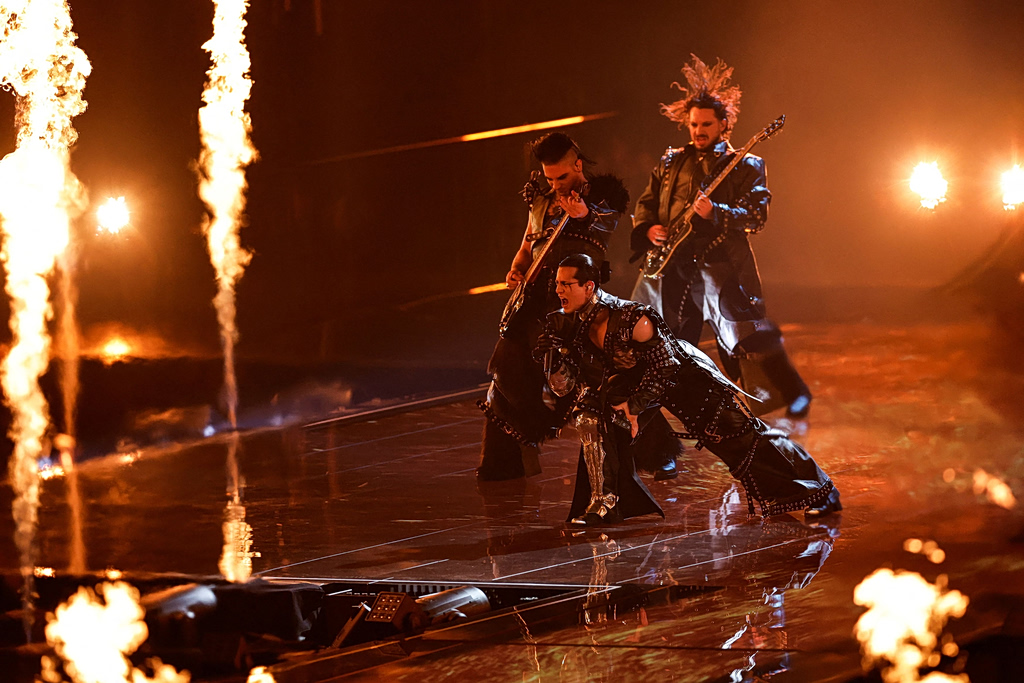
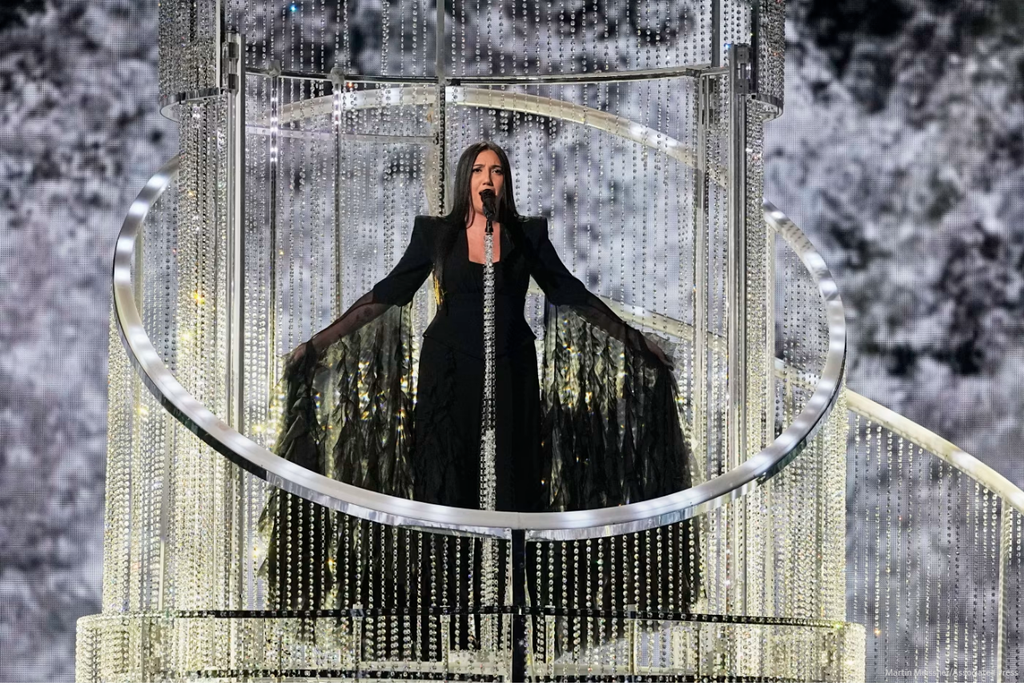
Lavina, representing Serbia, performs “Kraj Mene” during the dress rehearsal 2 of the Grand Final of the 2026 Eurovision Song Contest, in Vienna, Austria, May 15, 2026. REUTERS/Lisa Leutner
Eurovision has long carried political overtones, ever since Europe’s public broadcasters first put on the show to test their ability to host live transnational events. At the first one in 1956, Germany sent a survivor of the Holzen concentration camp who sang of the dangers of sweeping the past under the carpet—the earliest instance of a country trying to reshape its identity through the competition.
Austria later boycotted Eurovision in 1969 when it was hosted by Spain, then under the rule of dictator Francisco Franco. Greece tried to score some political points by snubbing it in 1975 after Turkey invaded Cyprus, while Turkey stayed away the following year, opening the door to a flurry of boycotts as the contest expanded, including this year’s dust-up.
This isn’t necessarily a bad thing for the fans. Aficionados say they are fascinated by all the maneuvering and infighting. They enjoy an additional layer of theater to complement the cheesy dance routines, outlandish outfits and big singalong choruses on stage.
“One of the reasons we like Eurovision so much is that we like to watch it for the political messages and tensions,” said Dean Vuletic, who has written a book on the topic. “Politics is part of the show and it always has been.”
The political aspects have taken larger billing when more countries joined following the end of the Cold War.
Armenia refused to take part in 2012 when it was hosted by its old rival, Azerbaijan. Shortly after Russia annexed Crimea in 2014, Ukraine tested the limits of what was permissible by submitting a song mourning Joseph Stalin’s expulsion of the Tatars from the peninsula.
Russia itself was banned after launching its full invasion of Ukraine in 2022. Shortly after, the public broadcaster in Kyiv sent over a rap group to perform a song that had already become a resistance anthem back home, ending with a plea for the rest of Europe to help. Its Kalush Orchestra won with a landslide.
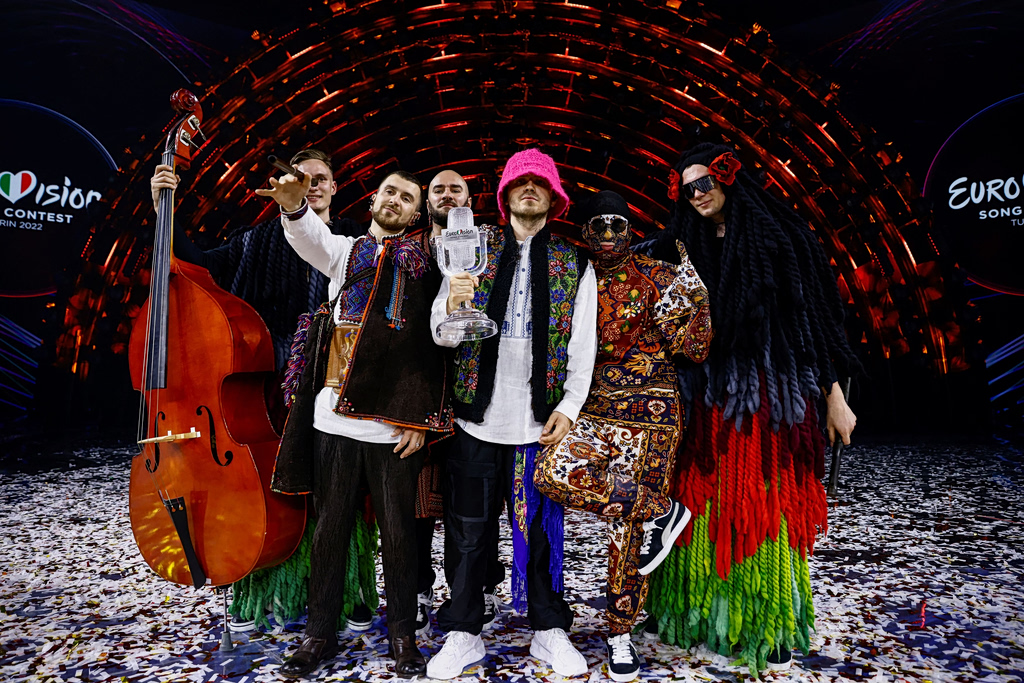
Kalush Orchestra from Ukraine pose after winning the 2022 Eurovision Song Contest in Turin, Italy, May 15, 2022. REUTERS/Yara Nardi
The Eurovision format provides generous opportunities for intrigue. Each country submits an act, with the ultimate winner determined by a jury and a popular vote open to members of the public in each competing nation—so long as they don’t vote for their own nation. This means people often vote for countries where they see some historic allegiance, or vote tactically to edge out old rivals.
For a lot of people, this is part of the fun. The British in particular enjoy complaining that the rest of Europe conspires to vote against them, especially after the U.K. left the European Union.
Israel, however, annoyed many broadcasters last year by boosting its artist’s ranking through an organized lobbying campaign, adding to the unease over the country’s involvement.
Viewers were permitted to cast 20 votes each, and some participants accused Israel of breaking the spirit of the contest by encouraging people across Europe to cast all their votes for its singer, Yuval Raphael, who survived Hamas’s attack on the Nova music festival in 2023. Its prime minister, Benjamin Netanyahu , joined the campaign on Instagram, posting that fans should cast all their votes for Raphael. She placed second.
Yuval Raphael from Israel performing last year. Martin Meissner/Associated Press
Eurovision’s organizers have said they hadn’t been strict enough in limiting lobbying campaigns and have since capped the number of votes to 10 per person. They have already issued a warning to Israeli broadcaster, Kan, after its contestant released videos in various languages asking people to vote en masse for Israel; Kan removed the posts.
Plenty of countries see the contest as a way to project a little soft power, however.
For some, such as Moldova, doing well at Eurovision is a way of telling the rest of the world that they see their future among the community of West-leaning liberal democracies—much as Germany did in the first edition.
“Their song has a very pro-European message,” said Vuletic, who has lectured widely on the contest. “Last night in the arena, it set the house on fire. People were jumping around singing along. It’s such a high energy song and it has really managed to attract the attention and support of a lot of fans.”
Barreiro Leon says it is no coincidence that former Soviet bloc countries such Estonia and Latvia won in the early 2000s before joining the EU.
“A lot of countries were submitting songs in English, and that was a way of saying, ‘See, we can speak the language. We’re here. We can communicate with each other,’ ” she said. “A lot of the songs were quite bland, but they were a way of saying we can be members of the same community.”
This is exactly the sentiment so many Eurovision enthusiasts revel in. “It has taught me to see the world not as it is, but as it should be,” said Austrian fan Herby Stanonik, who is a dancer and choreographer and credits the contest for helping him come out as gay.
Actor Will Ferrell, whose 2020 film “Eurovision Song Contest: The Story of Fire Saga” memorably spoofed the competition, recorded a short video shown at the semifinal. “One word for Eurovision? What could it be? Oh, I know: joy,” he said.
In contrast, Russia’s attempts to revive its own Cold War-era song contest, Intervision, have had mixed results at best. Several participants withdrew before the event got under way last September in a Moscow suburb.
“I think Eurovision is something they would like to come back to. But I don’t see it happening,” Barreiro Leon said.
Write to James Hookway at James.Hookway@wsj.com