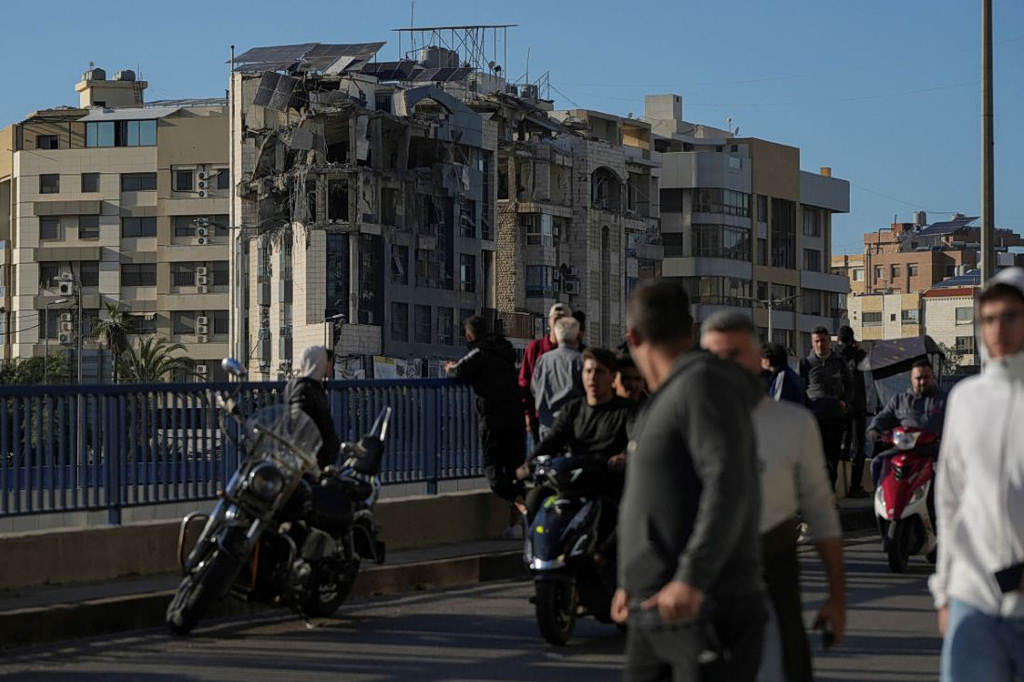

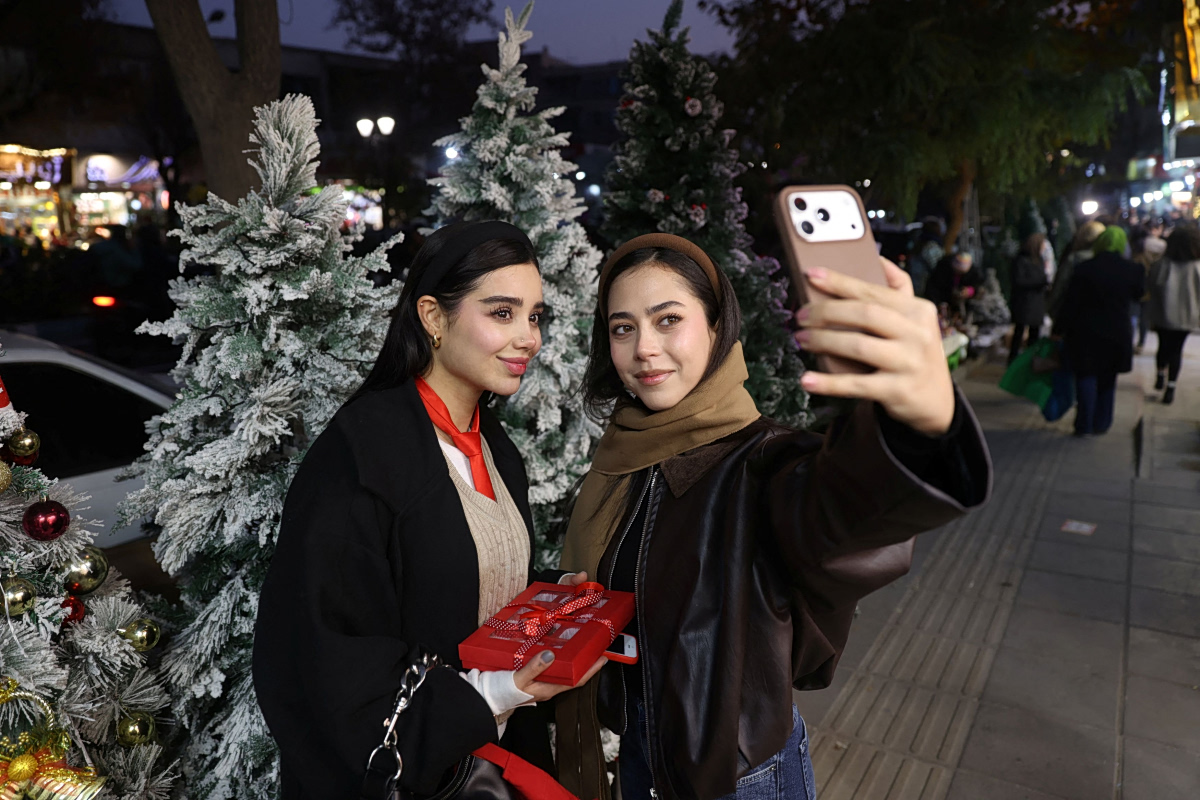
Live music is blaring on the streets of Tehran, women are ditching their mandatory hijabs and young people are dancing in cafes, as authorities allow a degree of social freedom not seen since the Islamic Revolution of 1979.
At the same time, however, the government is carrying out a widespread crackdown on dissidents and has executed more people this year than in nearly four decades.
Both moves have the same objective: preserving a system still shaken by last summer’s 12-day war with Israel and by sanctions that have sent the economy spiraling.
“The regime has one goal, and that is to make sure there is no collective action, no uprising,” said Fatemeh Haghighatjoo, a former member of Iran’s parliament who is now living in exile in the U.S.
“They fear that if they enforce the hijab, there will be another uprising,” she said. “They decided they can’t fight people on every corner.”
The June war with Israel exposed Iran’s inability to defend its population from attack, as well as the failure of its intelligence services to prevent deep penetration by Israeli spies. That revelation led to a surge in discontent with a government already under fire for its poor economic performance and its reviled strict moral codes.
In tolerating social freedoms, the regime is granting Iranians concessions that don’t threaten the survival of the system, say analysts and activists. It won’t, however, allow political mobilization and instead uses a crackdown on political dissent to instill fear.
The number of executions carried out in Iran has surged to levels not seen in decades. Over 1,870 people have been executed in Iran so far this year, around twice as many as last year, according to data collected by the Washington-based Abdorrahman Boroumand Center, an advocacy group that documents human rights violations in Iran. More than 490 people have been executed since the start of November alone, surpassing the total for all of 2021.
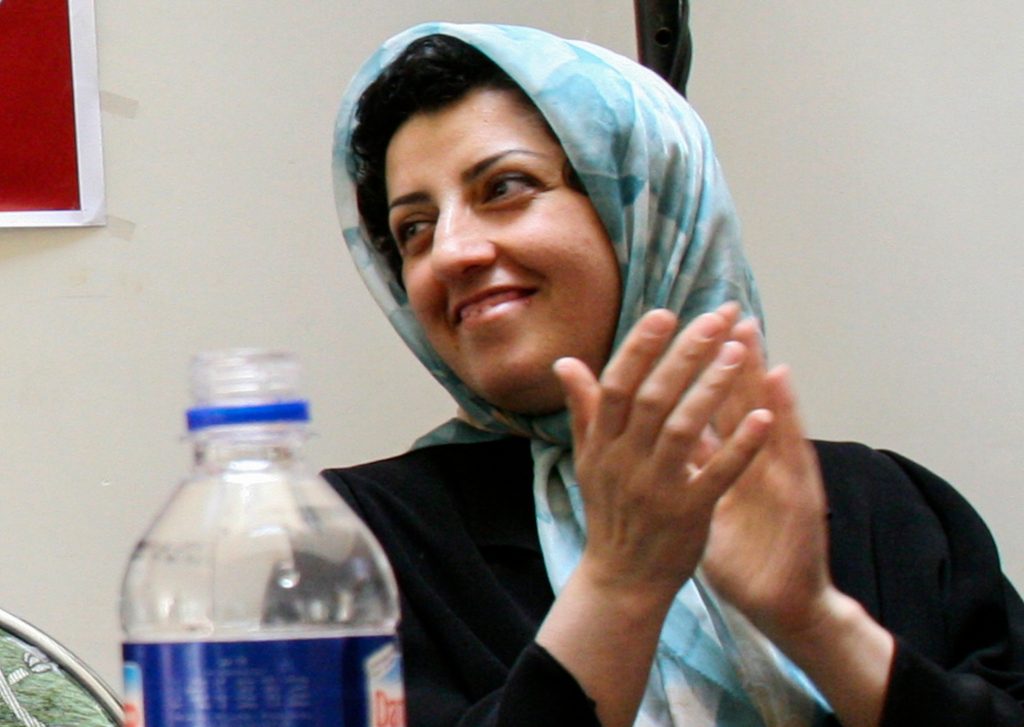
Earlier this month, Nobel Peace laureate and human rights campaigner Narges Mohammadi was arrested , along with around 40 activists, during a memorial in the city of Mashhad for a lawyer who activists say was slain. According to her family, Mohammadi had rallied the crowd in protest at the event. Mohammadi had been temporarily released on medical grounds from prison, where she was serving a long sentence for alleged propaganda activities. Her family says she was beaten so severely during her detention that she had to receive emergency medical care. She is still being held by authorities.
Meanwhile, Iran is also facing a host of other domestic crises. Tehran is running out of water, power shortages are rife, and the country is facing an economic crisis caused by extremely high inflation, international sanctions and the collapse in the value of the local currency against the U.S. dollar.
Iranian President Masoud Pezeshkian has called for a soft approach on those defying the country’s moral code for now.
“We shouldn’t impose unnecessary restrictions or put pressure on people. Anything that fuels public discontent is effectively helping the Zionist regime,” Pezeshkian said earlier this month, referring to Israel. “We are firmly opposed to social irregularities, but the question is how they should be addressed.”
Social restrictions, particularly the Islamic dress code on women, have been a political flashpoint since the 1979 Islamic Revolution.
The mass protests that rocked the country in 2022 erupted after the death in custody of Mahsa Amini , a young woman who had been detained by the country’s morality police for violating the country’s dress code requiring that women wear the hijab and dress modestly in public. Thousands of women responded by removing their headscarves in a collective act of defiance.
The protests were quelled, and more than 500 people killed. Since then authorities have often turned a blind eye to women discarding the Islamic headscarf.
Today, the morality police—with their trademark green and white vans—have largely disappeared from the streets of the Iranian capital. While large numbers of women are removing the hijab, few are getting in trouble for it.
The government’s enforcement of social restrictions has ebbed and flowed over the decades in response to the political mood. But never before have so many Iranians been willing to flout the Islamic Republic’s social rules at the same time, say residents and analysts.
Keivan Hosseini , an Iranian who records electronic music under the moniker Tame Werewolf, played his first public gig ever last year in a cafe before a large crowd. “The atmosphere felt open and alive,” Hosseini said. “Even small moments like these carry a lot of meaning.”
However, morsels of social freedom do nothing to change a worsening economic situation that is the biggest concern for most of the population, he said.
Iran’s Islamist rulers don’t like the changes playing out on the streets, and there has been no formal change to the country’s laws. But even as authorities have largely tolerated these acts of social defiance to avoid public unrest there are limits to how much they will allow.
Throngs of people in November attended a series of cultural events hosted at Tehran University and other venues for Tehran Design Week. Young men and women mingled freely, perusing works of contemporary art and design objects while a band played live music in the background.
A group of activists called Progressive Students in a post on X hailed the event as “a symbol of the liberation of the people and the youth from the dominance of backward cultural and social forces.”
The show provoked the ire of religious conservatives and the initiative was shut down days earlier than planned. Authorities also canceled the final two days of a five-day jazz festival in Tehran last month.
After thousands of women participated in a marathon on the southern island of Kish in early December, many of them without headscarves and in tightfitting sportswear, two of the organizers were detained.
A Tehran-based artist in his 30s said that while people have noticed the loosening of social restrictions, they know it is part of the government’s strategy to cool the temperature.
Iran’s clerical rulers are more concerned with external and internal security threats, particularly those linked to Israel, than they are about young people breaking social taboos, said Aniseh Bassiri Tabrizi, Iran expert with the Chatham House research group. “When it comes to those threats, the regime is choosing to deal with them with a very firm hand,” she said.
Regarding the new social freedoms, “it is definitely not top down and it’s definitely not something the regime is voluntarily conceding,” she added. “The question is how irreversible this will be.”
Write to Margherita Stancati at margherita.stancati@wsj.com and Sune Engel Rasmussen at sune.rasmussen@wsj.com