
 Μake us preferred on Google
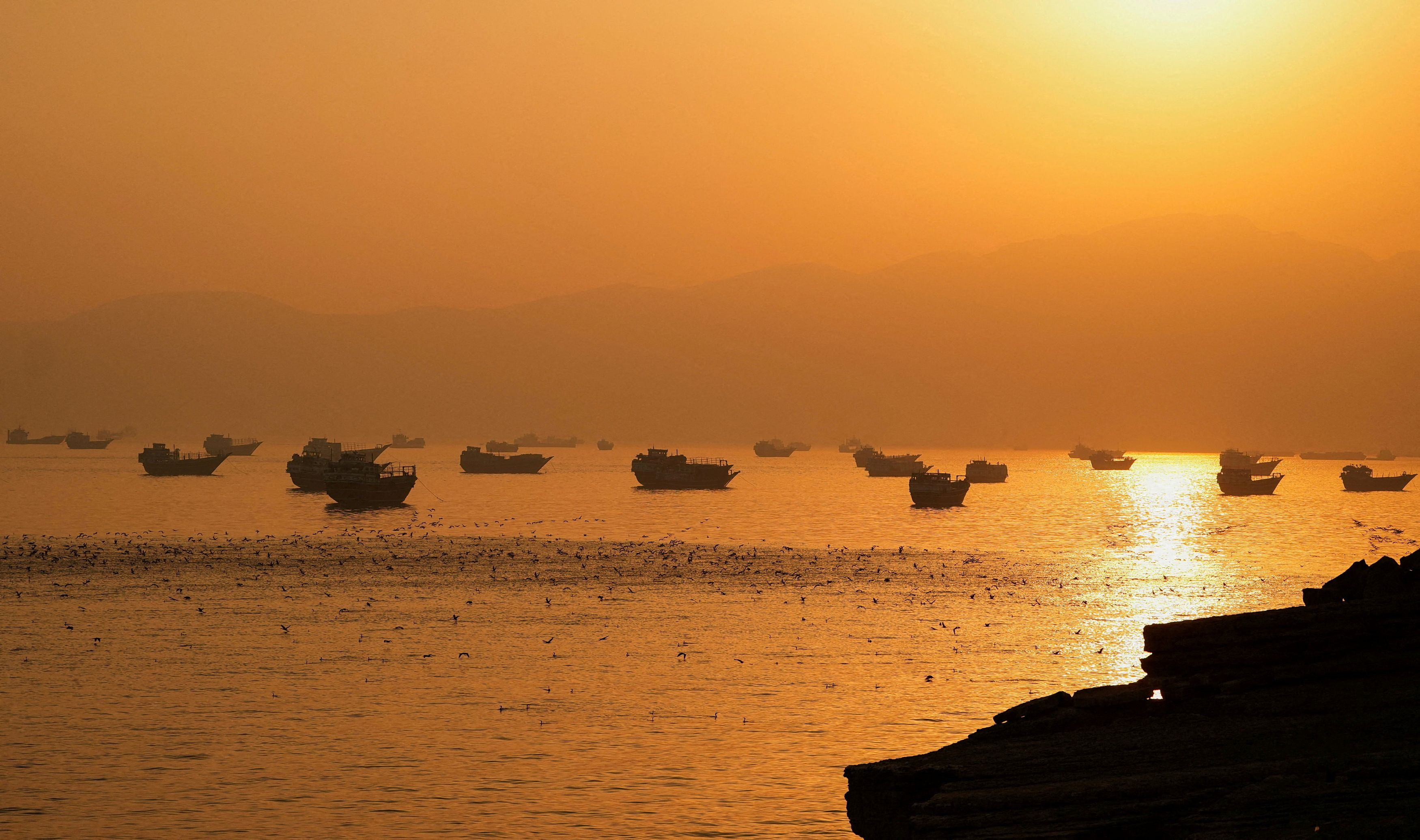
 MANAMA, Bahrain—Iran is pushing to make billions of dollars from the Strait of Hormuz as the regime positions itself to manage the global oil artery it severed at the start of the war.
The Islamic Republic estimates that charging for security, safety and environmental services in the strait would bring in $40 billion a year in revenue for states involved, according to officials familiar with the matter. The idea, if implemented, would give Tehran cash flow and control that it didn’t command before the war.
The regime is looking to models around the world, including the Dardanelles, the officials said, where Turkey charges ships a tax known as the gold franc for passage to and from the Aegean Sea through the international waterway.
To get buy-in, Tehran is pitching the idea to the wider Middle East and as far afield as Beijing, according to Iranian officials. It wants its Persian Gulf neighbors to be part of the agreement and share the revenue, they said.
“Everyone needs to know that management of the strait will never return to the way it was before,” said Iran’s chief negotiator, Mohammad Bagher Ghalibaf, during a visit to Oman on Tuesday to discuss the proposed arrangements with its neighbor across the waterway.
The number of ships crossing the strait Wednesday reached its highest since the war began with around 70 crossings, according to ship trackers, whose estimates vary. On average before the war, 130 oil tankers went through the neck of the Persian Gulf each day.
Dangers persist, however. On Thursday, a cargo vessel reported being hit by an unknown projectile in the strait close to the coast of Oman, causing damage to the bridge but no casualties, according to U.K. Maritime Trade Operations, which is affiliated with the Royal Navy.
Secretary of State Marco Rubio pushed back against the idea of tolls or fees in the strait during a trip to the Middle East this week, saying Thursday that tolls or fees would set a dangerous precedent that would spread like a contagion and cause chaos. “The reality is that no country on earth has the right to charge for the use of international waterways, and that will never be an acceptable condition of any deal,” he said during a stop in Bahrain. Rubio added that Persian Gulf countries had rejected the idea of charges to cross the strait.
The 60-day deal to end the fighting and reopen the waterway puts Iran in charge of demining it and insists on toll-free passage for ships in that time. But the document also gives Iran, which doesn’t recognize maritime law governing the strait, a say in the future management of the shipping chokepoint.
The strait, which became the central theater in the war between the U.S. and Iran, is now a key battleground in negotiations to bring the conflict to an end. The war taught Iran that the threat it can pose to shipping with missiles and drones gives it an on-off switch over the critical global trade route. President Trump’s deal offers Iran the right to negotiate the administration of the passage long term.
Iran has already set up an insurance firm it says shippers must use to cross the strait and Thursday warned that transits outside its designated routes were highly dangerous and prohibited, according to Iranian state media.
The U.S. and Oman, along with other Persian Gulf nations, have repeatedly said the strait should remain toll-free. “There are no tolls, no insurance costs & no other charges of any kind being sought or received by Iran on ships traveling the Strait of Hormuz,” Trump said in a social-media post on Wednesday, without saying whether he would be willing to negotiate with Iran on that.
Oman recognizes the convention banning tolls on maritime highways and its Foreign Minister Badr Albusaidi reiterated in the meeting Thursday with Rubio in Bahrain that any future arrangements for Hormuz wouldn’t include transit fees. After talks this week, Iran and Oman said their discussions had focused on services required in the future management of the strait and their associated costs.
Separately, Oman said this week that it would provide a safe, toll-free temporary corridor for tankers to cross Hormuz, coordinated with the International Maritime Organization, and hugging the Omani coast.
Some shippers said they were wary of the risks of crossing before a final deal is reached, though insurance premiums on ships crossing the strait have, in recent days, fallen back close to levels last seen before the war.
Tehran has discussed its proposal to charge service fees in talks with China and Egypt, Iranian and mediating officials said. Iranian officials have said privately they would be open to the U.S. joining such payment programs, an idea Trump has occasionally raised in public.
The Dardanelles—the sliver of sea that splits Turkey between Europe and Asia—is providing Iran with a model for Hormuz. The international waterway is covered by a 1936 convention that gives Ankara a mandate to demand shippers pay the gold franc to cross it.
The charge, set at $6.70 a ton for the year starting July 1, covers sanitary services, lighthouses and lifesaving. Ships moving from the Black Sea into the Mediterranean must go through the Dardanelles.
There are significant obstacles to Tehran adopting a similar policy. Iran has signed international and regional agreements that ban it from imposing unilateral payments on passing ships, said James Kraska, a maritime law professor at the U.S. Naval War College, which educates U.S. Navy leaders. Turkey’s agreement is unique and couldn’t be automatically applied to another nation, he said.
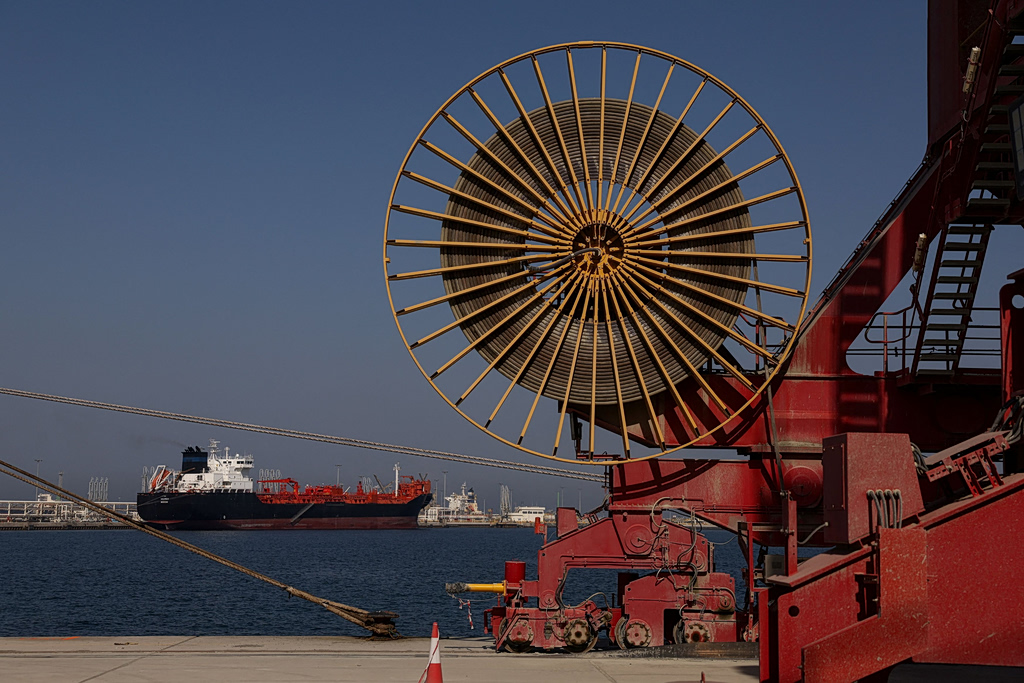
An oil tanker docked at the Port of Fujairah, as the U.S.-Israel conflict with Iran limits marine traffic in the Strait of Hormuz, in Fujairah, United Arab Emirates, May 6, 2026. REUTERS/Amr Alfiky
Any service fees levied by Iran would need consensus of the 176 members of the IMO.
Esfandyar Batmanghelidj, chief executive of the Bourse & Bazaar Foundation, a London-based economics-focused think tank, said any system of service fees would likely be managed by a regional body on behalf of Iran and other countries.
Iran has justified charges in the strait as a means of controlling the flow of military goods, after it alleged the U.S. used the strait to transport military supplies it later deployed to attack Iran, according to the Iranian officials. When asked for comment, the White House referred to Trump’s social-media post about fees in the strait.
Turkey negotiated its right to charge fees amid tensions in the 1930s with Italy, which was then in control of Greek islands in the Aegean Sea. The treaty gives Turkey the right to bar the passage of warships in any conflict in which it isn’t a belligerent. Ankara invoked that right at the start of the 2022 invasion of Ukraine to interdict Russian military vessels, but later relented under Kremlin pressure.
Another model that Iran and other Persian Gulf nations are examining is in the Strait of Malacca, which like Hormuz is a global energy chokepoint bordered by more than one country.
The Malacca Straits Patrol, a multinational military force including coordinated naval patrols and joint air surveillance, could provide a pattern for managing transits through the strait, Middle East and European officials said.
Malaysia, Indonesia, Singapore and other Asian nations operate the patrol to combat piracy and other maritime threats. In the case of Hormuz, the arrangement would combine the marine forces of Persian Gulf monarchies with those of Iran, the officials said. The cost of the Malacca patrol is shared among Asian nations, along with a private Japanese foundation.
Whichever route Iran pursues, reaction to the proposal has been mixed.
Anwar Gargash, presidential adviser in the United Arab Emirates, said on Thursday that new geopolitical realities, such as in the Strait of Hormuz, couldn’t be imposed on the Arab Gulf states.
Some big shipowners see payment as the price of reopening the route, through which 20% of global oil normally flows.
Tehran said it was reopening the waterway after the U.S. lifted its blockade of Iranian ports in line with the deal to wind down the war that was signed June 14.
Since then, Iran has imposed new procedures, including a demand that ships register to cross two days in advance.
When fighting in Lebanon flared between Israel and Hezbollah ahead of weekend negotiations between the U.S. and Iran, Tehran’s delegation delayed the start of the talks and its Islamic Revolutionary Guard Corps said it had shut the strait.