
 Μake us preferred on Google
 Greece is entering a new phase in its management of public debt, with the debt-to-GDP ratio expected to continue declining rapidly over the coming years and potentially fall below 100% between 2033 and 2034.
The strategy rests on two main pillars: maintaining high primary budget surpluses and making early repayments on loans accumulated during the country’s bailout period. The moves are intended to reduce future financing needs while further improving the profile of Greek public debt.
The projected decline would mark a series of milestones that appeared distant only a few years ago. Greece is expected to first move below Italy’s debt-to-GDP ratio, followed by a decline below 120% of GDP and eventually below the 100% threshold.
The 100% milestone
Greece’s economic team estimates that the country will overtake Italy in terms of having a lower debt-to-GDP ratio by the end of this year.
NEWSLETTER TABLE TALK
Never miss a story.
Subscribe now.
The most important news & topics every week in your inbox.
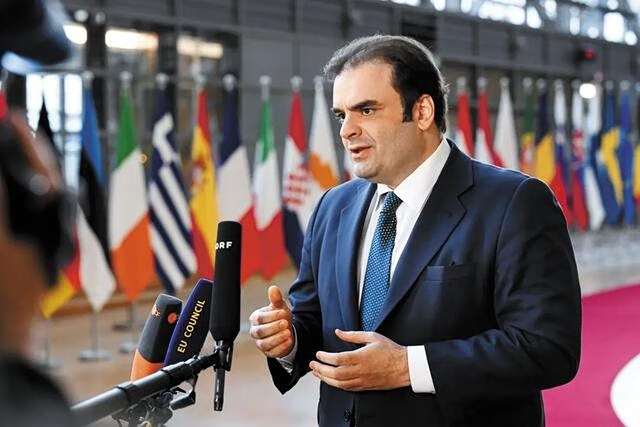
Finance Minister Kyriakos Pierrakakis has set 2029 as the target for Greece’s debt to fall below 120% of GDP.
The next major milestone would then come in the following decade. Based on projections presented by officials to OT, Greece’s public debt could fall below 100% of GDP during the 2033-34 period.
Debt sustainability remains positive even under a particularly unfavorable long-term scenario in which economic growth ranges from just 0.4% to 0.8%.
That does not mean the risks have disappeared. Despite its downward trajectory, Greece’s public debt remains exceptionally high by European standards. Its future path will depend heavily on economic growth after the strong boost provided by the Recovery Fund comes to an end.
Greece therefore faces a yearslong race: first against Italy, then toward the 120% threshold and ultimately the 100% mark. Early repayments are accelerating the process, but maintaining the current pace of debt reduction will ultimately depend on whether the economy can sustain growth and high primary surpluses for many years.
Greece steps up early repayments
Greece is accelerating its strategy of repaying public debt ahead of schedule. Following an initial repayment on June 15, 2026, the government has scheduled two additional repayments totaling €4.7 billion by the end of the year.
The government’s goal is to further improve the country’s debt profile, reduce future financing needs and accelerate the decline in the debt-to-GDP ratio, as Greece seeks to stop being the European Union country with the highest public debt.
According to information obtained by OT, the first of the two new repayments involves €2.5 billion in loans from the European Financial Stability Facility (EFSF). The repayment is expected to be completed by the end of October.
On December 15, Greece is scheduled to repay a €2.2 billion bond held by the country’s four systemically important banks. The bond matures on that date.
With these two transactions, the government will complete this year’s cycle of early repayments. In the meantime, it will develop its strategy for similar moves in the coming years, beginning in 2027.
So far, the Greek state has effectively repaid or repurchased around €7.75 billion, while its cash buffer is expected to exceed €30 billion by the end of the year.