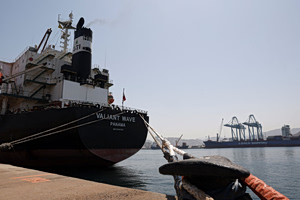
Iran seized a support vessel owned by a Chinese security firm near the Strait of Hormuz, appearing to signal it is unwilling to permit armed protection even for ships sailing on behalf of its strongest global backer.
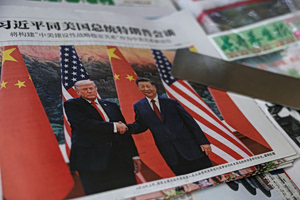
It was the first known seizure of a private-security vessel since the start of the war between the U.S. and Iran. It also came at a sensitive time. Owner Sinoguards Marine Security said Iranian authorities impounded the ship Thursday, the same day President Trump held a summit with Chinese leader Xi Jinping in Beijing.
Securing Xi’s help in pressuring Iran to accept peace terms was high on Trump’s agenda . A day earlier, a Chinese tanker had been allowed to transit through the strait in what Iran said was an agreement to allow some Chinese ships to pass.
Granting passage of commercial ships while arresting security vessels “is a way to remind the Chinese who is in control of Hormuz and they shouldn’t even think of providing their own security,” said Sanam Vakil, director of the Middle East and North Africa program at Chatham House, a London-based think tank.
The seized ship, the Hui Chuan, was sailing under a Honduran flag and had been at anchor just outside the Strait of Hormuz, about 38 nautical miles northeast of Fujairah in the United Arab Emirates.
Hong Kong-registered Sinoguards said it was asked for “documentation and compliance inspection by the relevant authorities” in Iran, who took the Hui Chuan into Iranian waters.
Sinoguards provides armed guards to protect ships sailing out of Fujairah and five other locations in Asia and Africa, according to its website. A video on the website shows two Sinoguards employees arriving by speedboat at a tanker in the Gulf of Oman marked with the name and logo of Cosco Shipping , a state-run Chinese shipping giant. The men—identified in the video as Nepalese and Ukrainian ex-military—are carrying AK-47-style assault rifles, ammunition, flak jackets and military helmets.
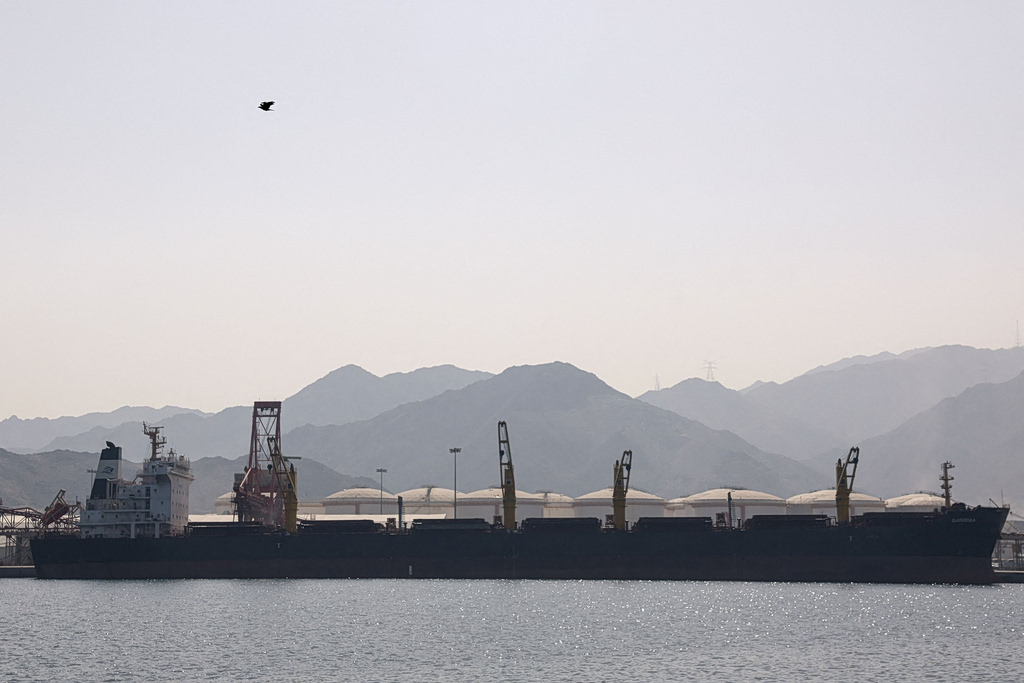
A bulk carrier docked at the Port of Fujairah, as the U.S.-Israel conflict with Iran limits marine traffic in the Strait of Hormuz, in Fujairah, United Arab Emirates, May 6, 2026. REUTERS/Amr Alfiky
Gun restrictions in ports along the Persian Gulf and Gulf of Oman mean security companies have to store their weapons offshore on floating armories. A photo on the Sinoguards website shows dozens of assault rifles stored aboard one such vessel.
Sinoguards was formed in 2013 by Mario Yun Zhou, who studied shipping law at Shanghai Maritime University and was CEO of a contracted security company in Iraq, according to his LinkedIn profile.
Zhou declined to comment on whether the Hui Chan was serving as a floating armory when it was seized. Sinoguards operates under “applicable flag state authorizations and regulatory requirements relevant to its operational scope,” he told The Wall Street Journal.
According to the Equasis shipping database, Sinoguards also owns the Honduras-based Sunny Ocean, a floating armory that successfully fended off an attack by Yemen’s Houthi militants in the Red Sea in 2024.
Analysts said a foreign ship of any kind carrying weapons near Iran in wartime would likely have drawn suspicions. Iran might have been vexed by what the vessel’s crew planned to do specifically or what it might inspire others to consider, according to Christopher Spearin, a professor of defense studies at the Canadian Forces College.
A spokesman for China’s Foreign Ministry declined to comment, saying there were no Chinese crew members onboard the Hui Chuan. A spokesman for Iran’s mission at the United Nations in New York didn’t return a request for comment.
The White House said Trump and Xi had agreed during their talks in Beijing that the Strait of Hormuz should remain a free waterway and Iran shouldn’t be able to exact payments for the use of shipping lanes.
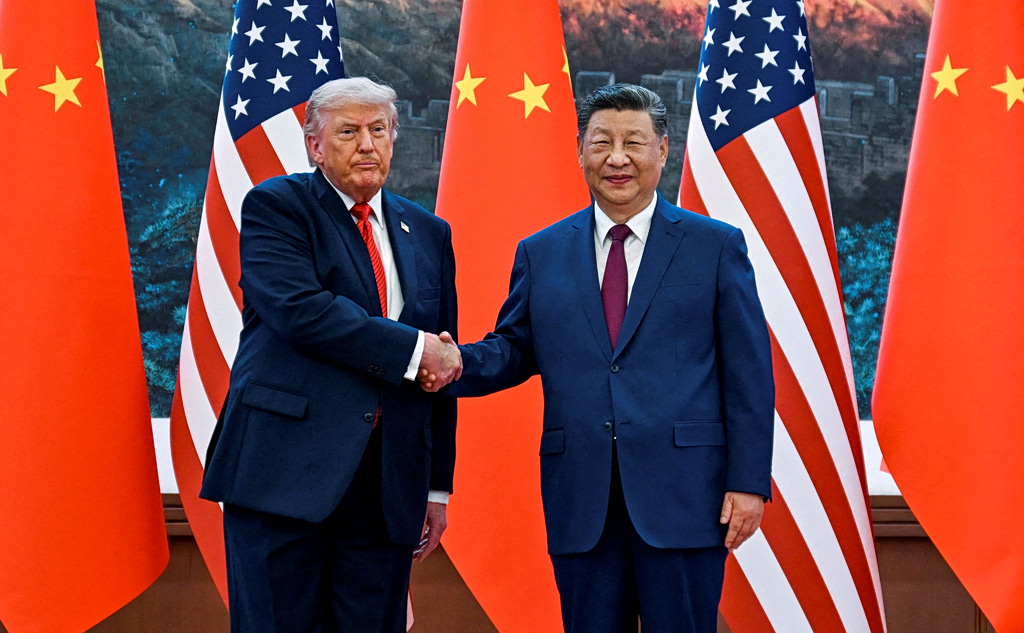
The scene as U.S. President Donald Trump participates in events at the Great Hall of the People and does a greeting with the President of the People’s Republic of China Xi Jinping May 14, 2026, in Beijing China during a trip focused on trade, regional security, and strengthening bilateral ties between the world’s two largest economies. Kenny Holston/Pool via REUTERS/File Photo
While it is possible Chinese diplomats might intervene with Iranian officials to free the Sinoguards vessel, the incident likely stops well short of a major incident from Beijing’s point of view, according to Timothy Heath , founder of defense-research firm Perceptum.
Sinoguards in its marketing materials emphasizes it has no connection to any government or military, though its list of clients includes several large and politically important business groups owned by China’s government, like state shippers.
China traditionally didn’t permit private security firms to handle weapons, and the nation’s military has no history of operating around the world the way the U.S. Navy does. That became a problem for Chinese shippers around 2010 when Somali piracy was on an upswing, so Beijing permitted the creation of private firms according to strict guidelines, Heath said.
“For security around the world, Chinese state-owned enterprises in particular have tended to rely on these private security companies,” he said, noting that some of the firms have been set up by the shipping companies and now several dozen operate.
The private Chinese security players “have evolved from marginal actors into an important instrument of Beijing’s overseas risk-management architecture,” said Alessandro Arduino, associate fellow at the Royal United Services Institute, a London defense think tank.
Chinese private security companies have had a more discreet presence than Russia’s Wagner Group, which acted as a shadow Russian military in parts of Africa, or America’s Blackwater, which provided logistical support for U.S. interventions abroad. “Beijing remains deeply wary of outsourcing violence beyond Party control,” Arduino said.