
 Μake us preferred on Google
 In seven decades of boldness and risk-taking, my mother’s single greatest regret is marching for the 1979 revolution in Iran.
She was a 23-year-old medical student, newly married and pregnant for the first time. When protests broke out to oust the Shah, she showed up for her community, a tightknit cluster of graduate students who were frustrated by his extravagance and tyranny. And, though she’d spent the ’70s in fashionable bell-bottoms and unveiled with a stylish haircut, she put on a chador to support her cohort again, this time for the demonstrations that threw open Iran’s doors to the corrupt, murderous Islamic Republic.
In the 1960s and ’70s, a secular Iran was thriving artistically and culturally. At the Shah’s insistence, the country was Westernizing and modernizing, an exciting or frightening prospect depending on who you were. But the Shah was a problematic figure, obscene in his displays of wealth and ruthless in his suppression of dissent. He became a symbol of Western decadence, income disparity, amoral living and kowtowing to Western interests. Though each of Iran’s scattered factions wanted something different, they began to unite in their desire to get rid of him.
My mother’s cluster were moralists: conservative, sheltered children of university-educated parents who believed in God, marriage and study. They weren’t necessarily hijab-wearing conservatives or even Muslims; my mother was Muslim but her closest friends were Baha’i and Jewish. But they were worried about permissive Western ideas changing Iran. To them, “Westoxification” meant the end of modesty— Playboys on newsstands, naked women on television—individuality over community, and the erosion of thousands of years of Iranian culture and morality.
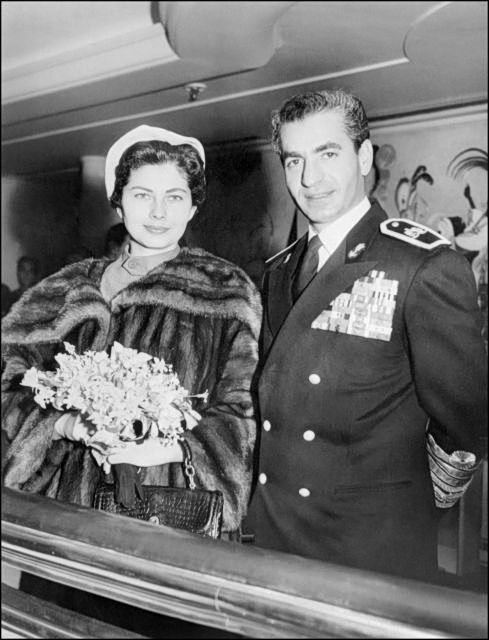
A picture dated March 1953 shows late Shah of Iran Mohammed Reza Pahlavi and his second wife, Soraya Esfandiary in Tehran. Soraya Esfandiary had died of natural causes at the age of 69 in Paris, police officials said 25 October 2001. EPA PHOTO-AFP-FILES
Then there were the Marxists, including the Tudeh Party, who wanted to shake off the capitalist, Western influences and move toward communism. And, an overlapping circle of liberals and intellectuals who wanted to restore the 1906 constitution with free elections and civil liberties. The oldest of these had witnessed the CIA-backed 1953 coup that overthrew the popular Prime Minister Mossadegh (who had nationalized the oil industry) in favor of a more controllable Shah.
In the background were ordinary people like my rural-born father, a vast population of along-getters and pleasure-seekers who just wanted to live. They didn’t organize or worry too much about cultural change—what angered them was that their families struggled for basic needs while the Shah fattened himself on the people’s oil. Of these culturally Muslim, rural working classes often credited with wanting a theocracy, my mother says “they just wanted someone to give them their rights. The only thing that united them was basic human needs.”
One faction that did want a theocracy, though, were the radical Islamists, who, with their unkempt beards and disdain for music and art, looked and behaved very little like most of 1970s Iran. Their leader, the Ayatollah Khomeini, was exiled in France and shrouded in mystery. Nowadays, my mother says, a Google search can tell you more in a minute about Ayatollah Khomeini’s ideology than the entire population knew at that time.
So how did the clerics hijack the people’s revolution from everyone else?
I know it sounds strange to say that the revolution wasn’t about Islam; that the Iranian people were then, as they are now, religiously diverse, largely secular and with an ancient artistic, intellectual heritage rooted in Zoroastrianism. If I had to describe every Iranian in one blanket cultural statement, I’d say: An Iranian is a melodramatic poet biologically incapable of walking away from food, music or a party.
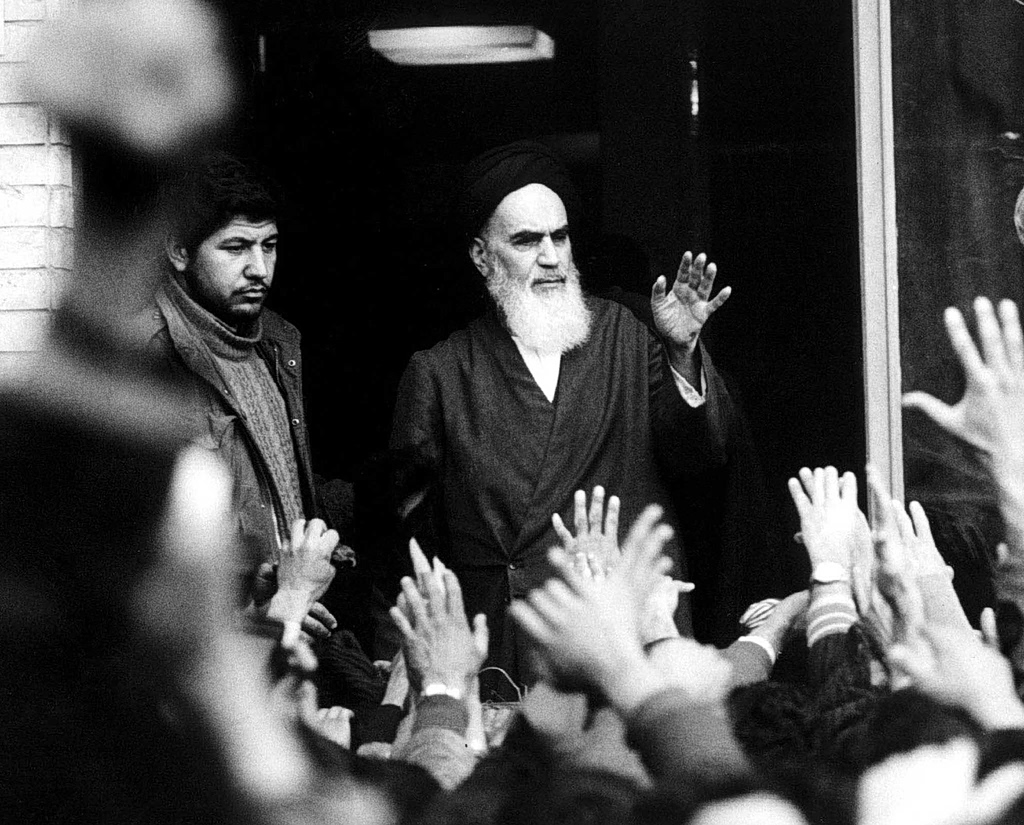
File photo: The late leader and founder of the Islamic revolution Ayatollah Ruhollah Khomeini waves from a balcony of the Alavi school in Tehran during the country’s revolution in this February 1979 file photo. To match Special Report IRAN-SETAD/LEGAL REUTERS
To these ordinary folks, the Ayatollah Khomeini made sweeping promises that the poor, religious minorities and women would be better off under his rule. He even claimed in interviews and speeches that women would have even more rights than men. The clerics then convinced the disparate political factions that to achieve this utopia, they would need to categorize themselves under a single ideology: Out with the Shah and his Western allegiances; Iranian resources would be for Iranians.
But, for the revolution to work and these shared economic goals to materialize, everyone would have to accept the entire ideological package. So when the Ayatollah called women delicate flowers that must be protected from male concerns, my mother and her friends ignored their distaste. And they ignored warnings from their parents and professors, too. You were either in or you were out—and if you were out, you were siding with Western imperialists.
The tactic worked. The Shah boarded a plane, scooping a fistful of Iranian dirt on his way out. Ayatollah Khomeini, the cleric who had promised everyone everything, arrived on a Western jet from Paris. “We should have known,” my mother says, “because what exile returns on a fancy jet from France?”
Immediately upon gaining power, the Islamic Republic murdered the leaders of the factions who had paved its way, publishing gory photos of their deaths in national magazines. And, barely two years into the new regime, my mother and her friends were mourning their blind involvement. “It was a mistake,” my mother says. “We didn’t want a religious government. They promised us something else.” She adds a warning, “If a group ever asks you to agree with them on everything, it’s a cult.”
That cultish dynamic would come up again throughout my life, as I moved from Oklahoma to university and beyond. In each new community, my friends and colleagues clustered around a few core beliefs and accepted everything that felt roughly aligned with those values, relying on their community to arbitrate an array of issues for them. Now, in 2026, the Islamic Republic is benefiting from this tendency, quashing the people’s revolution, just as it did in 1979.
When I was 10 years old, my mother (now an outspoken Christian convert) was granted U.S. asylum and sent to Oklahoma, with me and my brother in tow. We joined a Christian community, where we were often asked to share our story in local churches. We spoke about how Jesus had chosen us, rescued us, the dangers we’d escaped. We left out the parts that didn’t fit the immigrant narrative: that we missed Iran; that the Muslims we knew weren’t militant. That our culture was ancient, rich and varied. Nobody seemed as interested in those.
Growing up in the Bible Belt, I took great solace in promises of God’s protection, His plans for my life. But, as I entered my teenage years, I started to deviate from certain aspects of the faith. I felt constantly at war with my new community’s teachings about women, gender and marriage: that men were the head of the family, that women should submit to their husbands. But when I spoke up, our church leaders insisted that you can’t pick and choose from the Bible, that the word of God is not a handbook of suggestions, and that cherry-picking your beliefs makes you a Christian in name only.
Eventually I left for university, where I found my own tribe of bookish girls. I experimented with versions of myself, and slowly I found my voice as a liberal woman, and later as a writer and advocate for refugees. By my 30s, I was comfortably situated in yet another trusted cohort, supporting my activist friends on things we all cared about: reproductive rights, wrongful convictions, freedom for Palestine.
But I couldn’t research everything. I believed that we all cared about the same things: climate stability, freedom, safety, justice, basic human rights and dignity for everyone. So, if the group planted a flag on a faraway issue, I could probably go with it.
At no time did it occur to me that this was the precise behavior I had judged in the ’70s Iranian activists and ’90s Southern evangelicals.
I first noticed a shift in the progressive reaction to Iran in the late 2010s. Between 2017 and 2020 I published several essays and a memoir about my mother’s imprisonment and our escape from the Islamic Republic, and the displacement that followed. I received hundreds of messages from readers. Some I expected: anti-immigrant rants, of course, and support from allies and fellow immigrants.
But there was a confusing third category that seemed to come from (otherwise) liberal, native-born Americans. The discourse around Islamophobia had swelled (and become dangerously binary) in the wake of the Muslim ban, and now I heard comments like, “Well, it’s a Muslim country, and your mother broke the law.” Again and again, I encountered the casual claim that a majority of Iranians wanted to live under Shariah law and that any criticism of repressive laws like forcible hijab equals religious bigotry. Free American women allowed themselves to say this to me, an Iranian who spent three years under forced hijab, in an Islamic Republic school.
One academic asked me flat out, if I loved Iran so much, why was I badmouthing it? In a single flippant remark, she’d confused Iran with the Islamic Republic (very different), my memoir with rhetoric (I was just telling my story), forced migration with disloyalty (we were forced to leave), and hatred of murderers with hatred of the country (and faith) they’d hijacked.
I dismissed these misguided reactions, and the silly underlying implication that any criticism of a cleric regime puts all Muslims in an unflattering light.
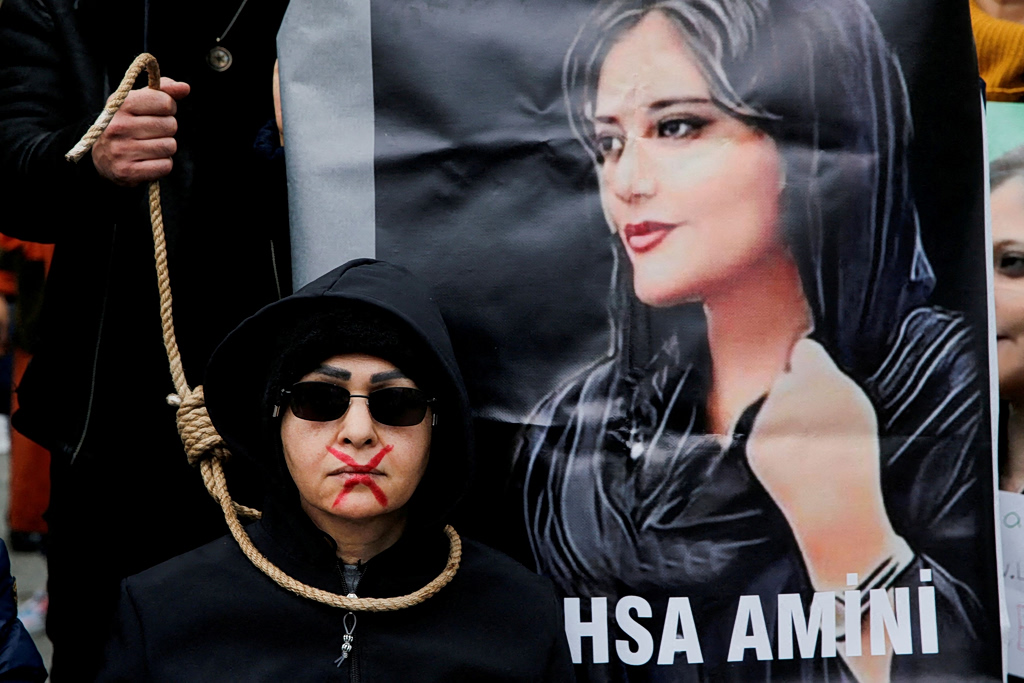
FILE PHOTO: A woman takes part in a protest against the Islamic regime of Iran following the death of Mahsa Amini, in Istanbul, Turkey December 10, 2022. REUTERS/Dilara Senkaya
But in 2022, when the morality police killed 22-year-old Mahsa Amini for refusing to wear a hijab and the Woman Life Freedom protests kicked off, the support from my cohort felt even more tepid and reluctant. Later, in fall 2023, after the October 7 attacks, that support dried up.
Since then, every reputable newspaper has documented and authenticated photos and videos of the regime’s atrocities. Hundreds of protesters—including children—have been killed; thousands imprisoned and tortured since 2022; dozens executed after sham trials. The European Union has designated Iran’s Revolutionary Guard a terrorist organization.
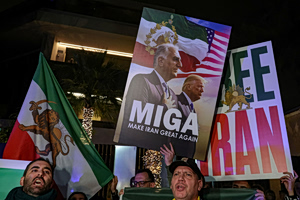
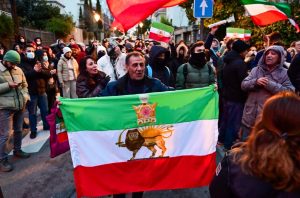
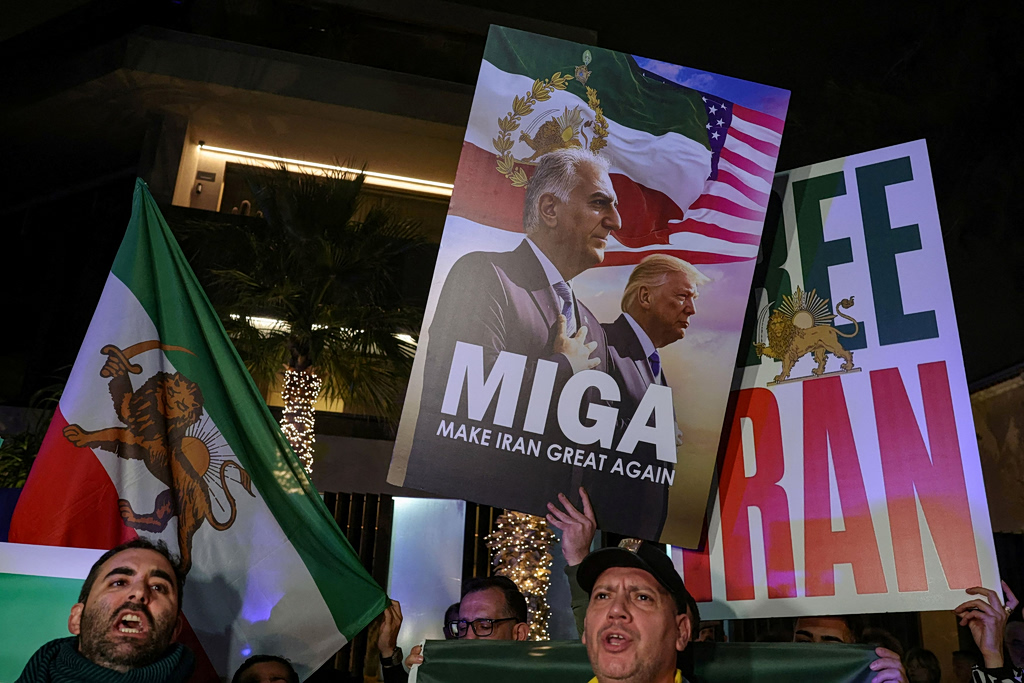
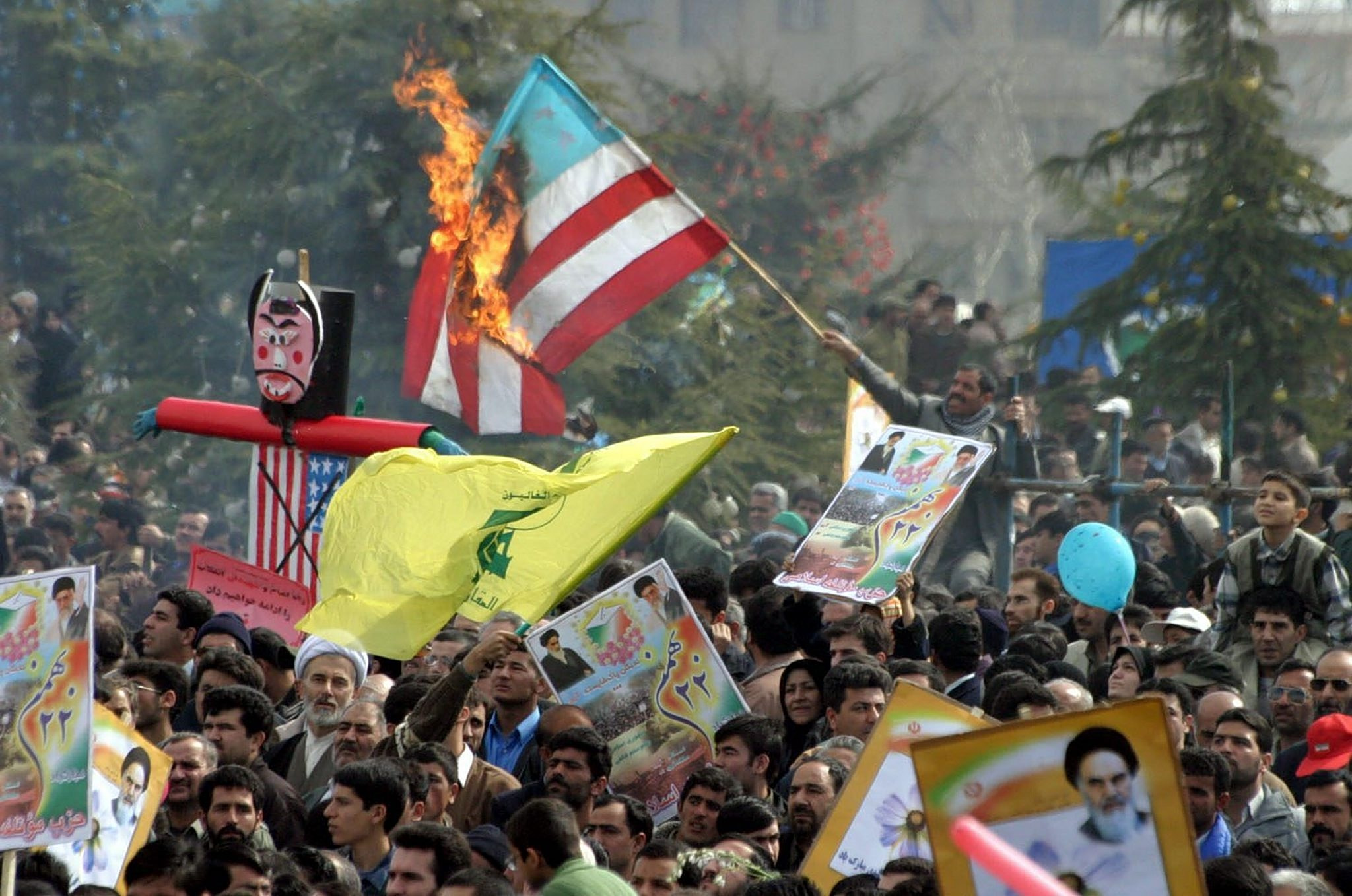
Amid all this, Western-educated Iranians like me are still hearing some of our peers (otherwise well-informed, humanitarian writers and academics) parroting Islamic Republic talking points: that the diaspora is ill-informed, fearmongering, manipulated by Trump or Israel or racist, imperialist right-wing forces. And now, this dismissive attitude has spread to the general public as part of a progressive belief package, from Huda Kattan of Huda Beauty, who posted a video of a pro-regime rally (and after viral backlash from Iranian customers, called the post a mistake), to protesters flying the Islamic Republic flag—not the historic national lion-and-sun flag—alongside Palestine’s.
More and more, human rights experts, lawyers, even some celebrities are joining Iranians in condemning the lazy rhetoric that sustains Iran’s dictators. In June 2025, in response to a photo of a white protester waving Islamic Republic propaganda, actress Nazanin Boniadi posted: “ Well-meaning but misguided progressives in the West have swallowed the Islamic Republic’s propaganda. Millions of Iranians would trade places with you in a heartbeat—while you defend their oppressors .”
And yet, the groundswell of outrage that I expected from my community hasn’t materialized. Iranians are dying on the streets, but even outspoken public figures like Greta Thunberg, who openly support a free Palestine and women’s rights (both aims that align with a free Iran), and who have themselves enjoyed Western freedoms, are still silent on Iran. Where are the protests on college campuses, the social media campaigns? The problem is that the issue has been miscast. When I started posting videos on Instagram supporting the latest uprisings in Iran, my feed began to veer right on a range of unrelated issues. Why would the algorithm think I’d agree with much of this nonsense, except that my views on Iran have been categorized alongside them?
Today, in 2026, the Islamic Republic is using the same old tactic to confuse and override the people’s will. It wants you to look away from its crimes, and so it has shrewdly attached itself to the victims in Gaza. Just like in 1979, when the clerics convinced everyone to band together on some general anti-Western vibes, they are now benefiting from people’s impulse to rally around general antiracism vibes. Sure, state-sanctioned mass-murder is bad, but who wants to be mistaken for an imperialist or an Islamophobe?
As a woman who spent her first eight years trembling under the regime’s eye, berated by teachers and made to chant hateful slogans in the schoolyard, I’m baffled by this moral inconsistency: we are rightfully outraged by the brutality of ICE. But Iran’s morality police have brutalized citizens in even worse ways for nearly half a century. We’re disgusted by the Epstein files, but in Iran, girls as young as 9 are forced to marry old men. There’s no need for secret files. And the Islamic Republic has shot, hanged or otherwise murdered thousands of innocents, including minors.
Since December, I feel the old loneliness returning. I am American and Iranian, a progressive feminist, a humanitarian. I believe in liberal values. I’m also trying to form opinions more thoughtfully, and here’s where I’ve landed: I find it racist to believe that while you’re sophisticated enough to need democracy, Iranians are not. We all want the same things: our share of our land’s resources, a voice in governance, and the freedom to thrive according to our nature. Nobody, Muslim or Christian or Baha’i or atheist, wants to be stuck under the crushing rule of somebody else’s god.
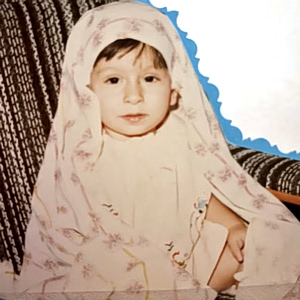
Dina Nayeri as a child living in Iran in the 1980s. Dina Nayeri
And, I get it: we can’t expect everyone to research every issue or mobilize for every fight. Often we decide at the outset, I’m humanitarian or I’m a conservative Christian, and we accept our group’s handbook, assuming that each opinion has been vetted by experts and that we’ll be generally right most of the time.
But sometimes our communities get it wrong. Humanitarians might miss an atrocity. Feminists might overlook sexism. We make compromises and alliances and mistakes, and that’s OK. But it takes intellectual humility, curiosity and bravery to correct those mistakes, and to stray from the herd toward a messy and complicated truth.
Dina Nayeri is the author of “The Ungrateful Refugee” (2019), “Who Gets Believed” (2023) and “A Happy Death” (2027).