In Jerusalem’s Old City, a group of Israeli teenagers recently banged on the door of the headquarters of the Armenian Apostolic Church and asked if there were Christians inside it. They wanted to spit at them.
The boys said it was a religious duty, or mitzvah , to humiliate Christians, or, as they called them, idol worshipers. “We are supposed to hate them,” explained one teen, wrapped in an Israeli flag.
They were among the thousands of mostly young Israelis who on that May afternoon marched through the historic Old City for a national celebration that marks the capture of East Jerusalem in 1967. It is an annual show of force that the area’s mostly Palestinian residents find provocative.
On that recent afternoon, there were at least a dozen spitting incidents near the Armenian church alone, according to security-camera footage, witnesses and a Wall Street Journal reporter on the scene.

Young Israelis celebrate the Jerusalem Day Flag March in a city with many Christian symbols and monuments. OFIR BERMAN FOR WSJ
Incidents of anti-Christian hate, once sporadic, are becoming routine in Jerusalem, a city held sacred in Christianity, Judaism and Islam. Most Israelis condemn this behavior, but negative attitudes toward Christianity have become more common, particularly among young people, surveys show.
The incidents are embarrassing for Israel’s right-wing government, which says it is committed to upholding religious freedom in a region where discrimination is common. The government has appointed a new Arab Christian ambassador to help smooth relations with Christian communities, but critics say it isn’t doing enough.
“This is the reality: Whomever is a Christian—visibly a Christian—is becoming a target,” said Yisca Harani , an Israeli scholar who monitors anti-Christian hatred. “There are a growing number of religious Jews who do this, and it is not being taken seriously by Israeli authorities. They are turning a blind eye, and that is an encouragement.”
Christian targets
The rise in distinctly anti-Christian behavior is relatively new. In 2013, attackers desecrated a Protestant cemetery in Jerusalem. Two years later, Jewish extremists set fire to a monastery in Tabgha, a place where Christians believe Jesus performed the loaves-and-fish miracle.
Itamar Ben-Gvir , Israel’s far-right national security minister, was the defense lawyer of the arsonists. He has said spitting on Christians is an ancient Jewish custom and shouldn’t be considered a crime.
Benedictine Abbot Nikodemus Schnabel said the situation has worsened dramatically since he first arrived in Jerusalem in 2000. At the time, spitting was rare. “Now there is no day that people are not spitting at me,” said the German-born monk. The attackers often come for his pectoral cross and sometimes shout at him to remove it.
He said the rise of religious extremists in the government is making it easier for people to get away with acts of anti-Christian hate. “They are making it very clear that there is no right to be here as a Christian.”
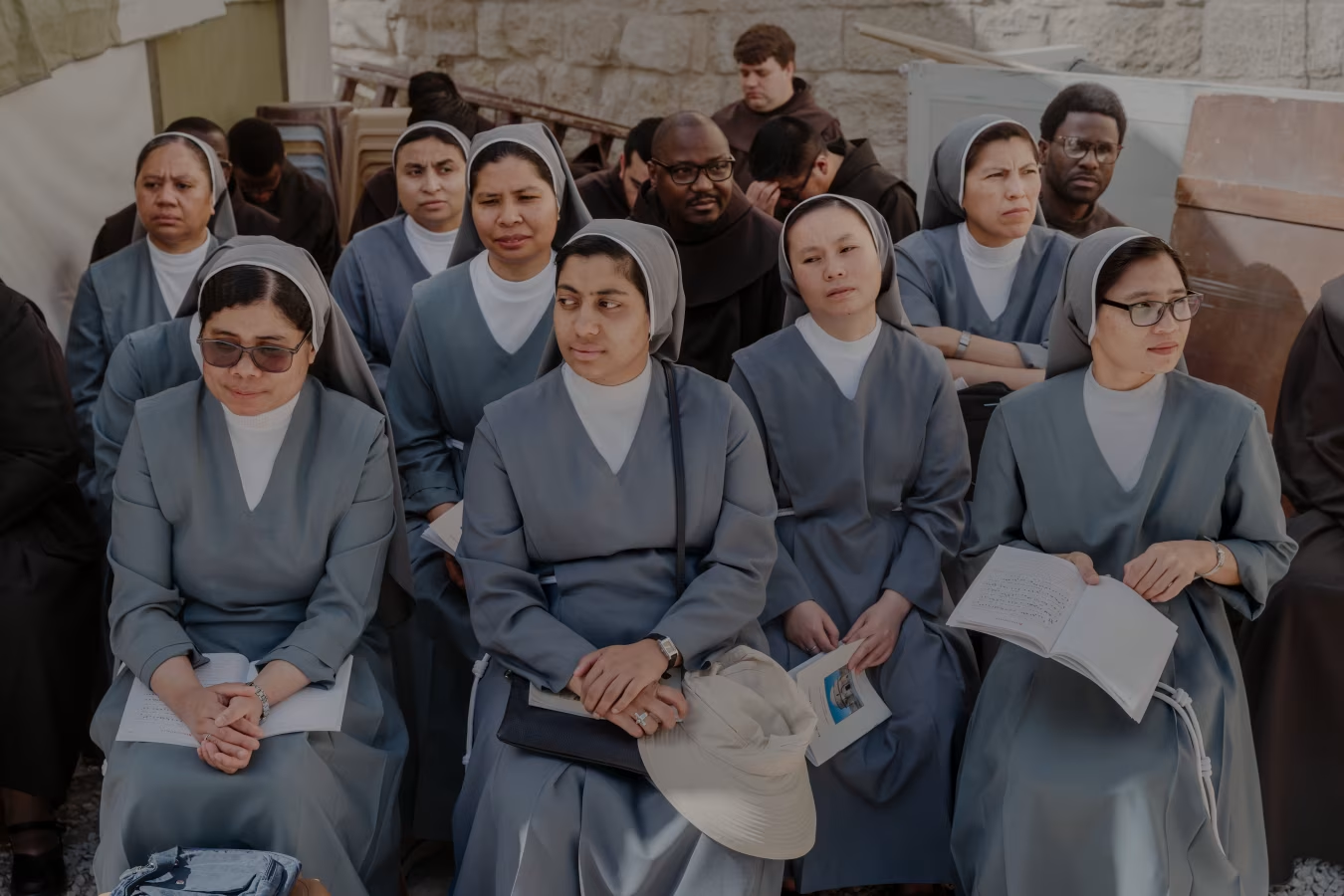
A tour guide at the Church of the Holy Sepulchre. Clerics, nuns and the city’s overtly Christian symbols are often the target of anti-Christian behavior. OFIR BERMAN FOR WSJ
Harani, the scholar, began documenting anti-Christian incidents three years ago through the Religious Freedom Data Center, the organization she founded.
In the first half of 2026, Harani’s organization registered 107 anti-Christian incidents, more than double the figures it recorded in the same period in 2024. The majority occurred in and around Jerusalem’s Old City and the most common form is spitting and verbal abuse, including shouts of “Death to Christians.” Trash is often thrown at monasteries. The biggest culprits were young Israelis, the report found.
The overwhelming majority of Christians who live in Jerusalem are Palestinian Arabs. But much of the anti-Christian behavior targets foreign clerics, nuns and the city’s overtly Christian symbols, according to victims and rights groups that monitor such incidents.
Father Vazgen Alekyan is an Armenian priest who has been based in Jerusalem since the late 1990s. Security cameras positioned outside the door of his church once caught someone peeing inside a niche near the entrance. On another occasion, graffiti saying “death to Christians and Arabs” was scrawled on a wall.
As he stood in his traditional full-length black robe outside his church, a man paused to clear his nose next to him. “Did you see that?” said Alekyan. “The population is changing.”
In April, a French nun on Jerusalem’s Mount Zion was shoved to the ground by a Jewish extremist. The nun recovered from her head injuries and the perpetrator was quickly detained, but victims and rights groups say most incidents, which are usually nonviolent, go unpunished.
Many nuns are now too scared to go outside in Jerusalem. Volunteers from Harani’s organization now escort nuns on a daily basis to and from a monastery on Mount Zion to their residence in the Old City.
A bigger problem
While only a small number of extremists engage in such behavior, it speaks of a broader problem, scholars and activists say: Younger Israelis lack knowledge about Christianity, and the little they do know often fuels intolerance.
“The notion they have of Christianity is not very complex,” said Orit Ramon , an Israeli professor of Christian history at Jerusalem’s Open University. “They know Christian society mostly through the events of violence by European Christians towards Jews,” from the Crusades to the Holocaust.
There is also a deep-rooted fear of Christian proselytizing, and they oppose the statues and icons in churches that many regard as idolatry. Many are resentful of the Catholic Church for criticizing the conduct of the war in Gaza and for speaking out in defense of Palestinians.
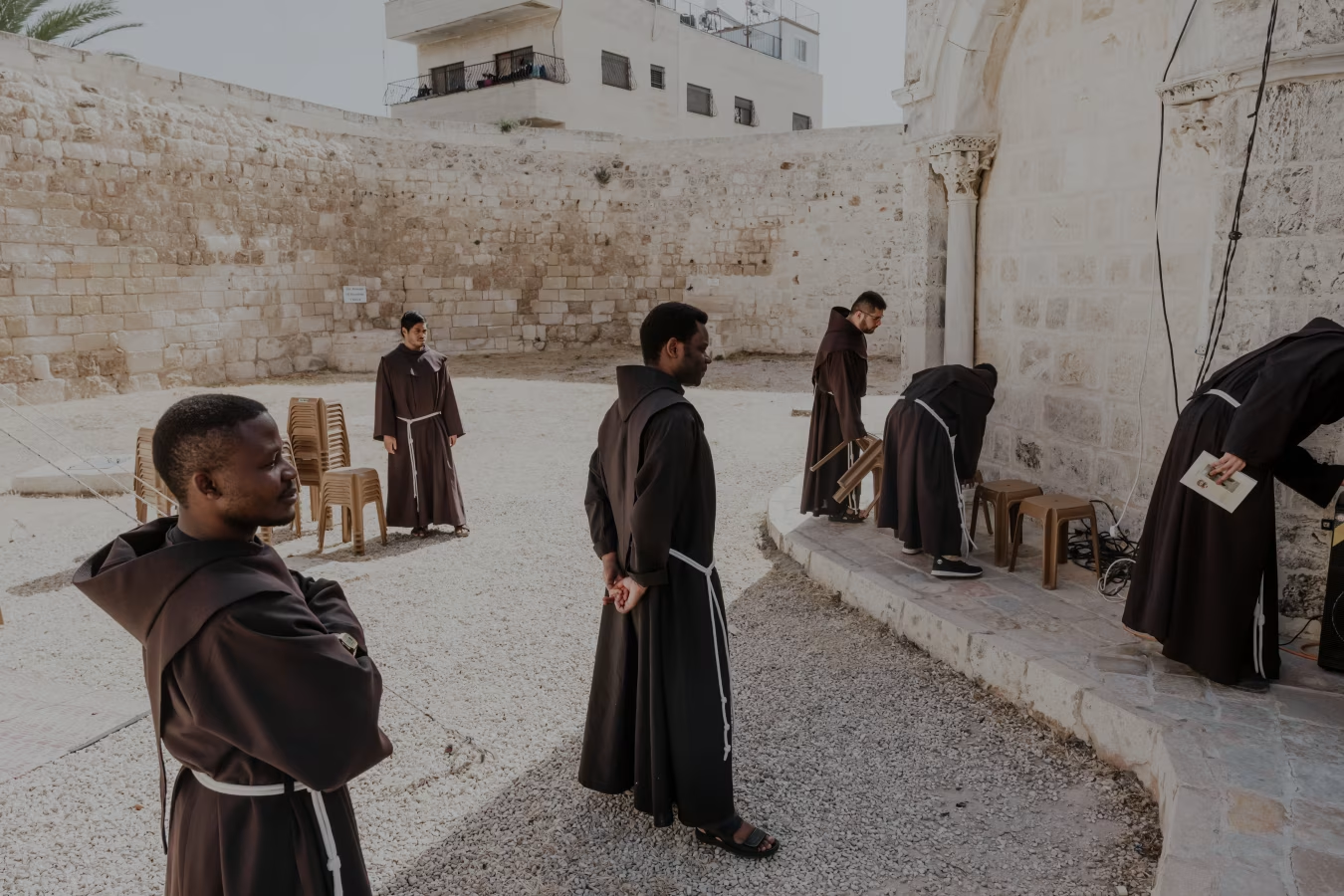
Christians pray at the Chapel of the Ascension on the Mount of Olives in Jerusalem. OFIR BERMAN FOR WSJ
Ramon used to take Israeli high-school students on field trips to Christian sites, but as students and their parents increasingly objected to those trips, most schools gradually stopped offering them. Ramon ended her tours in the mid-2000s.
Some Jewish extremists say they want Jerusalem’s churches destroyed or converted into synagogues. Among them is 19-year-old Atara Serwatien. “It should be a Jewish state,” she explained.
Similar hostility toward Christian images was on display during the recent war in Lebanon, where an Israeli soldier used a sledgehammer to smash a statue of Jesus.
Around half of Israelis believed that entering a church is forbidden, up from 10% in 2008, according to a poll published in September by the Rossing Center for Education and Dialogue, an Israel-based interreligious group.
A similar proportion of respondents said they considered Christianity a form of idolatry. These views were more common the younger the respondents got, and among more religious Israelis.
Visas and worshiping rights
There also are disputes between Israeli authorities and Christian institutions over which church properties should be exempt from municipal taxation. The Jerusalem Municipality has argued any church properties not used for prayer or religious instruction should be taxed.
Church leaders say this goes against longstanding agreements and see it as a way to pressure Christians. The leaders of different Christian denominations briefly closed the doors of the Church of the Holy Sepulchre in 2018 in protest.
Some Christians complain that excessive security restrictions interfere with their right to worship and send the message that they aren’t welcome.
In March, Cardinal Pierbattista Pizzaballa —the most senior representative of the Catholic Church in the Holy Land—was denied entrance to the Church of the Holy Sepulchre for Palm Sunday Mass.
Even if all sites of worship were closed to the public because of the continuing Iran war, Pizzaballa and another senior cleric planned a private ceremony in the church, where Christians believe Jesus was crucified, buried and resurrected. Nonetheless, they were still blocked by Israeli police.
“This incident is a grave precedent, and disregards the sensibilities of billions of people around the world who, during this week, look to Jerusalem,” the church leaders said in a statement. Israel acknowledged the mistake and Pizzaballa was allowed to celebrate Easter Mass the following week.
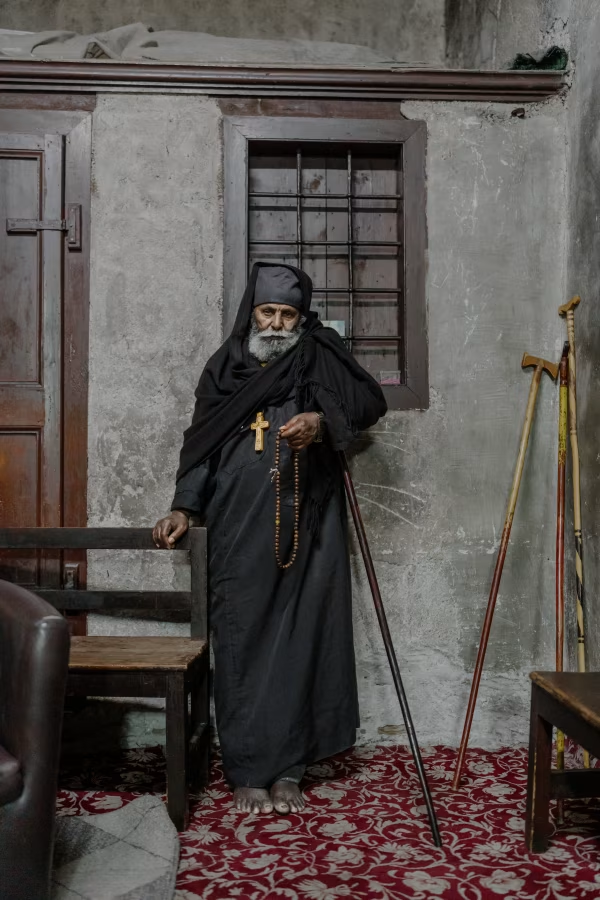
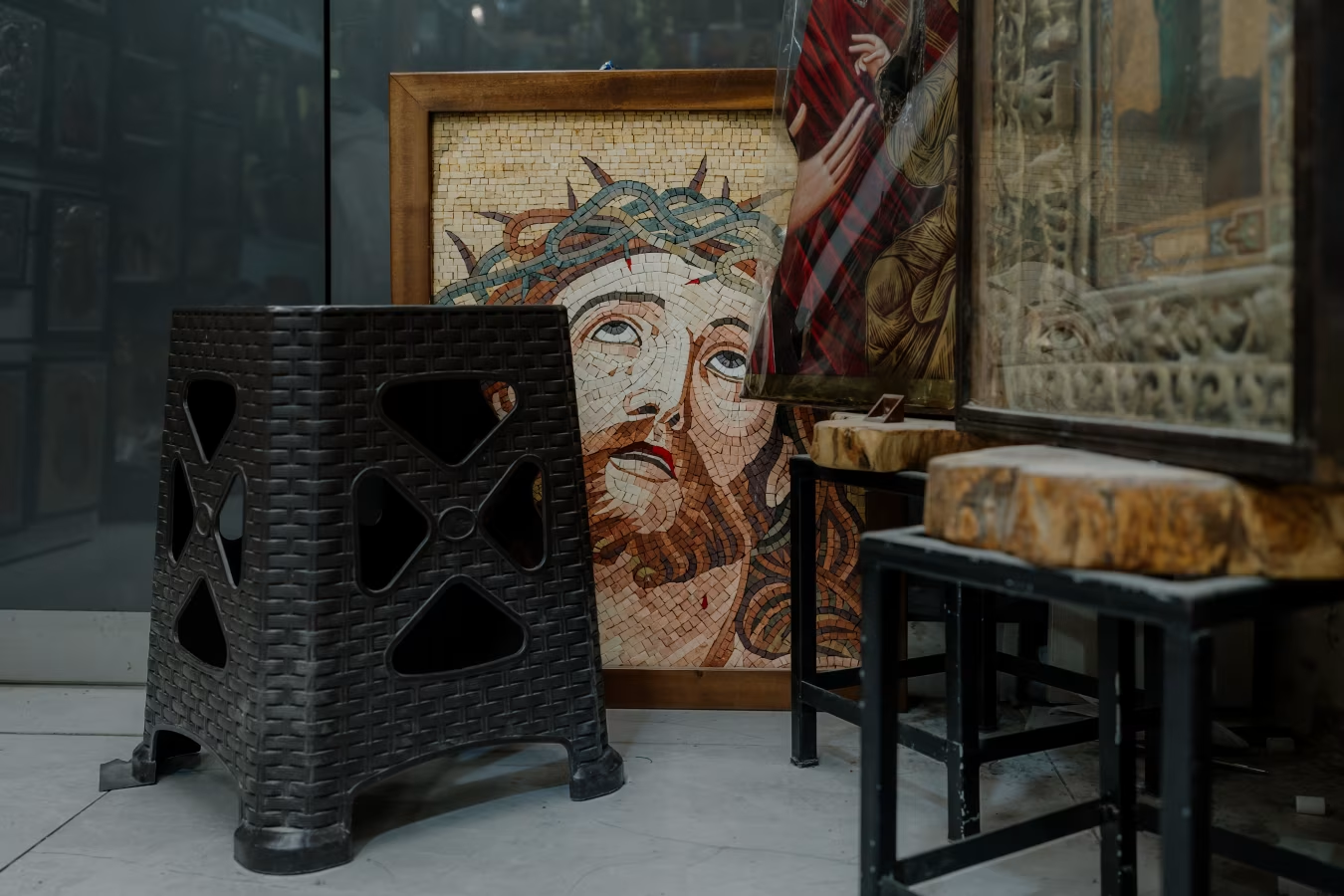
The rooftop compound of Deir al-Sultan, used by the Ethiopian Orthodox community above the Church of the Holy Sepulchre. OFIR BERMAN FOR WSJ
Anti-Christian behavior has tested the support of Israel’s staunchest allies in the U.S. When Mike Huckabee took over as U.S. ambassador to Israel last year, he was shocked to discover that evangelical Christian organizations were struggling to obtain visas. A strong supporter of Israel, Huckabee ran a tour company that brought thousands of Christian pilgrims to Israel and the West Bank and never had problems.
Huckabee went straight to Israel’s minister of interior, but the problem persisted, so he turned to Prime Minister Benjamin Netanyahu , who finally helped release the visas.
The main obstacle, said Huckabee, appeared to be an official at the Ministry of Interior who held anti-Christian prejudices. The U.S. Embassy is still working to streamline the visa process to avoid future problems.
“The best friends that the state of Israel has are evangelical Christians from America,” Huckabee said in an interview. “And if their organizations could not get their people to come serve on a clergy visa, that was the most unfortunate message they could possibly send.”
Shabbat Shalom
Alicia Nudelman , an Israeli volunteer who is part of Harani’s group, said she has witnessed how anti-Christian prejudices can be overcome.
She often accompanies a group of nuns from Jerusalem to Tel Aviv, where they deliver food and clothes to the homeless and drug addicts. During one such mission, a group of young men from a yeshiva—a traditional Jewish seminary or academy—spat near the nuns.
Nudelman and her colleagues reported the incident to the head of the yeshiva, who vowed to take action. A few weeks later, when the nuns returned to the same spot, they were approached by students from the same yeshiva. Instead of spitting at them, the students greeted the white-veiled nuns with a warm “Shabbat Shalom!”
“For the first time, they were trying to reach out,” said Nudelman. “They wanted to understand.”
The nuns say they are no longer afraid.
Write to Margherita Stancati at margherita.stancati@wsj.com