 Μake us preferred on Google
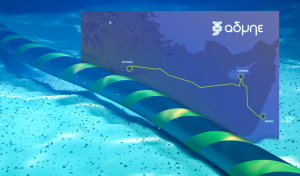
Lower electricity costs, fewer losses from the forced curtailment of renewable energy and annual savings for consumers that could reach €138 million, primarily in Cyprus. These are the main findings of a simulation examining how the Greek and Cypriot electricity systems could operate by 2035 if connected through the Great Sea Interconnector.
The analysis, presented Tuesday at a conference organized by the Institute of Energy for Southeast Europe (IENE), was conducted by Pantelis Biskas, a professor at the Aristotle University of Thessaloniki. It highlights an important consideration in assessing the project’s economic viability: a substantial share of the savings appears to come from the first 500 megawatts (MW) of transmission capacity, while further increases in capacity do not generate comparable additional benefits.
The Two Electricity Markets
To assess the project’s impact, the study examined different operating conditions for the two electricity markets. A scenario in which the countries’ power systems remain unconnected served as the baseline. Three levels of cable capacity were then evaluated: 500 MW, 750 MW and 1,000 MW. The analysis also considered the possibility of Cyprus gaining access to natural gas at a lower price than that used by Greek power plants.
This factor proved critical because it affects the economic value of electricity exchanges between the two countries. The findings suggest that the interconnector could reduce electricity supply costs, with a particularly significant impact on the Cypriot market, while also making it easier to absorb larger amounts of renewable energy.
The latter is especially important as renewable energy sources (RES) account for an increasing share of electricity generation. When the power system cannot absorb all the available output, some of that production must be curtailed.
However, the benefits do not increase proportionally with the cable’s capacity. According to the simulation, moving beyond 500 MW delivers a smaller additional economic return compared with the initial gains from connecting the two systems. Similarly, the availability of cheaper natural gas in Cyprus reduces the savings attributable to the electricity link.
Cyprus Stands to Reap the Biggest Energy Dividend
Cyprus is expected to capture the lion’s share of the savings generated by the Great Sea Interconnector. Across the scenarios examined, annual benefits for consumers in the two countries range from €122.7 million to €138.1 million, with the Cypriot market accounting for almost all of the economic gains.
The 500 MW scenario is particularly indicative. Savings in Cyprus reach €123.7 million, out of a total benefit of €138.1 million for both countries. In other words, approximately 90% of the gains would go to the Cypriot market.
The figures do not, however, improve steadily as the interconnector’s capacity increases. At 750 MW, annual savings for Cyprus rise to €126.6 million, before falling to €123.6 million in the 1,000 MW scenario.
The impact is also reflected in the average cost of electricity supply. Under the 500 MW scenario, the average cost in Cyprus falls from €120.49 to €99.14 per megawatt-hour (MWh), a reduction of approximately €21.30/MWh, or 18%.
The calculations also account for the various individual charges and costs required to ensure the electricity system operates smoothly and safely, including the cost of losses and maintaining reserve capacity.
By contrast, the change in the average cost of electricity supply in Greece is practically negligible. Depending on the scenario, it ranges from a 0.2% decrease to a marginal increase of 0.1%, highlighting the unequal distribution of economic benefits between the two countries.
Price Convergence With 500 MW
In the day-ahead electricity market, the load-weighted price in Cyprus falls from €112 to €90.50/MWh with a 500 MW interconnector.
The impact on Greece is marginal: the average day-ahead market price increases by just €0.40–€0.50/MWh. In the 500 MW scenario, specifically, it rises from €90.60 to €91/MWh.
The convergence of wholesale electricity prices in the two markets is another significant finding. According to the simulation, with a 500 MW connection, prices in Greece and Cyprus would be equal for 8,151 hours a year, or approximately 93% of the time.
That figure rises to 99.6% with transmission capacity of 750 MW and reaches 100% with a 1,000 MW connection. The findings suggest that even the initial 500 MW capacity could ensure almost continuous price convergence between the two markets, significantly reducing differences in wholesale electricity prices.
The interconnector would allow Cyprus to reduce its reliance on more expensive domestic electricity generation by covering part of its needs through imports from Greece. Based on the simulations, Cyprus’s net electricity imports are estimated at 1.53–1.60 terawatt-hours (TWh) annually, equivalent to 26%–27% of total demand.
Less Renewable Energy Goes to Waste
Another benefit of the electricity link is that it would allow a greater share of renewable energy production to be used, reducing the need to curtail output when the system cannot absorb all the available electricity.
The impact is more pronounced in Cyprus, where the share of curtailed renewable energy falls from 11.8% without the interconnector to approximately 4.5%. In Greece, the corresponding reduction is smaller, from 3.1% to approximately 2.9%.
Different weather conditions and electricity generation profiles in the two countries play a decisive role, creating opportunities to exchange surplus energy.
Under the alternative scenario involving cheaper natural gas, renewable energy curtailment in Cyprus falls further, to 3.5%–3.8%, compared with 4.5%–5.3% in the baseline scenario.
Cheaper Gas Reduces the Benefits
The equation changes significantly if Cyprus gains access to lower-cost natural gas.
In the baseline model for 2035, the price of natural gas is estimated at approximately €28/MWh. In the alternative scenario, the price in Cyprus falls to €18/MWh, while remaining unchanged in Greece.
This difference makes Cypriot natural gas-fired power plants more competitive, altering electricity flows between the two markets. As a result, Cyprus’s net electricity imports are cut by approximately half, from 1.6 TWh to 0.8 TWh annually, as a larger share of domestic demand can be met through local generation.
This development has a direct impact on the interconnector’s economic performance. Savings for consumers remain, but fall to €40 million–€50 million annually, approximately one-third of the benefits projected in the baseline scenario.
Of this amount, €16 million–€23 million would go to Greece and €23 million–€27 million to Cyprus. Despite the lower overall savings, the final cost of electricity supply in the Cypriot market stands at €98–€99/MWh in both scenarios.
A similar pattern emerges in fuel costs. Annual savings fall to €18 million–€21 million, compared with €61 million–€62 million in the baseline scenario.
The findings show that the economic value of the Great Sea Interconnector depends not only on the cable’s transmission capacity but also on fuel prices, which determine the competitiveness of power generation plants.
According to the presentation, operating the interconnector would also result in an annual reduction of 224,000–243,000 metric tons of carbon dioxide emissions.