
 Μake us preferred on Google
Chris Pappas, a Democratic congressman from New Hampshire, is favored to win a US Senate seat on Tuesday, potentially restoring Greek-American representation to the chamber for the first time in nearly 14 years.
Pappas, 46, faces Republican John E. Sununu, who served in the Senate from 2003 to 2009, in the race to succeed retiring Democratic Sen. Jeanne Shaheen.
If elected, he would become the first Greek-American senator since Olympia Snowe of Maine retired in January 2013. Other prominent Greek-American senators have included Maryland Democrat Paul Sarbanes and Massachusetts Democrat Paul Tsongas.
Beyond his ancestry, Pappas has established a record on Greece, Cyprus and Turkey as co-chair of the bipartisan Congressional Hellenic Caucus. His candidacy raises a question for Hellenism: Would his election strengthen Athens’ influence in Washington?
Chris Pappas, a Democratic congressman from New Hampshire, is favored to win a US Senate seat on Tuesday, potentially restoring Greek-American representation to the chamber for the first time in nearly 14 years.
Pappas, 46, faces Republican John E. Sununu, who served in the Senate from 2003 to 2009, in the race to succeed retiring Democratic Sen. Jeanne Shaheen.
If elected, he would become the first Greek-American senator since Olympia Snowe of Maine retired in January 2013. Other prominent Greek-American senators have included Maryland Democrat Paul Sarbanes and Massachusetts Democrat Paul Tsongas.
Beyond his ancestry, Pappas has established a record on Greece, Cyprus and Turkey as co-chair of the bipartisan Congressional Hellenic Caucus. His candidacy raises a question for Athens: Would his election strengthen Greece’s influence in Washington?

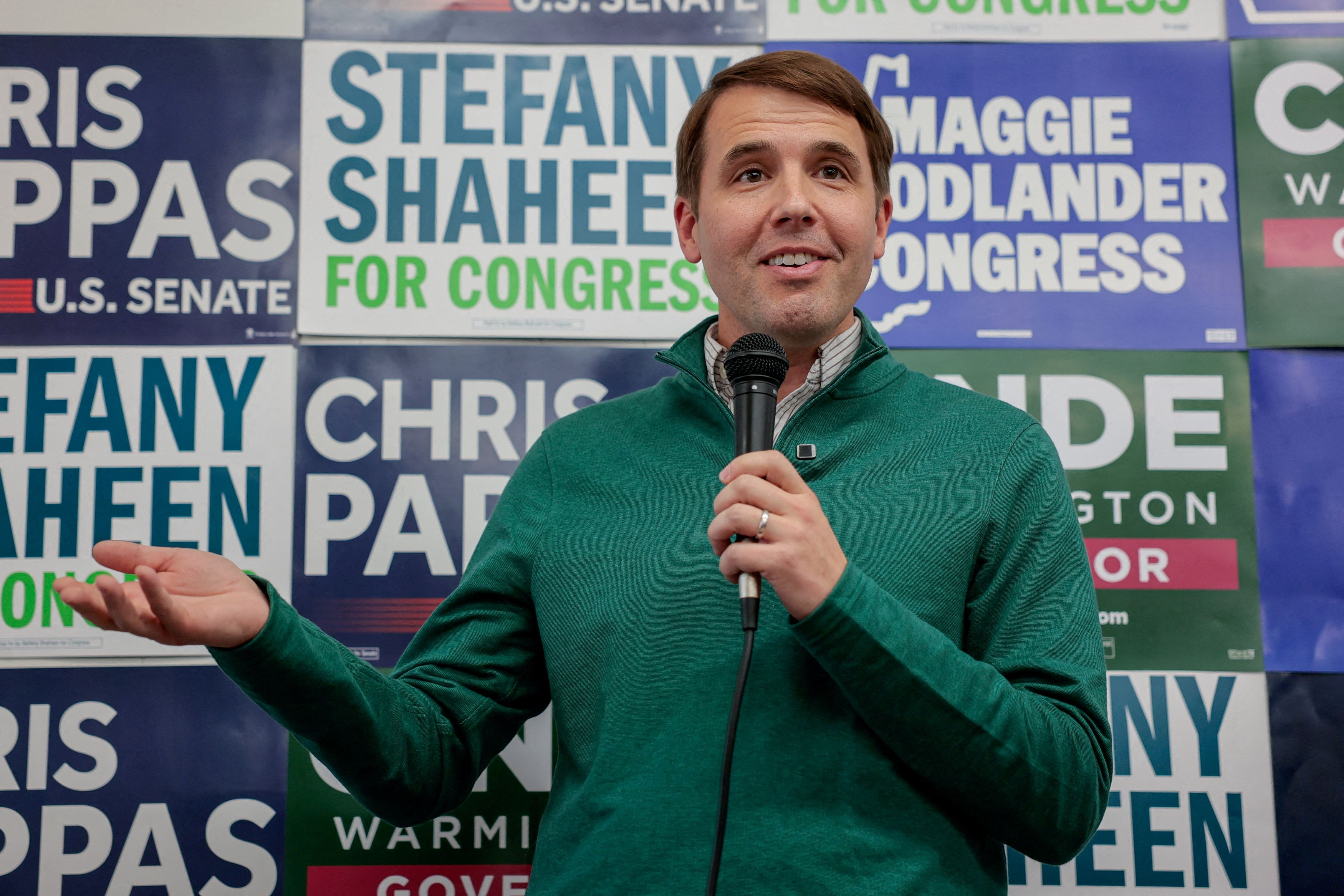
Democratic US Senate candidate Chris Pappas signs door hangers while meeting with community members at Willow, a clothing boutique, in Windham, New Hampshire, US, November 2, 2026. REUTERS/Kylie Cooper
From Manchester to Capitol Hill
Born in Manchester, New Hampshire, in 1980, Pappas is the great-grandson of Greek immigrants and traces his family’s roots to Thessaly and Macedonia. His early years followed a familiar path for many Greek-American families: growing up around the family restaurant, where he began working at a young age.
A Harvard graduate, he entered the New Hampshire legislature in 2003, later serving as Hillsborough County treasurer and on the state’s Executive Council.
Elected to the US House in 2018, Pappas became New Hampshire’s first openly gay member of Congress. He has represented the state’s First Congressional District since 2019 and lives in Manchester with his husband, Vann Bentley.
His political platform emphasizes affordability, healthcare, small businesses and government accountability.
Pappas has faced Republican attacks over potential conflicts of interest involving Bentley, a former Amazon lobbyist who now works for Uber, as well as over Pappas’ accumulation of wealth while in office.
Republican campaign advertisements have questioned whether Pappas’ congressional votes benefited companies connected to Bentley’s work. Independent fact-checkers, including PolitiFact and FactCheck.org, found that the advertisements misrepresented important aspects of his voting record, did not substantiate allegations that he concealed the relationship, and give a more modest presentation of his accumulation of wealth.
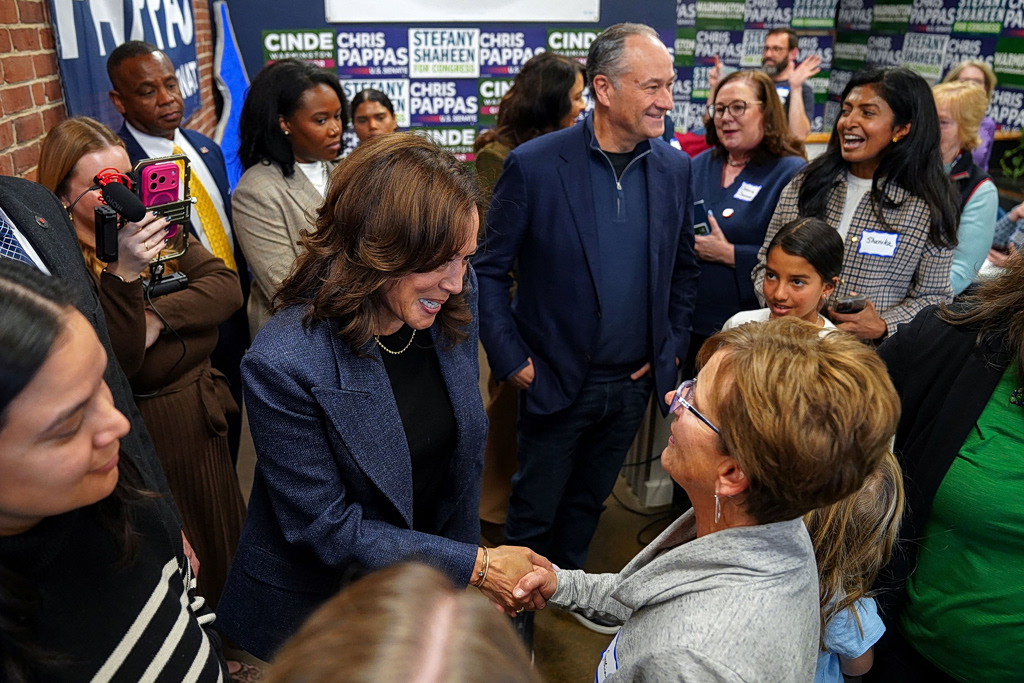
Former US Vice President Kamala Harris greets a supporter next to her husband, former second gentleman Doug Emhoff, after speaking at a campaign event with US Representative Chris Pappas (D-NH) ahead of the US midterm elections, in Portsmouth, New Hampshire, US, October 24, 2026. REUTERS/Amanda Sabga
What Do the Polls Show?
Pappas enters Election Day with a substantial lead. The RealClearPolling average, covering surveys conducted between September 28 and October 31, puts him ahead of Sununu by eight percentage points, 50.6% to 42.6%. The final University of New Hampshire survey showed a wider 54%–42% lead.
The Hill/Decision Desk HQ forecast estimated an 88% probability of a Pappas victory as of November 2. Meanwhile, the Polymarket prediction market priced his chances at approximately 96% on November 3.
Trump endorsed Sununu during the Republican primary but has been largely absent from his general-election campaign. Sununu, meanwhile, has sought to distance himself from several Trump policies, including tariffs and the war in Iran. With the president’s approval ratings low in New Hampshire, his support may have been perceived as much a liability as an asset for the Republican candidate.
By contrast, Pappas has campaigned alongside prominent Democrats, including former Vice President Kamala Harris, former Transportation Secretary Pete Buttigieg and California Gov. Gavin Newsom.

Democratic US Senate candidate Chris Pappas and former New Hampshire governor John Lynch speak with community members at MaryAnn’s Restaurant in Derry, New Hampshire, US, October 31, 2026. REUTERS/Kylie Cooper
Pappas, Hellenism, and Greek-Turkish Affairs
Pappas’s involvement in Greek-American affairs extends well beyond cultural ties. As co-chair of the bipartisan Congressional Hellenic Caucus, he has helped advance legislation strengthening US–Greece defense cooperation and challenged American arms sales to Turkey.
In May, the US–Greece Defense Cooperation Advancement Act, introduced by Pappas and three fellow caucus leaders, advanced through the House Foreign Affairs Committee. The bill would extend US military education and training assistance to Greece for five years.
Pappas has taken a particularly firm position on Turkey. In August 2025, he helped organize a bipartisan letter signed by 40 lawmakers opposing Ankara’s return to the F-35 fighter jet program while it retains Russian-made S-400 air defense systems. He has also challenged other proposed fighter aircraft sales to Turkey and criticized Turkish military activity in the Turkish-controlled north of Cyprus.
His election would give Greece and Cyprus an experienced advocate in the Senate, where lawmakers vote on senior administration appointments and can influence defense legislation, sanctions and arms transfers. But his effectiveness would depend on committee assignments, political alliances and the balance of power in Congress. US policy toward Greece and Turkey remains largely shaped by a Republican White House which has demonstrated little interest in bipartisan collaboration.
His departure from the House would also leave the Hellenic Caucus seeking a new Democratic co-chair. As To Vima’s Petros Kasfikis recently reported, the caucus has struggled to maintain bipartisan unity when Greek-related issues require lawmakers to challenge their own party’s administration.

Signs supporting Democratic US Senate candidate Chris Pappas and Democratic candidate for New Hampshire’s 1st Congressional District Stefany Shaheen in Manchester, New Hampshire, US, November 1, 2026. REUTERS/Kylie Cooper