 Μake us preferred on Google
 Like many schoolboys, I idolized Indiana Jones and James Bond for all the usual reasons, not least their double lives. When he wasn’t taking on Nazis, Indy lectured in the sort of dusty, paneled classroom I learned Latin in. Bond knew weapons as well as he did the most recondite French wine list.
Even then, I understood that the sedulous life and inclination of the archaeologist were ill-suited to movie-spy suavity. Fine dining? Crisp-white tuxedos? The pioneering British archaeologist Flinders Petrie reputedly served meals “so excruciatingly bad that only persons of iron constitutions could survive” them, and supposed that archaeology “should necessarily entail . . . rags, dirt, malnutrition, chronic dyspepsia and almost total absence of the most rudimentary creature comforts.”
Rodney Young, the central figure in Stephan Talty’s “The American School of Spies: The Archaeologists Who Fought the Nazis and Saved the Treasures of Ancient Greece,” was among the exceptions. A onetime “Cary Grantish darling of New York debutante balls,” Young pursued archaeology at Princeton and Columbia, joining the American School of Classical Studies in Athens in 1933. It was there, at the outbreak of World War II, that he helped to “rebury” the treasures of the National Archaeological Museum to protect them from bombing raids, Nazi archaeologists and plundering soldiers.
In 1941, channeling his inner Byron, Young became the first American to volunteer to serve in the Greek army (his application was rejected). The next year, William Donovan, soon to be the founding director of the U.S. Office of Strategic Services—the precursor to the Central Intelligence Agency—recruited him to lead an American spy network in Greece.
Young’s team, the so-called Greek Desk, was comprised of fellow Ivy League archaeologists and Greek-American commandos. Why archaeologists? Donovan’s concern was not so much the preservation of ancient relics as it was the regional expertise and cover that archaeology provided for gathering intelligence. And how did Young go about persuading his peers? According to Mr. Talty, they were motivated by patriotism, noblesse oblige and philhellenism. “Greece gave us the tools of liberty,” Young would reflect. “We owed it to her to fight for her soil.”
Dorothy Cox upstages Young in Mr. Talty’s narrative. Trained as an architect at Columbia—the only woman in the master’s class of 1917—but denied meaningful work owing to her sex, she had resigned herself to serving the Red Cross, teaching women how to make embroidered goods in Greece and, at her lowest ebb, housekeeping at Bryn Mawr, her undergraduate alma mater. Ultimately, she fell into archaeology and numismatics (the study of coins, on which she would become an authority). Cox joined Young on the Greek Desk at age 50, “single, graying, and somewhat frail in health,” Mr. Talty writes.
Their training at the OSS “Farm” in Maryland was amateurish, “scandalous” in its spotty instruction and lasting only four weeks, less than half of the 10 weeks for recruits to the Communications Branch of the OSS. Young and Cox were star pupils. Jack Caskey and Jerome Sperling, who would play significant roles on the Greek Desk, were chided for their rule-following, caution and seriousness, qualities that any sensible archaeologist might otherwise aspire to.
Setting up in Cairo in May 1943, Young’s brief was to cultivate local spy networks; gather intelligence; insert agents and operatives in Greece to guide the commandos; sabotage enemy infrastructure; and prepare for D-Day.
As the war progressed, the Greek Desk became adept, if not war-altering, spies. Cox proved to be Young’s ablest intelligence gatherer, even if the occasional bribes she endorsed put her agents at needless risk. (Only black-marketers and foreign agents could afford bribery.) Mr. Talty’s representative commando, Helias Doundoulakis, was more Bond-like in his approach. One night he treated friends to shrimp, clams, fried potatoes and ouzo on the waterfront, upsetting elderly, likely famished, passersby. He vowed not to attract such notice again, but as one of his partners Cosmas reminded him, “we are behaving as all Greeks do.” As Mr. Talty notes, “to make money and live poorly would have been more suspicious, more un-Greek, than blowing it on a lavish meal.” Doundoulakis embraced the advice, learning the rumba and generally, in the author’s words, “living like a Greek playboy.”
Mr. Talty presents characters worthy of our interest, but he tends to flatten them into stock types. Young was “the gruff father figure.” (The contemporary alternative was considerably more purple, to be fair. A 1941 United Press report describes Young’s eyes blazing “like the eyes of the dragon in Siegfried.”) Cox “earned the respect of the brass.” Doundoulakis’s nerve-wracking encounter with Nazi guards ends with something I pictured the young Clint Eastwood being made to say: “An older man might have thought, I’m lucky . Helias thought, I’m good .”
Yet Mr. Talty does not ignore his heroes’ ambivalence. Young and Cox increasingly chafed at Britain’s postwar plans for Greece. The author explores the guilt Doundoulakis felt for the thousands of deaths caused by one 20-word telegram reporting German troop movements and calling in an American airstrike. I was unexpectedly moved by the grief of the lovelorn cousin of Yianni, one of the Greek commandos, for the loss of her German boyfriend: “Did you know that my German lieutenant was an ancient-Greek scholar? . . . He loved me and he loved Greece.” But Yianni “couldn’t say the truth,” Mr. Talty observes. “ It didn’t matter what he did or how he felt .”
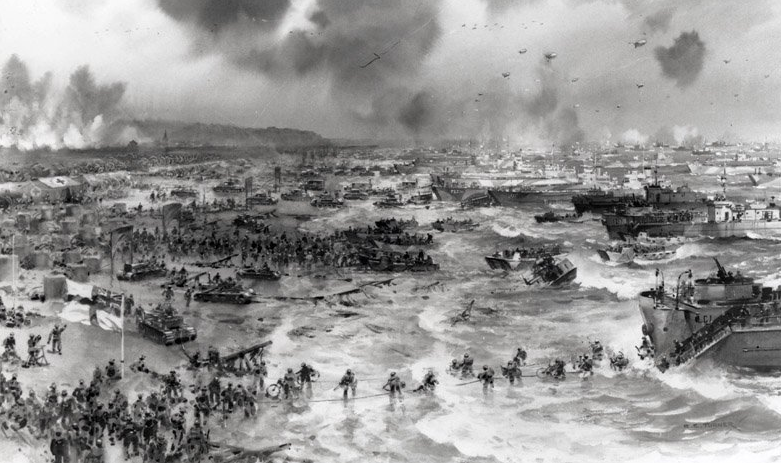
The Greek Desk’s closest brush with D-Day was the extraction of Cornelia Kapp from Ankara, Turkey, in 1944. Kapp, who had been spying for the Americans in the German embassy, identified Elyesa Bazna, the British ambassador’s valet, as “Cicero,” the secret agent whose information was so good as to sow doubt in his Nazi handlers. Had Kapp been captured, Mr. Talty relates, “one thing would have been clear to the Germans: Cicero was not a double agent” and they could act on what he told them.
After D-Day, with B-25s sighted over Salonika, Doundoulakis met one of his neighbors on the street: “Helias, do you see?” he cried. “The Americans did not forget us, after all.”