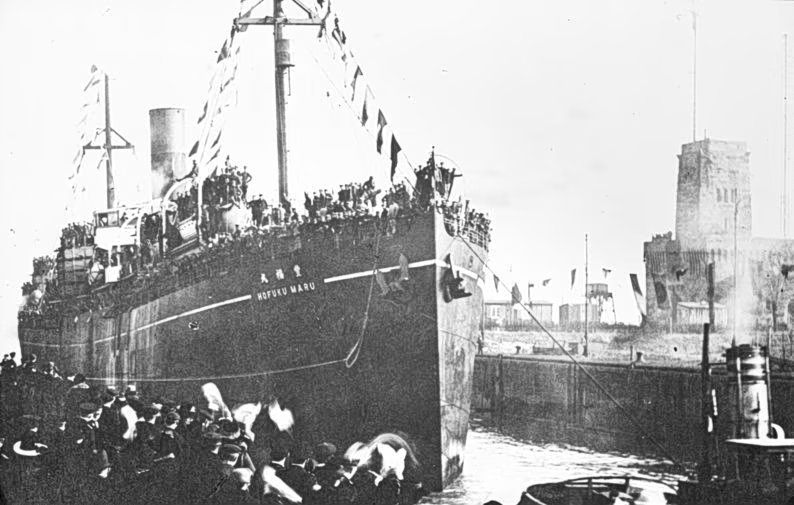
Petty Officer First Class Taylor Lucas was nearly 80 feet underwater, inside the wreckage of a Japanese liner used to transport captured American soldiers and sailors in World War II.
In the darkness, the U.S. Navy diver dug through mud, wood and steel. There was so much sediment floating around that a flashlight was no use.
Suddenly, he touched something that felt different.
“I got that feeling of like, ‘Oh, maybe this is something important,’” Lucas said.
In his hand, he had the remains of a boot, sole and leather still attached.
The shoe, later found to have “U.S. Army” written on the sole, was one of the strongest signs yet that Defense Department researchers are closing in on a goal that has escaped them for more than eight decades: bringing home the remains of about 250 American prisoners of war who died in December 1944 when U.S. aircraft, in the campaign to retake the Philippines, sank the Japanese ship carrying them.
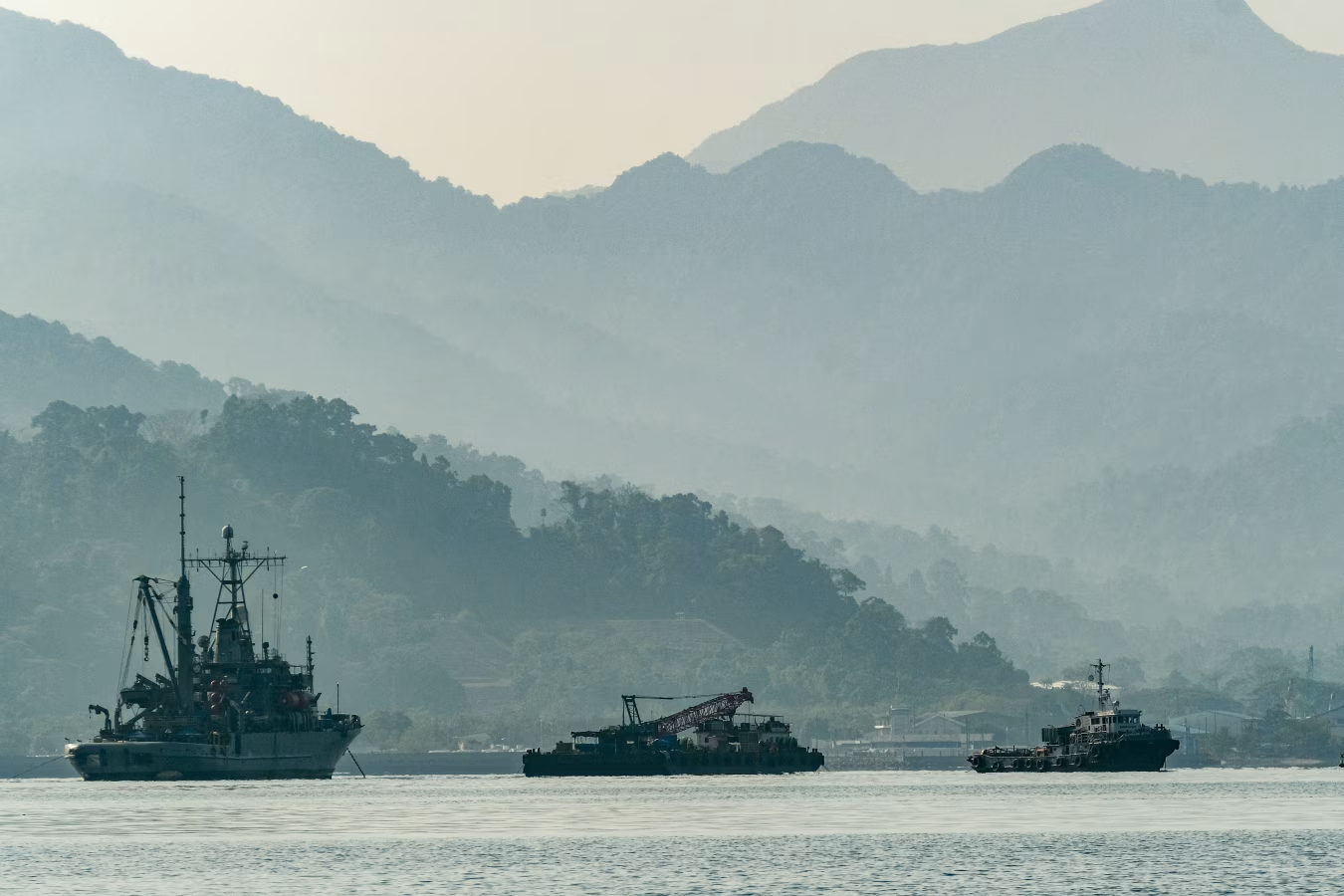
The mission at the Oryoku Maru, whose crumpled frame lies on the ocean floor about 500 feet off the Philippine coast, is among the most complex ever attempted by the Defense POW/MIA Accounting Agency, the Pentagon arm tasked with finding missing U.S. servicemembers.
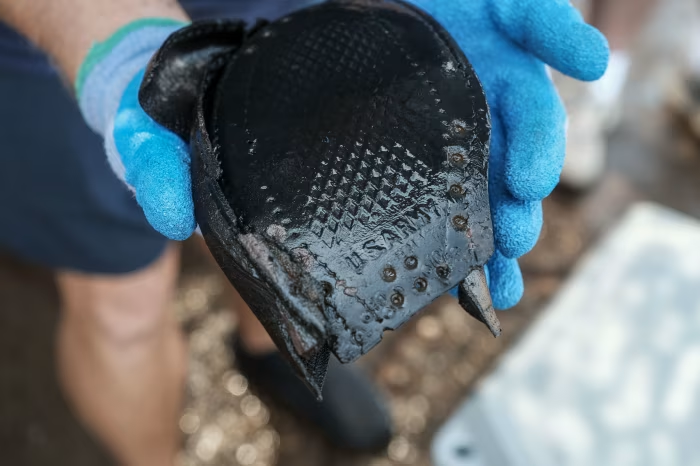
The Army boot offered a glimmer of hope for the agency’s mission, and POW families. Veejay Villafranca for WSJ
For Christopher Schurtz, it’s also the best hope yet to close a wound that has afflicted his family for three generations.
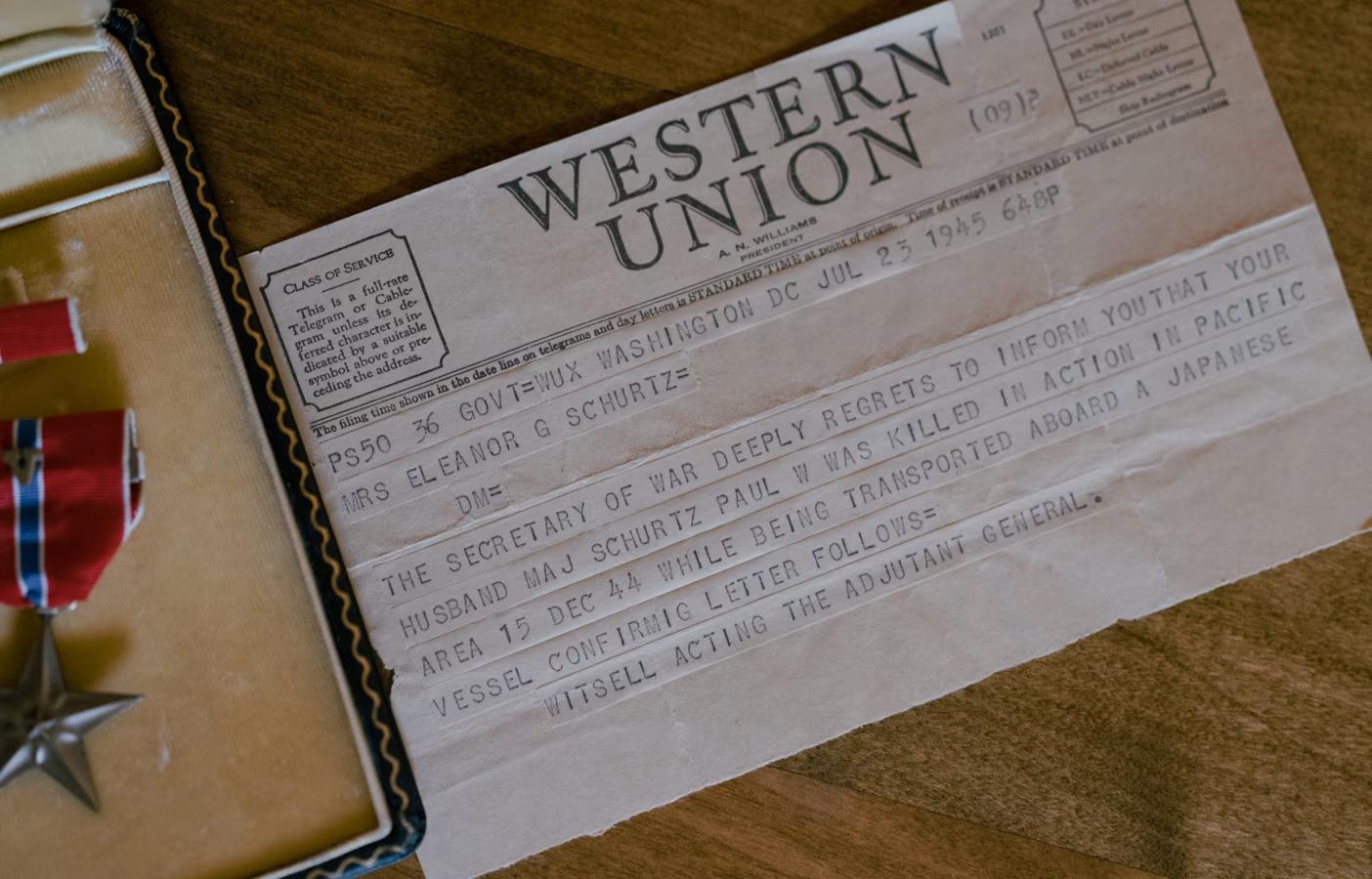
Schurtz’s grandfather, Maj. Paul Schurtz, died on the Oryoku Maru when he was 43.
A U.S. postal worker in Deming, N.M., Paul was known for whistling while delivering mail. He also served as the choir director at a local church.
When his National Guard coastal artillery unit was deployed to the Philippines in 1941 just months before the Japanese attacked Pearl Harbor, Paul left behind his 5-year-old son Gerald, Christopher’s father, and a 1-year-old daughter, Jeanette. Paul’s wife, Eleanor, was pregnant with another son, Robert, he would never meet.
Christopher grew up hearing his father tell the story of their farewell at a train station in Fort Bliss, Texas.
The loss of Maj. Schurtz defined Gerald’s life and influenced Christopher, too. Gerald, who died in 2023, joined the Army. Christopher became a history professor.
“I can’t believe that after all this time, that this would be something that would even be possible,” Christopher said of his grandfather’s remains perhaps coming home. “And I wish my dad was around to see it, cause it meant everything.”
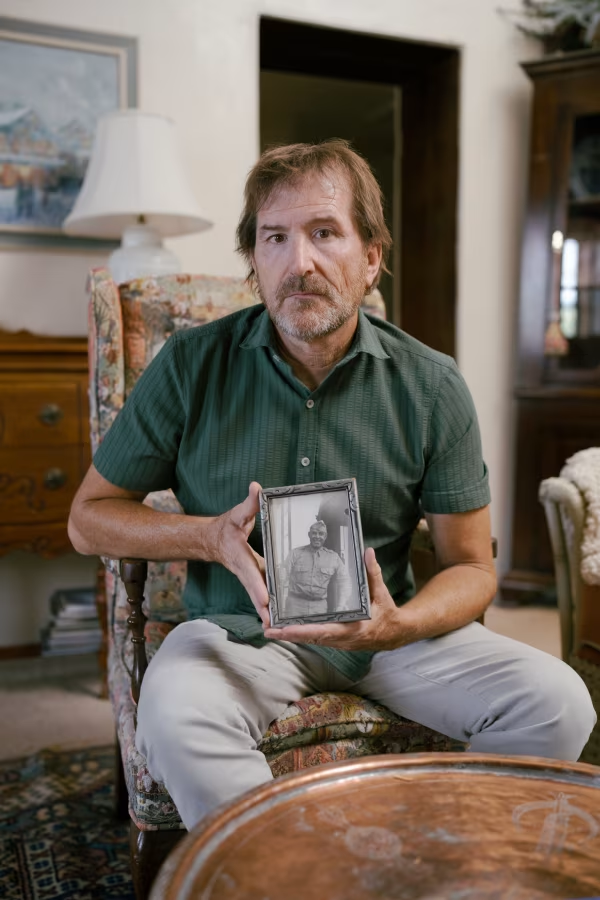
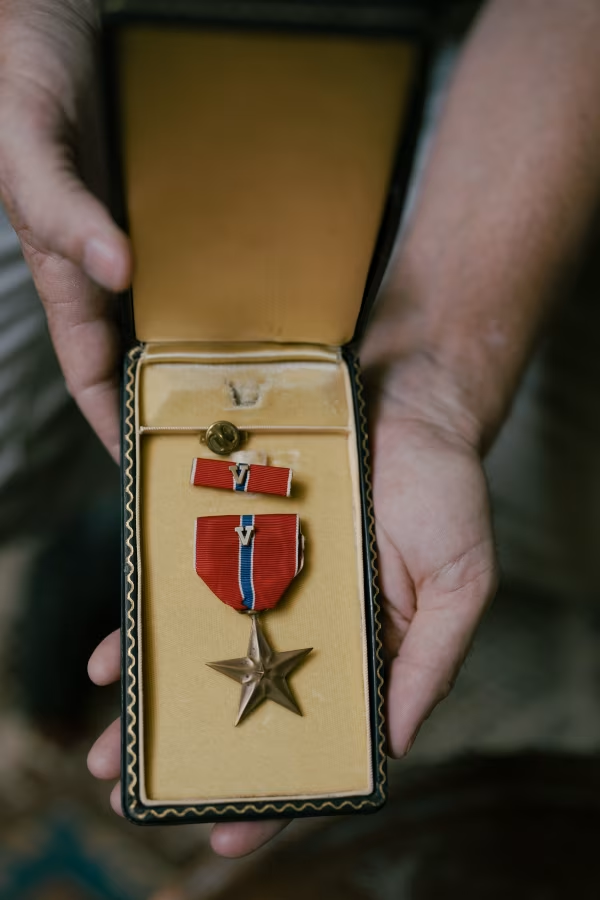
Christopher Schurtz’s life has been shaped by the death of his grandfather. He hopes the mission, in Subic Bay, might bring closure. It’s been 82 years since Maj. Paul Schurtz, who was awarded the Bronze Star, disappeared. Paul Ratje for WSJ
Paul Ratje for WSJ
Searches, schematics and surveys
About 80,000 U.S. servicemembers remain missing, most of them from World War II. Locating and identifying these men and women is a painstaking and sometimes dangerous process. Even if the POW agency finds human remains, it may not yet have DNA from family members to identify them. Since 1973, fewer than 4,000 have been accounted for.
In the case of the Oryoku Maru, there are the technical challenges of excavating the largely flattened 436-foot wreck, the sheer number of POWs and the fact that researchers can’t be certain who went down with the ship, because of conflicting historical accounts.
The agency has done underwater excavations before. But usually its researchers are looking for a single person or a small crew, such as aviators who went down with their aircraft.
The Oryoku Maru is “extremely damaged and extremely disarticulated,” said Meghan Mumford, the lead forensic underwater archaeologist for the mission.
U.S. aircraft pounded the ship with rockets and bombs over two days in December 1944. In 1946, Navy divers used explosives to break open the wreck in an attempt to recover remains. Two disintegrating skull fragments were recovered. Ultimately, they decided the mission was too difficult and recommended the wreck be designated a cemetery—like many other sunken World War II-era ships.
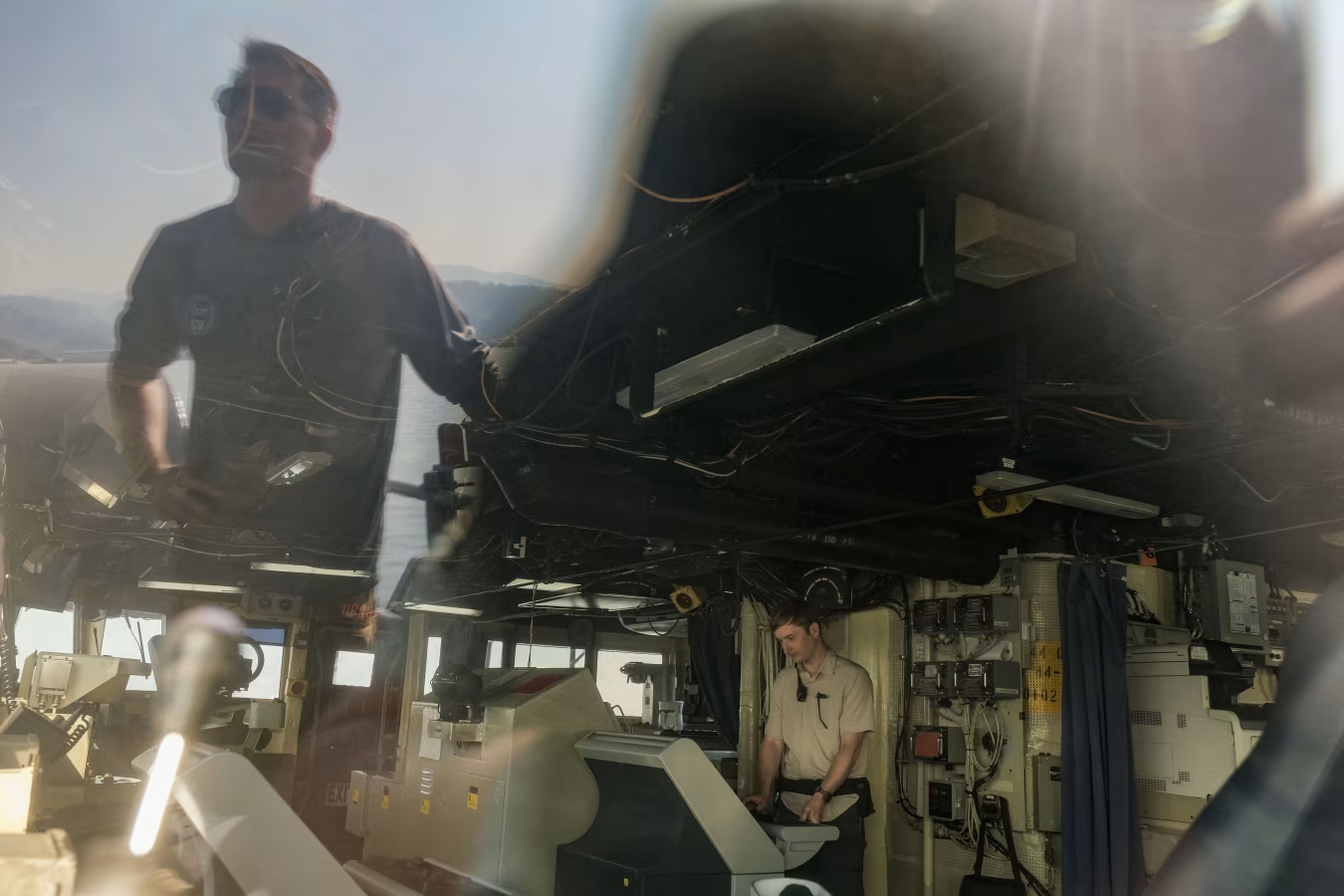
Aboard the USNS Salvor, the team carefully plans their mission. Lead researcher Meghan Mumford briefs divers before they head out. Others inspect items found during the recovery. Veejay Villafranca for WSJ
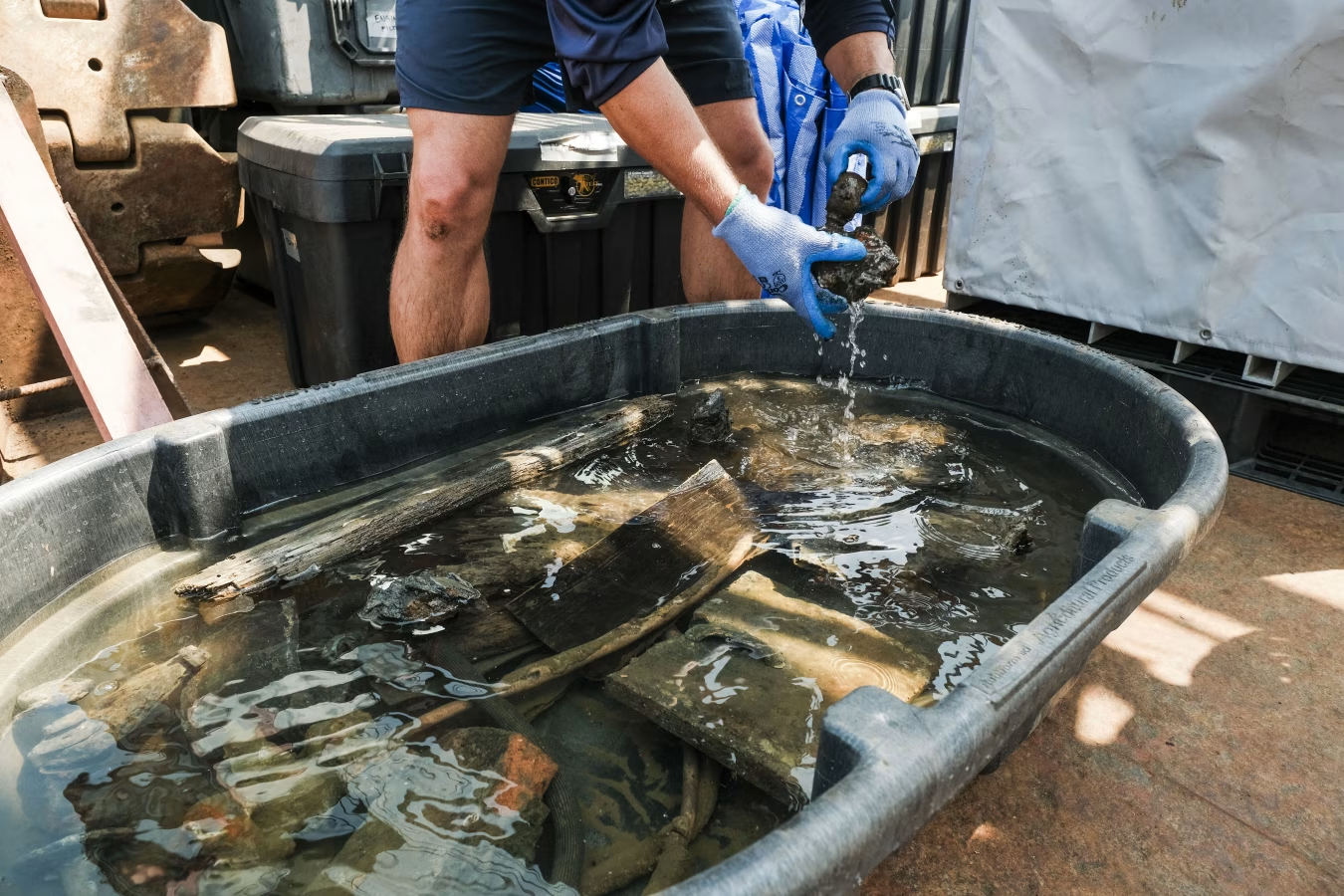
Aboard the USNS Salvor, the team carefully plans their mission. Lead researcher Meghan Mumford briefs divers before they head out. Others inspect items found during the recovery. Veejay Villafranca for WSJ
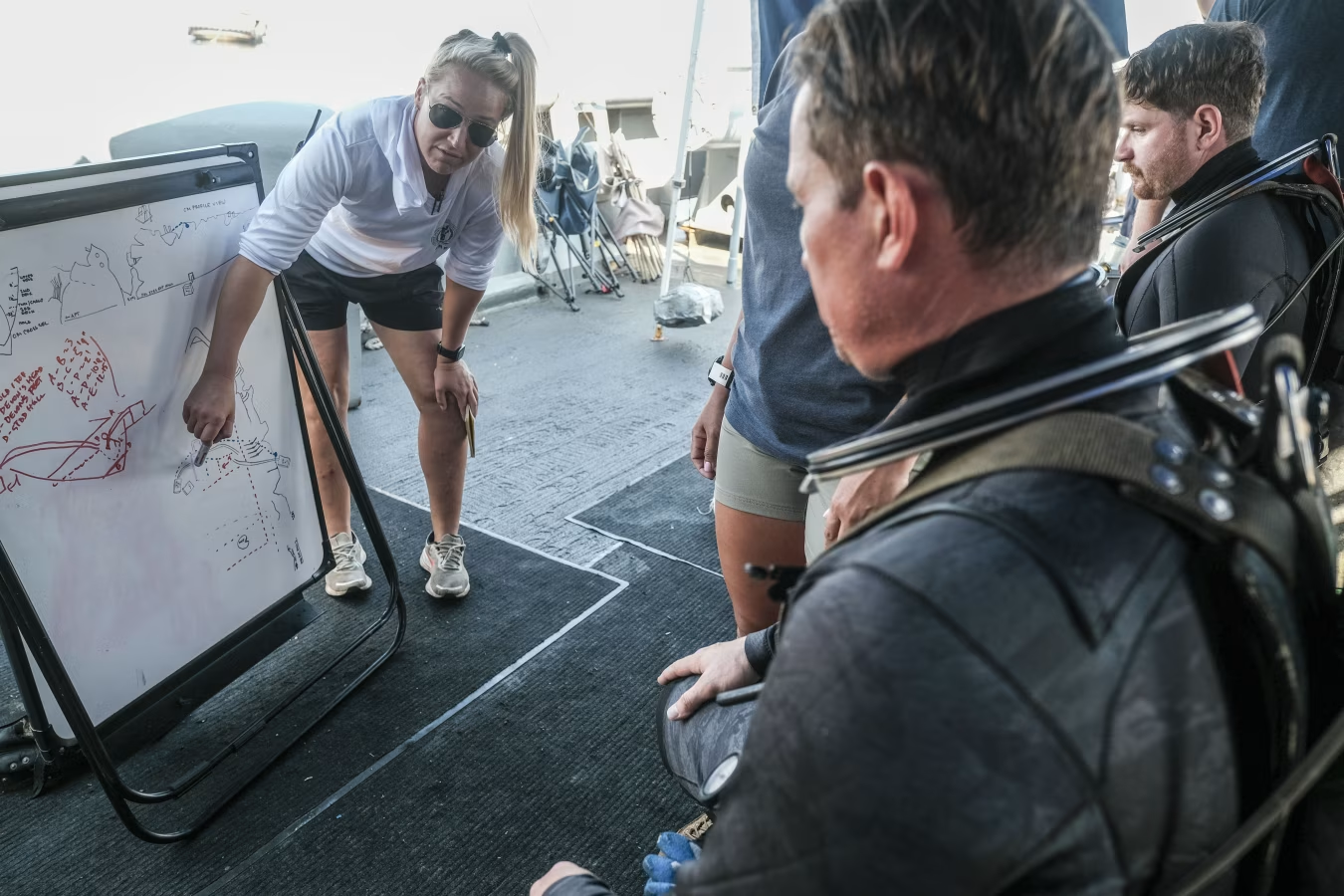
Aboard the USNS Salvor, the team carefully plans their mission. Lead researcher Meghan Mumford briefs divers before they head out. Others inspect items found during the recovery.Veejay Villafranca for WSJ
It took decades before officials tried again. The turning point came when an effort to identify World War II remains tied to another Japanese transport ship led researchers back to the Oryoku Maru.
Historians with the POW agency began combing through archives, including passenger rosters and survivor accounts, around the early 2010s. In 2016, a team started canvassing the area around the former U.S. naval base at Subic Bay, talking to local fishermen and divers about conditions at the site. Researchers eventually located schematics of the ship.
More expeditions followed, in which the POW agency and its partners conducted intensive underwater surveys to map the wreck and check on access to the ship’s cargo holds. Seven main 3-D models were created.
The surveys confirmed the wreckage was the Oryoku Maru and, more importantly, that a recovery operation was feasible.
The length of the ship matched the Oryoku Maru, as did features across the wreck. The front section, which was more intact, had an anchor, a windlass and a stairwell feature consistent with the liner. Also visible was a hatch opening, leading to a forward hold where American POWs were believed to have been held.
“There are several ways we could approach the ship and get into the hold, which is down in the lowest part of the ship,” Mumford said.
The hellscape of the ‘hellship’
On Dec. 13, 1944, 1,619 Allied POWs, mostly Americans, were loaded onto the Oryoku Maru in Manila as the Japanese rushed to move prisoners to labor camps elsewhere before the Americans retook the islands. The ship also carried 1,000 merchant sailors, 700 civilians and 100 crew, according to the POW agency, which notes the numbers are estimates based on conflicting historical documents.
Many of the prisoners had been captured more than two years earlier when the Japanese first invaded the Philippines and had survived the infamous Bataan Death March. Many who survived the Oryoku Maru would later say their ordeal on board the ship—one of more than 100 Japanese prisoner transports that would become known as “hellships”—was the worst of their captivity.
In one cargo hold, prisoners sat jammed into the crotch of the man behind them, five to a row. Men passed out from suffocation and dehydration. Temperatures inside may have soared to 120.
The Japanese requisitioned the ship, a luxury liner, for the war effort, and had recently used it to transport horses. The ventilation system, turned on for the horses, was turned off for the prisoners. Some POWs said there were still traces of manure. Buckets, placed in holds as latrines, were soon overflowing.
“‘Hell’ is almost too small a word to describe what went on there,” said John McManus, a historian at Missouri University of Science and Technology who has studied the Japanese prisoner transports.
Survivors talked about POWs drinking their own urine or going so crazy they attacked their comrades. “To be able to lick a few drops of water off a rusty pipe becomes a leg up somehow,” McManus said. “That’s just how mind-blowing and terrible this truly was.”
The hellscape worsened when U.S. aircraft attacked the Oryoku Maru on Dec. 14, one day after leaving port, and again on Dec. 15, setting the aft deck ablaze and dealing the ship its final blows. Historians say U.S. commanders didn’t know the ship was transporting American prisoners.
Prisoners could hear the screams of Japanese children, who were also on board. POWs who tried to escape were shot. Blood trickled down the structure of the ship, evidence of the carnage.
Eventually, the Japanese abandoned the ship as it sank in Subic Bay, and the prisoners were forced to swim to shore.
Just several hundred prisoners originally on board made it to Japan, with about 400 surviving to the end of the war, the POW agency estimates.
Some 225 died during the Oryoku Maru’s short journey and the U.S. attacks, according to the agency. An additional 55 drowned or were shot by the Japanese as they swam. Those prisoners who were recaptured were eventually loaded onto two more ships; more died when one of those ships was attacked by U.S. aircraft, others died in transit.
Paul Schurtz’s unit had become trapped in the Bataan Peninsula as the Japanese advanced. After the U.S. forces surrendered, Schurtz left his position and approached the Japanese to make sure they knew hostilities had ended, saving his men. The act earned him a Bronze Star. Schurtz then endured more than two years in Japanese prison camps.
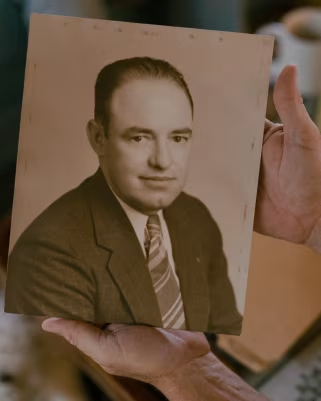
In the final moments of the Oryoku Maru, an American military chaplain saw the lifeless body of a Maj. Shurtz, cradled his head and said a prayer, according to “Days of Anguish, Days of Hope,” a book based in part on the diary of the chaplain, who survived the war. Christopher Schurtz believes it is a reference to his grandfather.
His father, Gerald, served 28 years in the Army, rising to the rank of colonel. He tracked down veterans to learn more about his missing father and worked to ensure POWs’ sacrifices were recognized. He told Christopher that his father’s death felt like a big mix-up, and that sometimes he would look down the street and imagine him walking home.
As a child, Christopher would stare at photos of his grandfather, trying to imagine his voice and wondering what life would have been like if he had come home.
Some years ago, he found some old family videos. He was stunned to see his grandfather appear on screen, holding his father’s hand at the train station in Fort Bliss. There was also footage of the family waving goodbye.
“I just couldn’t believe what I was seeing,” Christopher said. “Here’s this myth come to life.”
‘More human’
During a more than two-month expedition that ended in early May, a team of U.S. Navy and Coast Guard divers, led by the POW agency, tried to make their way into the Oryoku Maru’s forward cargo hold, where 600 enlisted men were kept.
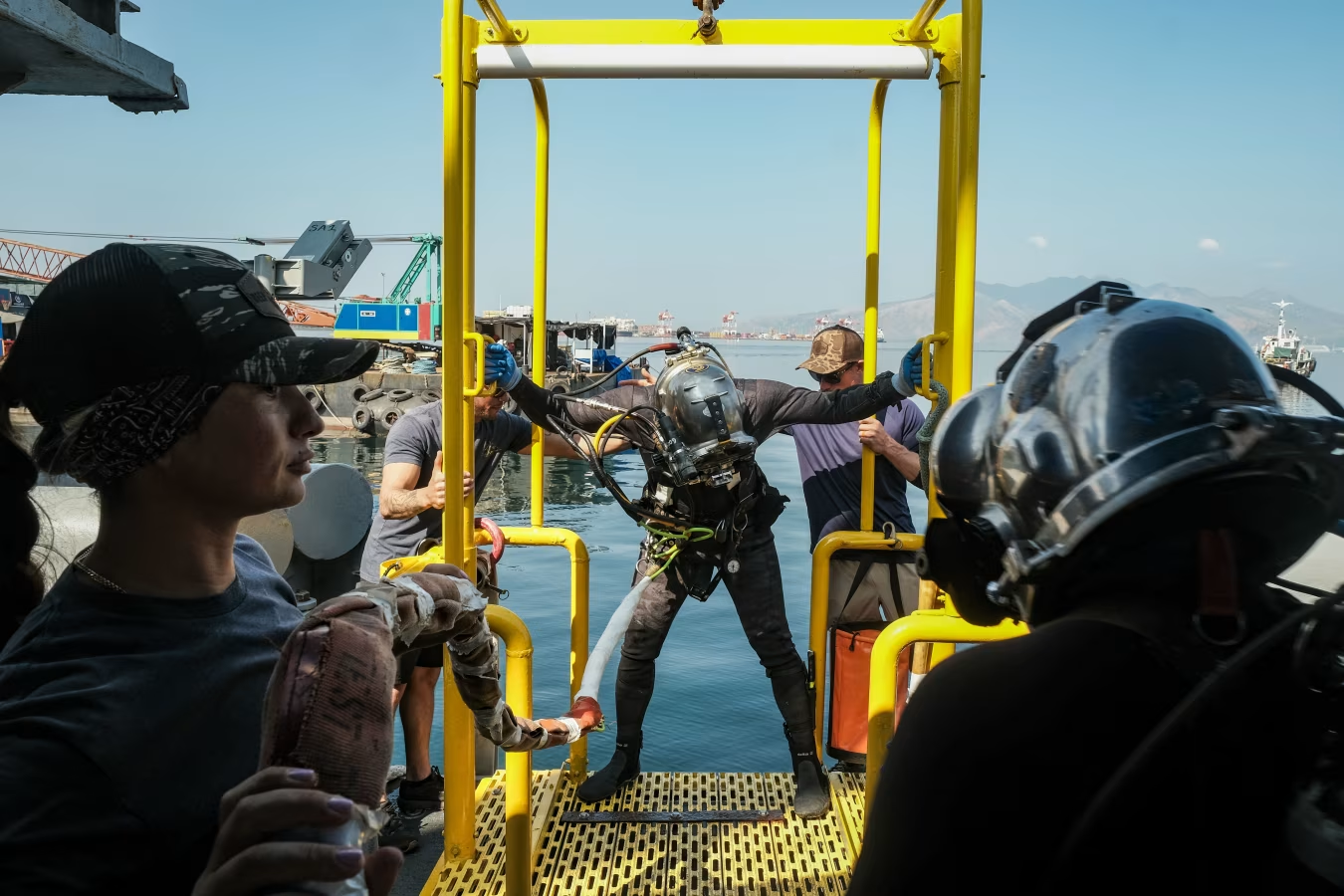
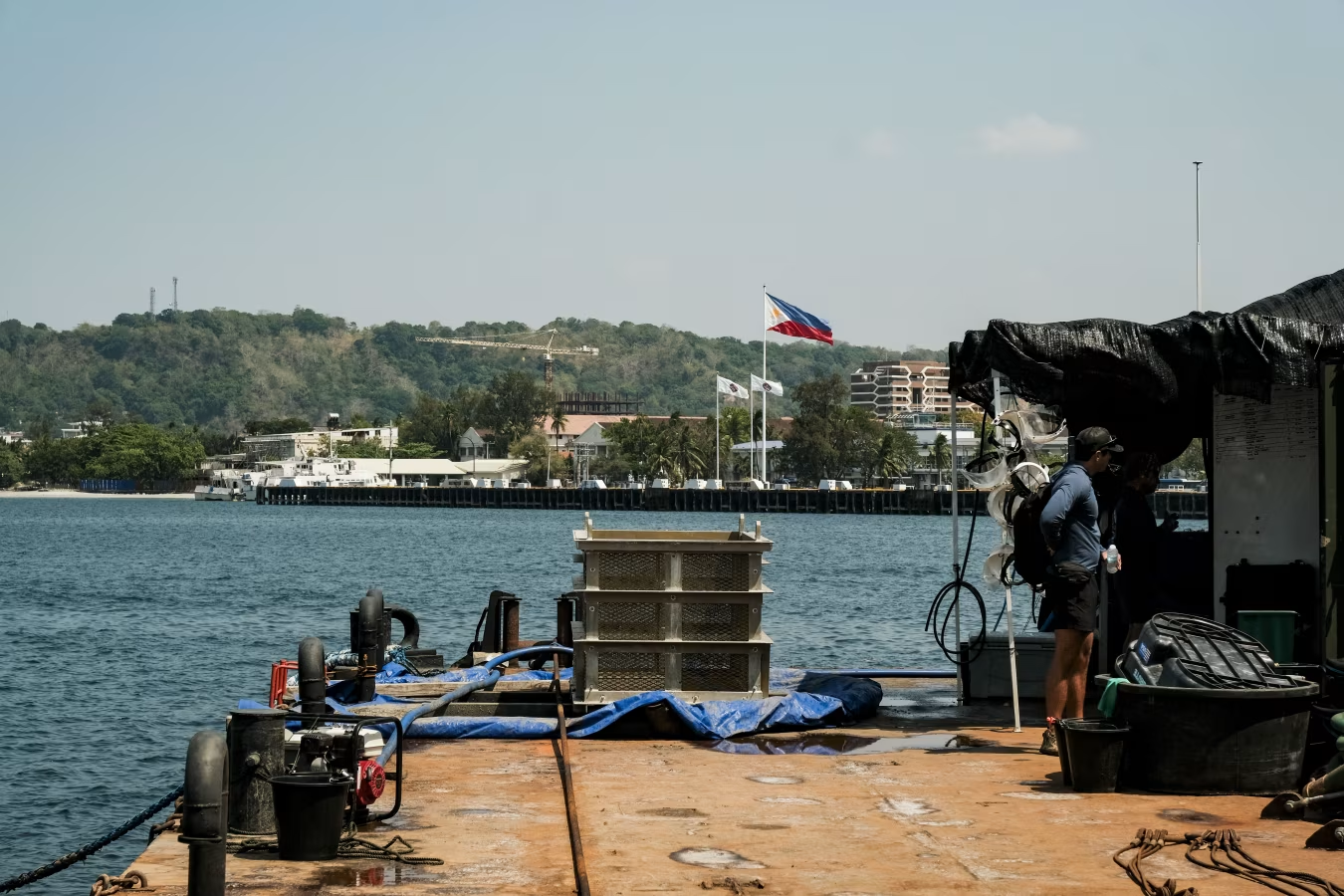
The divers’ base of operations was the USNS Salvor, a civilian-mariner-crewed salvage ship owned by the Navy. Pairs of divers, connected to the surface via an air hose and audiovisual cables, were slowly lowered into the water .
Once underwater, they sliced through the ship’s steel using a torch with a self-consuming rod burning at thousands of degrees Fahrenheit. Hydraulic tools helped pry away heavier pieces of metal.
“It’s very humbling to be down there and try to bring some of our fellow soldiers, sailors back home,” said Chief Petty Officer Jason Friars, a U.S. Navy master diver. “It’s challenging, which is fun, and it can be scary at times, cause it’s dark, but we’re all kind of used to that.”
Divers’ primary tool was a vacuum-like system called a dredge, which sucked up sediment from inside the wreck and deposited it into baskets on the sea floor.
Square containers, serving as baskets, store sediment from the wreck. Once on board, salvaged material is combed through by researchers.
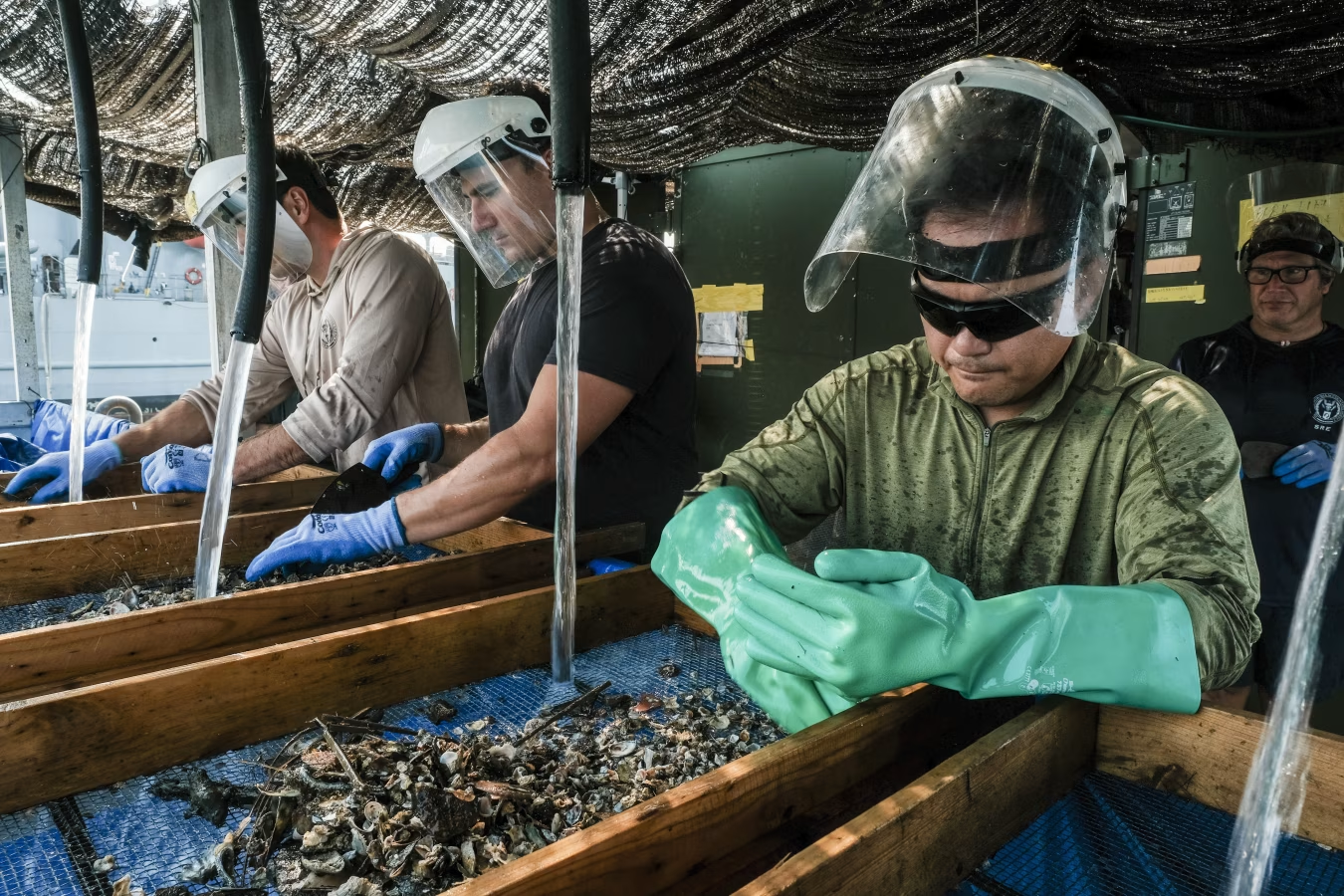
Square containers, serving as baskets, store sediment from the wreck. Once on board, salvaged material is combed through by researchers.
When ready, the baskets were lifted out of the water by crane and placed on a barge alongside the Salvor, where researchers sifted through the contents by hand.
A key find was a second boot, this one with “USA” on the sole and a name carved into the leather upper. Another was a metal identification bracelet, similar to a dog tag. Researchers also found a pair of broken glasses; an IV needle with a bottle topper; a brass item with writing, perhaps a cigarette case; and a button with Japanese-looking iconography. They also found ceramics and lots of chopsticks.
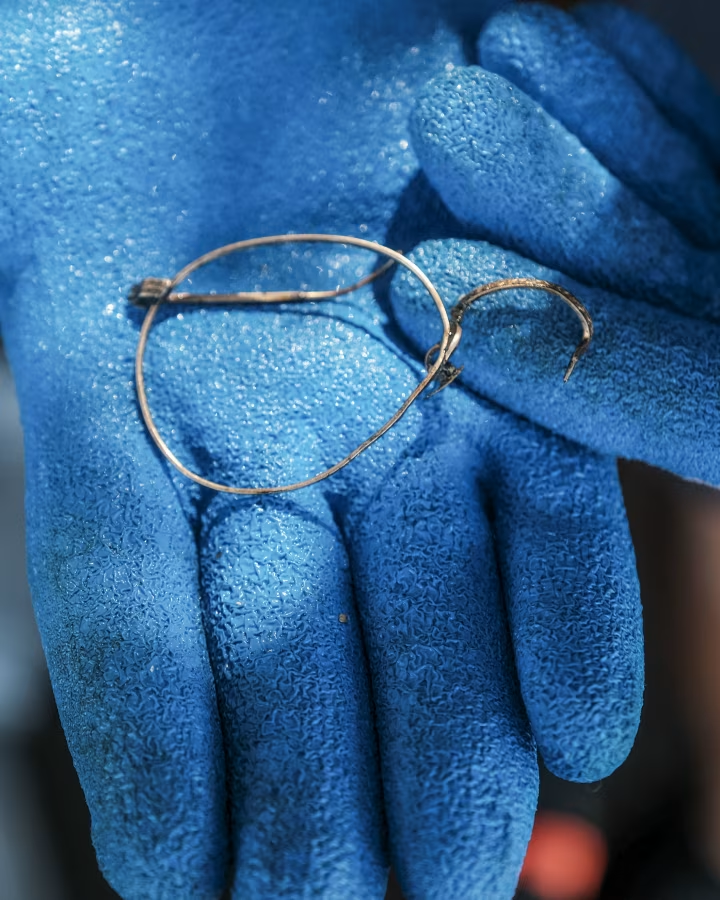
Artifacts found during the mission include a pair of broken glasses, a button, a boot and an IV needle with a bottle topper.
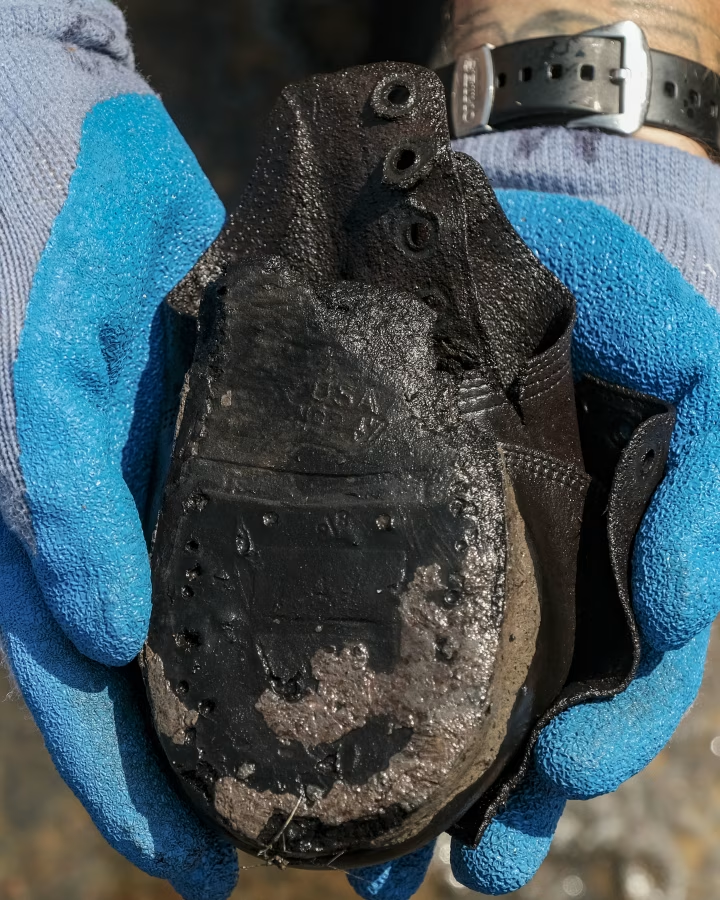
Artifacts found during the mission include a pair of broken glasses, a button, a boot and an IV needle with a bottle topper.
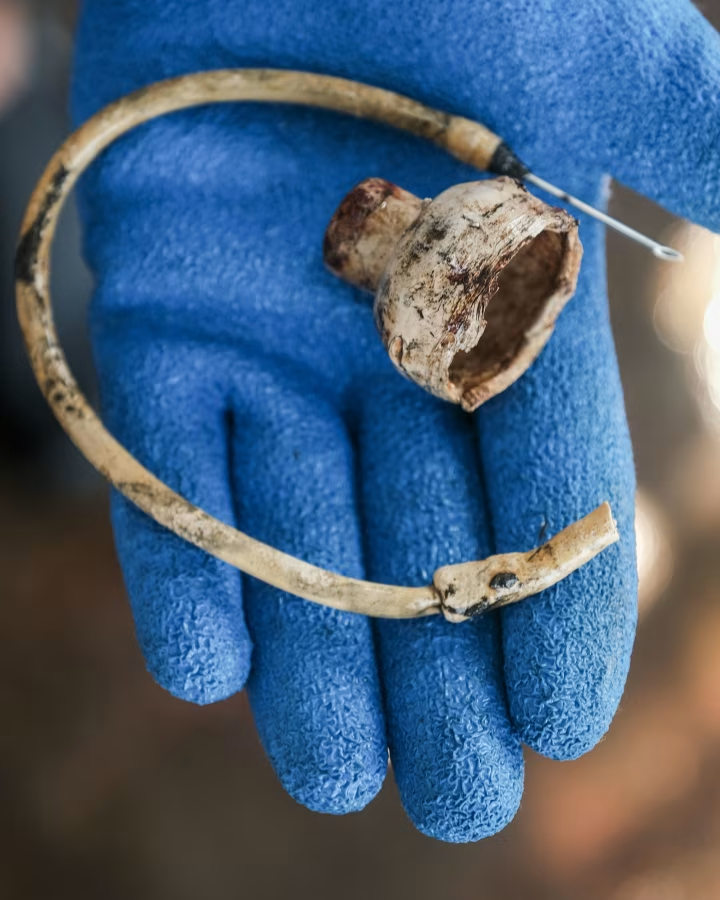
Artifacts found during the mission include a pair of broken glasses, a button, a boot and an IV needle with a bottle topper.
When researchers found a possible bone, they treated it like a forensic crime scene. They stored the item in water to keep it from disintegrating, marked down exactly where in the shipwreck it was found and placed it in a locked case. Once in a lab, the objects will undergo a desalination process to make sure they’re stable enough for further study.
“Of course, we’re familiar with the history and the events,” said Matthew DeFelice, another forensic underwater archaeologist with the POW agency. “But then when [an item] comes up and it’s this tangible piece of evidence, then it kind of makes it more human.”
A forensic review of the possible bone material with the Philippines was scheduled for July, though no results have been disclosed yet. The researchers plan to return in fiscal 2027, and hope to bring clarity to more families about their loved ones’ final moments.
Lori Zielinski’s grandmother and mother rarely talked about her grandfather, Capt. Fred Rose, who’s listed among those unaccounted for on the Oryoku Maru.
The California firefighter and Army reservist had recently bought a house in Coronado with his wife before he was deployed to the Philippines in 1941. During the defense of the U.S. base at Corregidor, in the bay near Manila, troops under Rose’s command removed an artillery piece from its mount and turned it into a roving gun. They named it “Battery Rose.”
He was given the Silver Star for his actions, but his death has remained a mystery. A 1951 letter from another POW said Rose was in the rear hold of the Oryoku Maru when it was bombed. On another occasion, a visitor told Zielinski’s family that he saw Rose in the water. Documents from the POW agency, meanwhile, state he was in the forward hold.
His wife, Marie Rose, never remarried and worked as a dental assistant. That family history, Zielinski said, marked her and her sister.
“My sister and I are both pretty strong women,” said Zielinski, who had a long career in the computer industry.
Around 2019, she found a box in the family home that had a picture of her grandfather—it was the first time she saw his face.
Zielinski remembers having a dream as a child that her grandfather actually made it to shore.
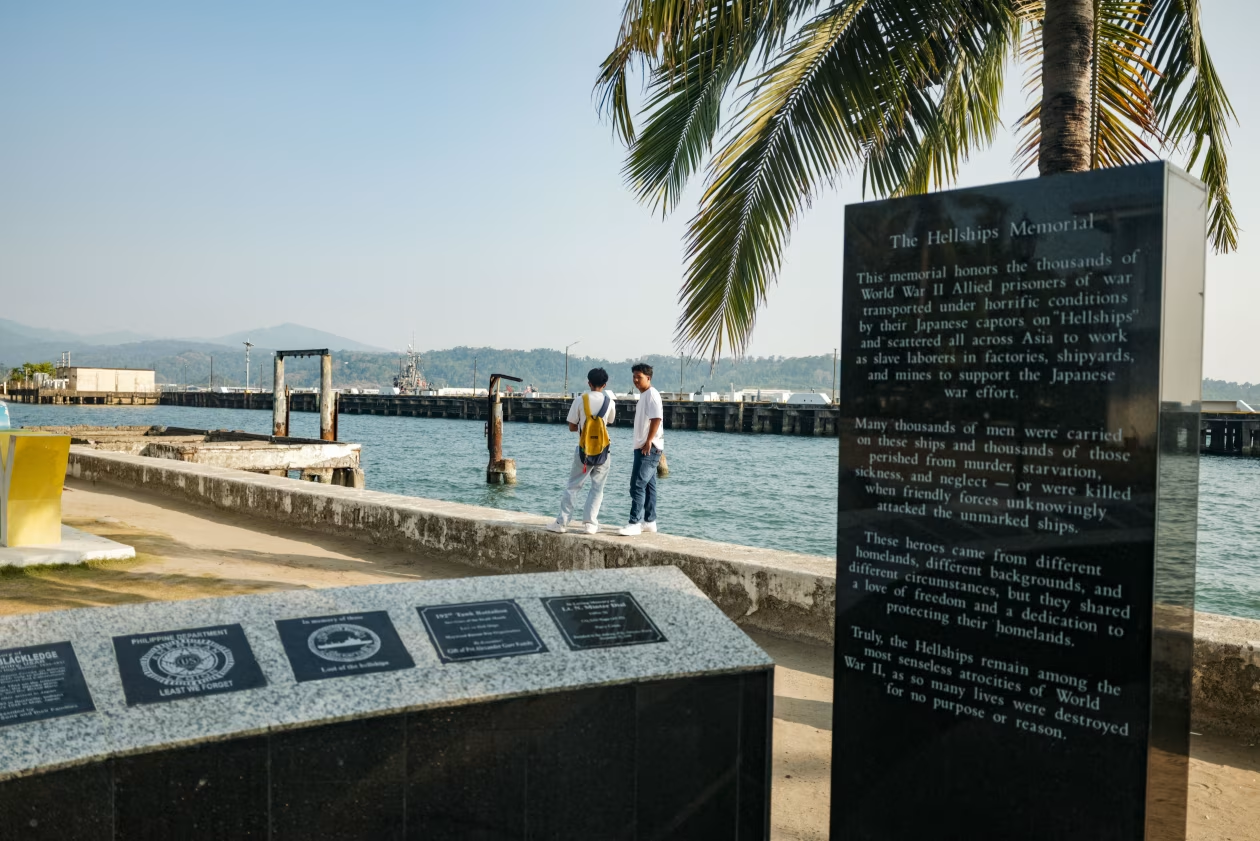
“I’ve accepted it now, but as a kid, when I first heard the story, you kind of go, well, how do they know he died in the water?” she said. “How do you know he’s not still alive in the jungle, like you hear about in ’Nam?… You always have this dream that he’ll come home.” undefined
Write to Mike Cherney at mike.cherney@wsj.com