 Μake us preferred on Google
 President Trump on Monday aimed to quash a growing conflict between Israel and Hezbollah that threatened to derail his peace talks with Iran, declaring that both sides had agreed to stop fighting and that Israeli Prime Minister Benjamin Netanyahu had called off attacks in Lebanon.
Hezbollah agreed to the terms, according to Lebanon’s embassy in Washington. Netanyahu said he would attack “terror targets in Beirut” if Hezbollah continued targeting Israel. Israeli forces would continue operating in southern Lebanon, Netanyahu added.
“Let’s see how long that lasts — Hopefully it will be for ETERNITY!” Trump posted later on Monday.
Trump’s moves, which included a phone call to Netanyahu, appeared to be aimed at preventing U.S. negotiations with Iran from collapsing. The fighting in Lebanon had become a major sticking point in end-of-war talks as Iran considers the conflict a violation of the U.S.-Iran ceasefire. Trump received briefings in recent weeks that the Israel-Hezbollah conflict was one of the key reasons why Iran remained unwilling to make a deal with the U.S., Trump administration officials said.
Last week, Trump’s advisers declared that a deal with Iran was close . But one didn’t materialize as the U.S. struggled to receive guarantees from Tehran that it would never seek a nuclear weapon or dispose of its enriched uranium. By Monday, Trump told CNBC he “didn’t care” if the “very boring” Iran talks came to an end.
Whether Trump’s pressure would help clear a path for U.S.-Iran talks to progress was unclear. Netanyahu, who faces a general election later this year, is under pressure at home to continue the military campaign in Lebanon, making the coming days a test for Trump’s assurances that the Israeli prime minister heeds his demands.
While the weekslong ceasefire with Iran still holds, it has creaked repeatedly. Over the weekend, the U.S. bombed radar and drone sites in Iran while Tehran shot down an American drone and targeted U.S. forces in Kuwait with missiles.
After a weekend when Israel made gains deep into Hezbollah territory , a semiofficial Iranian news agency, Tasnim, quoted anonymous sources suggesting that Tehran was suspending talks with the U.S. over ending the war. People familiar with the talks told The Wall Street Journal the report wasn’t true, but it nevertheless sent a ripple of concern through markets, causing oil prices to rise—a pressure point for Trump.
After announcing the Israel-Hezbollah truce, Trump said talks were continuing “at a rapid pace” with Iranian leaders. Earlier on Monday, he pushed back at critics pressing him to move more quickly toward a deal or take a harder line.
“Just sit back and relax, it will all work out well in the end,” he posted.
On Sunday, Secretary of State Marco Rubio spoke with both Netanyahu and Lebanese President Joseph Aoun , proposing a gradual de-escalation that would begin with Hezbollah stopping all attacks on Israel. In return, the Israeli military would in turn refrain from escalating hostilities in Beirut, according to a U.S. official.
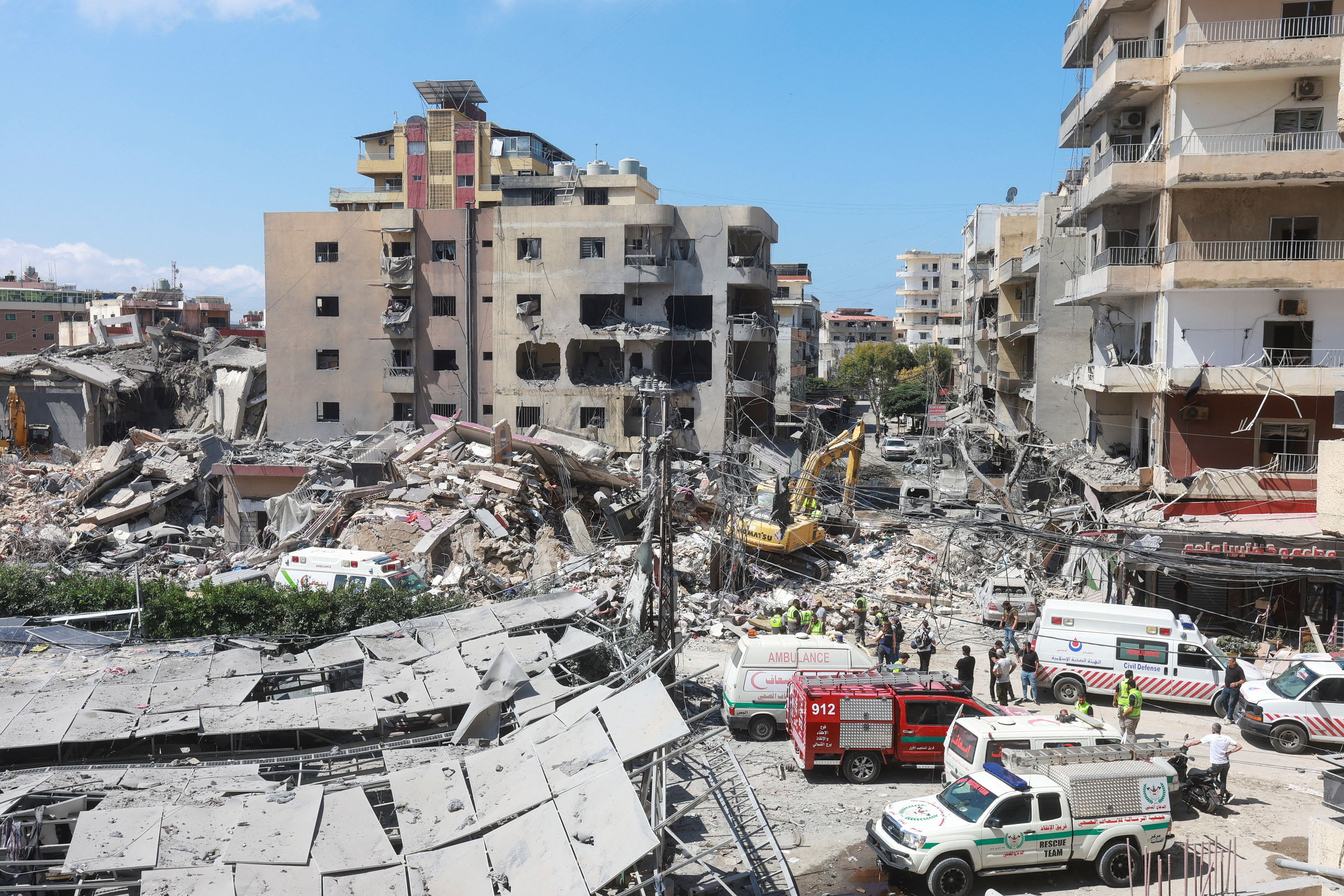
Earlier on Monday, Netanyahu had announced that Israel would strike targets in Beirut’s southern suburbs and the Israeli military even issued evacuation orders for civilians before strikes. Israel has mostly held back from striking densely populated Beirut , following U.S. pressure, though it has continued to regularly strike in southern Lebanon.
Trump’s announcement brought an immediate backlash from Israeli lawmakers from both Netanyahu’s ruling coalition and the opposition, who argued that Israel was too beholden to the U.S., rendering it unable to make decisions on its own.
“This is the time to tell our friend, President Trump, ‘No,’” far-right Israeli National Security Minister Itamar Ben-Gvir said.
“A total protectorate state,” Israel’s leader of the opposition, Yair Lapid , pronounced.
Trump has repeatedly said a deal with Iran is close, but mediators have said issues like nuclear commitments and the timing and scale of any financial relief remained unresolved.
U.S. Central Command, which oversees American forces in the Middle East, said American warplanes attacked Iranian radar sites and drone command-and-control facilities on Qeshm Island and Gorik in Iran’s Hormozgan province Saturday and Sunday.
The strikes came after Iran shot down an American MQ-1 drone , Central Command said. U.S. fighters also shot down two Iranian attack drones that posed a threat to ships, it said.
The U.S. and Iran are discussing a memorandum of understanding that would lift the U.S. and Iranian blockages in the Strait of Hormuz, extend the ceasefire and set up an extendible, 60-day period to resolve issues around Iran’s nuclear program and sanctions relief.
American hard-liners and some in Israel are wary of a deal with Iran, fearing it will ease pressure on the regime while it is at a weak point without securing concrete concessions on its nuclear program or control of the strait.
Trump said Monday on social media that Iran wants to make a deal but that criticism and commentary around the deal in the U.S. was making it harder to achieve one.
Write to Alexander Ward at alex.ward@wsj.com , Vera Bergengruen at vera.bergengruen@wsj.com and Anat Peled at anat.peled@wsj.com