 Μake us preferred on Google
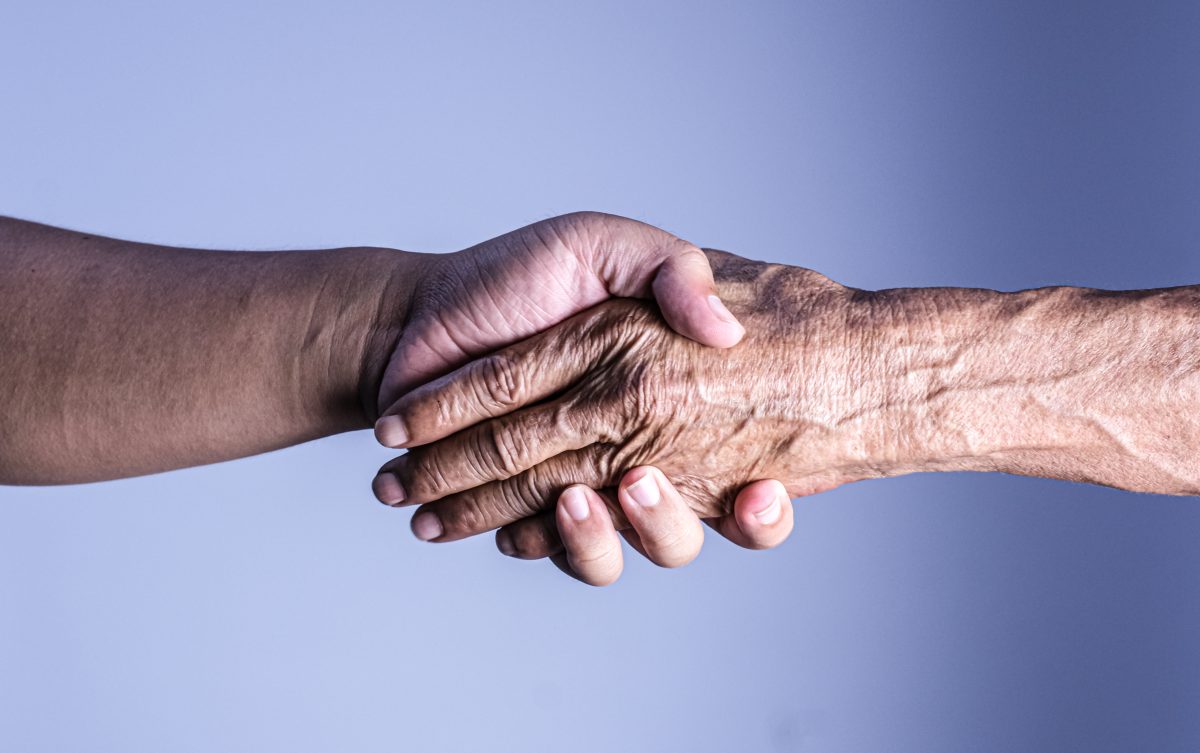
 Have a tendency to reach for a racket, a pen or a glass with one specific hand?
New research traces the answer back millions of years—to the time when our ancestors stood up. When we shifted from climbing trees with four limbs to walking upright on two, we freed up our hands for gripping food, hunting and even crafting tools. A preferred hand made such tasks more efficient, according to a recent paper in the journal PLOS Biology.
And, coupled with a growing brain—more on that in a bit—the right hand later emerged as a clear favorite.
No other primate species shows such a strong preference for one hand over another: 90% of people are right-handed .
“We are unique for how strong our handedness is—the fact that most humans are going to use their dominant limb for essentially everything they do,” said Rachel Hurwitz , a University of Oxford biological anthropologist and co-author of the recent paper.
The researchers examined studies on 41 primate species, along with some human ancestors. They identified hallmarks of humanity, such as tool use, habitat, diet, social structure, brain size and upright walking. Statistical modeling concluded that brain size and walking upright best explain our one-hand bias.
A timeline helps provide the picture. About six million years ago or so, our ancestors transitioned from climbing trees to walking on two legs—opening up the possibility of having a preferred hand.
The level of dexterity and control humans have “is only possible thanks to this high-level of specialization and directionality,” said Thomas Püschel , an Oxford evolutionary anthropologist and another co-author.
The bias toward the right hand in particular came later in our evolutionary history.
About three million years ago, human ancestors started developing bigger brains, and dedicated parts began to control different functions. The brain’s left side became responsible for language, logical reasoning and coordinating tool use. That region also controls the right hand, which some scientists believe helps explain the right-hand bias.
Still, some mysteries linger—after all, there are plenty of lefties.
“It’s not that left-handed folks have smaller brains,” Hurwitz said.