 Μake us preferred on Google
 We first heard him in Greece in 2008, when he sang the Duke of Mantua in the Greek National Opera’s production of “Rigoletto.” He returned in 2009 for the same opera and again in 2014 for Massenet’s “Werther,” a role he considers his favorite.
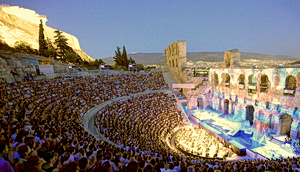
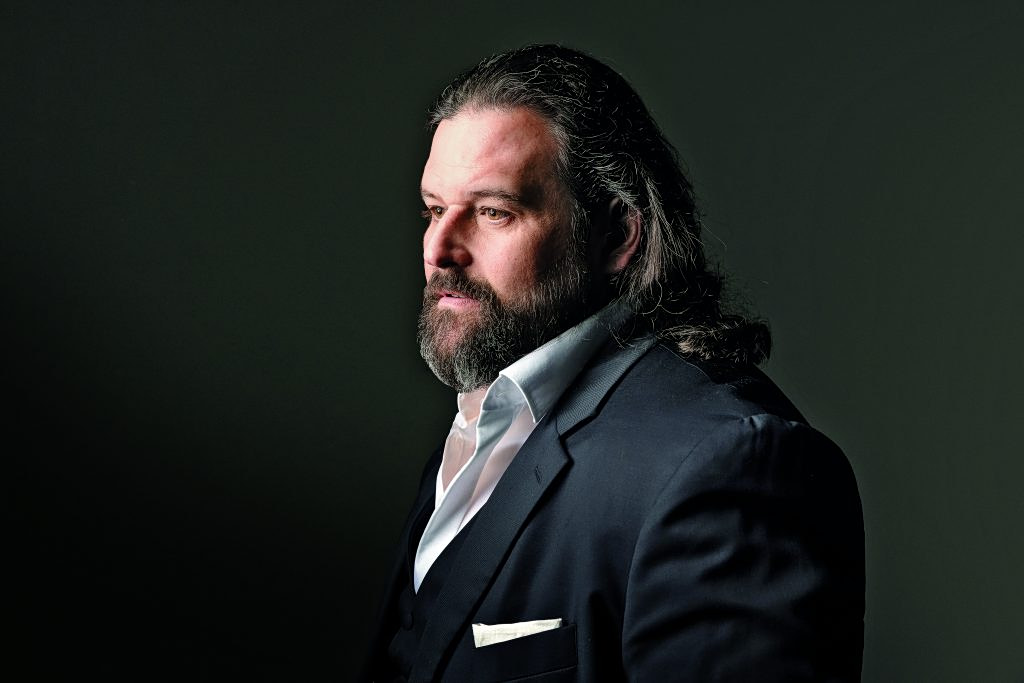
Now, Jean-Francois Borras is preparing for one of the most remarkable appearances of his long career: he will portray Jason in the sole performance of Cherubini’s “Medea” that the Greek National Opera will present on June 20 at the ancient theater of Epidaurus. The production is a reconstruction of the legendary 1961 staging, directed by Alexis Minotis, with sets and costumes by Yannis Tsarouchis, and Maria Callas in the title role. Ahead of this highly anticipated, sold-out event, the renowned French tenor shares with BHMAgazino his thoughts on the mythological prince who loved and betrayed Medea, as well as on his own journey through the world’s great stages, where music serves as an antidote to the noise and brutality of our times.
Traveling from the stages of Paris and New York to the ancient stone of Epidaurus, Borras champions an art form that, as he notes, offers refuge and a rare sense of truth in a world of confusion, uncertainty, and mounting hardship.
It may be a cliche of a question, but have you ever visited Epidaurus? And how do you feel about singing at this legendary ancient theater?
“No, I have never been to Epidaurus, it will be my first time. I have, however, sung in France, at the Roman theater of Orange. It is smaller, but also very old and absolutely beautiful. You feel an enormous emotion when you sing in places with such a past, because they carry all of history. History is alive around you, it is magical. I can’t wait for the Epidaurus experience.”
But open-air theaters do present real challenges for singers. The acoustics are nothing like those of an enclosed hall. Does that worry you?
“I wouldn’t say it worries me, but it is a factor I cannot ignore. In Orange there is a large wall at the back that helps the voice carry. As for Epidaurus, I’ll tell you how it goes after the first rehearsal, when I see firsthand how difficult or easy it is. There is a certain suspense for me in this production,” (laughs).
Is this your debut in the role of Jason?
“Yes, it is my debut in the role. And in the venue as well, so there’s a double dose of nerves.”
It isn’t the most sympathetic role in the tenor repertoire. Jason is often portrayed as ambitious, selfish, and hard-hearted. A man who betrays the love of his partner. How do you see him?
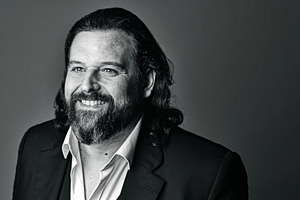
Credits: Youness Taouil
“The story is indeed very harsh. Jason has a whole previous life with Medea, they have had children together… Then he finds Glauce. He wants to completely erase everything that came before, not his children of course, but Medea, and to live his ideal life with his new love. He tells Medea: ‘I don’t understand what you want from me. I have a new life with Glauce and I am determined to live it. If I no longer love you, if I no longer want to be with you, that is your problem, not mine.’ It is a difficult situation, but, let’s not fool ourselves, an absolutely timeless one. A relationship can reach its end.”
Does that give Jason a free pass to behave the way he does?
“It is an ancient story, yet at the same time it is part of our everyday lives, plain and simple. In love, people become cruel. When a relationship ends, it is painful. When only one of the two wants to end it, it becomes even more painful.”
You are coming to Jason after many years of an international career. You started with lyric roles and now you are singing more dramatic ones. Do any stand out for you?
“My absolute favorite role has always been and remains ‘Werther’ by Massenet. I actually performed it in Athens twelve years ago, and it was one of my most cherished experiences. Today, the role I sing more than any other is Don Jose in ‘Carmen.’ I love it, because I first see him as an ordinary, everyday person. I can understand why he falls so desperately in love with Carmen. And when she tells him ‘I don’t love you anymore,’ I can understand why he transforms into a dangerous man. That is where all similarities between us end. For a regular, everyday person like me, it is wonderful to portray on stage a role so distant from one’s own personality. There is always great fascination in finding common ground with the characters you play, but even greater fascination in stepping into the shoes of characters very different from yourself.”
How do you approach your roles? When you are playing Don Jose on stage, for instance, are you more musician or actor?
“I believe that in opera, those two things go together. It is a whole in which words and music complement each other; the orchestra reinforces the lyrics with its sound, and the result is magnificent. That said, stage direction is extremely important. If there is no good director or good staging, I would rather give a beautiful concert, so that the audience focuses solely on the music. It is 2026, and people today watch more than they listen. That creates obstacles to truly appreciating music. If an opera has good stage direction, the audience follows the evening, follows a story, and is drawn into it, because everything fits together harmoniously. But if something goes wrong, if your attention is pulled away from the music and you focus only on the visual side, you lose the essence of it all.”
So, between a traditional and a modern staging, you would choose the traditional?
“I love traditional stagings, but I also appreciate modern ones, as long as they are done well. Unfortunately, we see many productions today that drift too far from the story and the music, leaving audiences at sea. If someone has to explain to you after the performance what the director intended, then something has failed. If the singers on stage cannot convey the meaning of the work, then the whole thing does not work.”
When you are part of a production but disagree with the directorial approach, what can you do as a singer?
“It depends. About a year ago, I did a ‘Carmen’ in Hamburg. It was a revival of an older production, not a new creation. In my view it was a poor production, with dreadful costumes and ridiculous staging. Since the work belongs to the genre of opera comique, the director had taken ‘comique’ literally and turned it into a comedy. They had dressed me in enormous flowers. All the costumes were hideous. I told myself: ‘You will do what you always do, the very best you can with the music.’ Fortunately, we had an outstanding, brilliant conductor and together we created something musically beautiful. As for the staging, I did what was required, but I refused to do the things that made my role look foolish. We found a middle ground; I stripped away the most extreme elements and steered the role in a more traditional direction.”
But you were at a point in your career where you had the standing to impose your view, in a way. What about a younger colleague?
“If I were a very young singer, I would say ‘fine, I will do whatever you want,’ because I would have no other choice. But now I have been working for 24 years. I have done more than 70 performances as Don Jose. I know the role. I naturally adapt to the conditions of each production and build what the director wants, but I bring a large part of my own emotion to the character in order to make it feel real.”
Is there a role you dream of singing in the future?
“I can’t think of a specific one. I have sung many great roles: Romeo, Des Grieux in ‘Manon,’ ‘Werther.’ I have sung great roles in the Italian repertoire as well, in ‘La Boheme,’ ‘La Traviata,’ ‘Rigoletto,’ ‘Lucia di Lammermoor.’ I notice that many colleagues dream of and pursue a change of vocal category — light tenors want to become lyric, lyric tenors want to become dramatic, and so on. I am very happy with my voice as it is. I hope to do even more, but I have no unfulfilled ambitions. I could say I hope to one day sing Calaf in ‘Turandot,’ but if it never happens, that is fine. I want to sing what suits my voice, without pushing it.”
Many of your colleagues talk about the loneliness and sacrifices the profession demands. In your own case, what has opera cost you?
“It is a difficult profession, and it is becoming increasingly so because there are many singers and fewer jobs. You travel all year long. It is hard to build a family. I am grateful that my wife is also a singer, so she understands my way of life and has the flexibility to travel with me. If you are with someone who has a conventional job and needs to be in one city, and there are children in the picture as well, it is nearly impossible to make it work.
It is also hard to maintain deep friendships. You meet many colleagues, spend a short time with them, but they cannot truly become your friends because you part ways quickly. I live in Nice, France, but how many days a year do I actually spend at home? Perhaps a month and a half to two months at most. Long-distance relationships are hard. And yet we do all of this because we need it. Because we are artists.”
The need for expression is truly a powerful driving force. What about the financial side? Are the earnings of a professional lyric singer with an international career like yours enough to justify the dedication, the effort, the risk?
“Let’s be honest: however well you are paid for certain productions, this is not a profession you pursue to get rich. That may have been the case in earlier times, not anymore. Today, once you subtract taxes, travel costs, and the rent of the apartment housing you during rehearsals and performances, even if a decent sum remains, you have not become wealthy.
We are no longer living in an era where a tenor like Mario Del Monaco could sign two or three contracts and buy a villa and brand new luxury cars. As I said, we fight for this work because we need it. When you love something so deeply, you do not want to stop.
The reward is immense when you are on stage in front of the audience, after a month and a half of exhausting rehearsals with your colleagues, and at the end the crowd applauds and tells you: ‘We had a wonderful evening.’ What we no longer receive in money, we receive in emotion from the public.
We are not living in the best of times; there are wars, so many difficulties. There is confusion, uncertainty, fear. In periods like this, people turn to art, to painting, literature, dance, music, opera, cinema, in order to dream. And so opera becomes a refuge for dreaming in hard times. Even if only for two or three hours. For those few hours you forget your problems, your work, your relationship, your family troubles. That is priceless.”
Do you manage your career on your own? Are you the one who negotiates with the theaters?
“For me, my work is my passion. I love rehearsing, singing all day. I move, of course, in a strange and demanding world. If I had to ‘sell’ myself as a product, I would be terrible at it. I remember when I was young in Monte Carlo and sang at ceremonies in church… The moment when I had to negotiate a fee or ask for my money at the end of the ceremony made me feel awful.
That is why it is wonderful to have an agent; he finds the work, makes the deal, and I concentrate on singing well. It is a partnership. If you enter what is called the ‘star system,’ things change. It becomes a different kind of job. You have to constantly promote your image, find sponsors, give private concerts, secure television appearances and radio interviews. All of that is a second profession, running alongside the music. If you enjoy it, if you can handle it, fine. That is not the kind of person I am.”
Outside of music, what does your life look like? What rests you and helps you unwind after a run of performances?
“When I have free time, I go back to Nice or travel with my wife to a very beautiful place in Italy where we have a house. There is always some repair or maintenance work to do there, so I spend a lot of time on those kinds of tasks. I don’t really follow sports, I don’t watch soccer or anything like that. I know this may sound a bit old-fashioned, but above all I want to spend quiet, quality time with my family. That is the most important thing, until the moment I pack my suitcase again for the next trip.”