Retrospective Exhibition at the Auditorium Art Space
Opening: Thursday, February 5, 2026, at 7:00 pm
Curated by: Spyros Moschonas
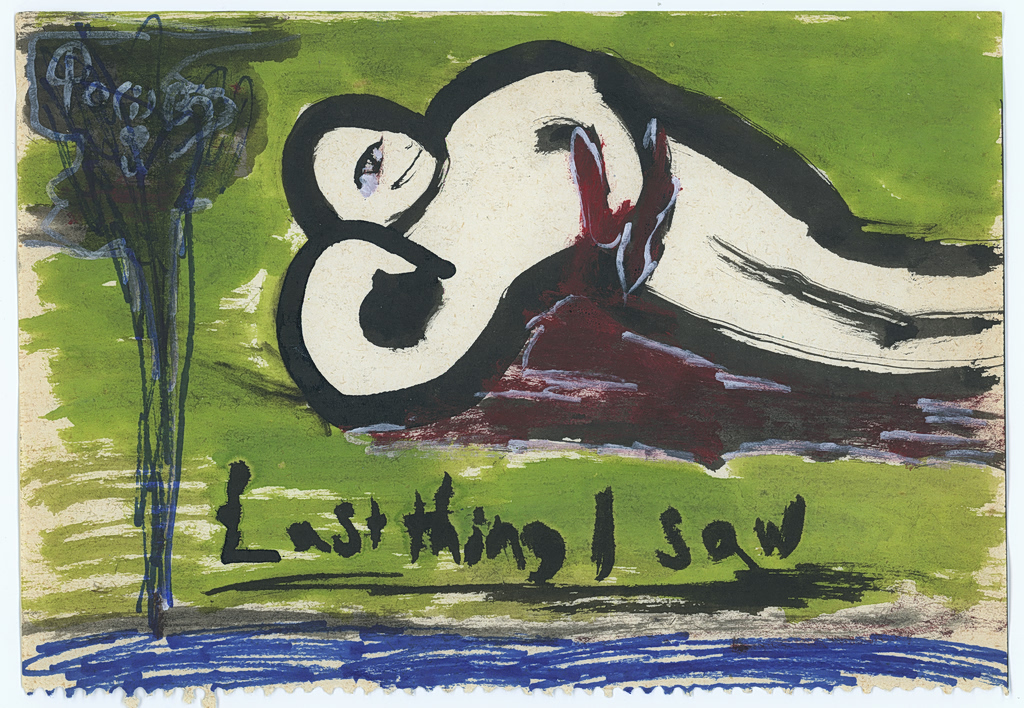
The Auditorium Art Space, in collaboration with the cultural management company Time Heritage, presents the retrospective exhibition of visual artist Voula Laspia-Kamara.
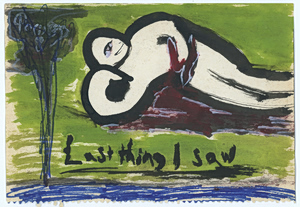
Through 30 selected works, the exhibition unfolds the thread of a remarkable artistic journey that began in the studio of Yannis Moralis and extended to the sun-drenched island of Aegina.
The opening evening will feature introductory remarks by art historian Spyros Moschonas and by the painter’s daughter, Aphrodite Kamara, Director of Time Heritage. This will be followed by a discussion on Yannis Moralis’s workshop, as well as on the challenges faced by women artists of the time within a male-dominated artistic environment.
Voula Laspia-Kamara (1927–2022): A Life Dedicated to the Search for Form
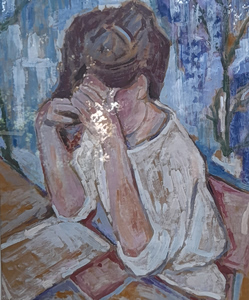
Voula Laspia-Kamara’s artistic path began during a pivotal period for Greek painting. From 1948 to 1951, she studied at the Athens School of Fine Arts, where she had the privilege of training in the studio of Yannis Moralis, from whom she learned the importance of composition and the purity of line.
Her artistic quest then led her to Italy, where she spent five years (1951–1956) deepening her engagement with the European tradition at the Accademia di Belle Arti in Rome.
Upon returning to Greece, she became an active presence in the country’s visual arts scene, participating in landmark group exhibitions that defined the era: from the Intellectual Cooperation Agency in Patras (1959) and the historic Panhellenic Exhibition at the Zappeion (1960), to the Greek-Soviet Association (1962).
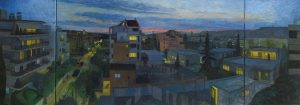
The 1970s marked a period of experimentation, as she turned to printmaking and linoleum cuts, exploring new textures. The 1980s, however, signaled a major creative shift. She focused on landscape—both urban and rural—as well as still life, adopting a distinctive aesthetic: cool colors, subdued tones, and a notable absence of dramatic chiaroscuro, lending her works an inward, almost metaphysical calm. Her solo exhibition in 1988 sealed this mature phase of her work.
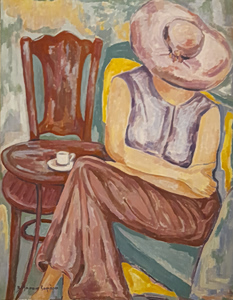
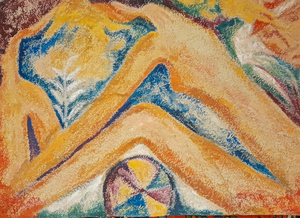
From the late 1990s onward, her art underwent a radical transformation. Her observation of light reflections and her deepening exploration of female psychology led to an explosive visual outcome. After 2000, her palette was liberated: nude, abstracted female figures are “bathed” in intense, warm colors, in an outburst of creative energy vividly captured in her major solo exhibition of 2004.
Until the end of her life, Voula Laspia-Kamara remained an artist unafraid to change, evolve, and redefine her gaze upon nature and the human condition. This exhibition offers audiences a rare opportunity to witness this “turning point”: from the discipline of line to the absolute freedom of color.
“Laspia-Kamara’s art traces a journey from the earthly to the ethereal, a continuous rediscovery of female identity through time.”
A Female Voice in a Male-Dominated World
Voula Laspia-Kamara’s career represents not only a personal mastery of technique and style, but also an act of claiming space within an artistic environment that, during the 1950s and 1960s, remained deeply male-dominated.
When Laspia-Kamara graduated from Yannis Moralis’s studio in 1951, Greek society was still struggling to heal the wounds of the Civil War. For women, art was often regarded as a “supplementary” pursuit or a “decorative” activity before marriage. To continue studies at the Accademia di Belle Arti in Rome and remain an active artist was, for a woman, a declaration of independence.
In the group exhibitions of the period (such as those at the Zappeion or the Greek-Soviet Association), women artists had to work twice as hard to gain critical attention, which often employed dismissive terms such as “female sensitivity” to undermine the intellectual weight of their work.
Laspia-Kamara responded through her subject matter. Her engagement with industrial landscapes—an archetypically “hard” and “masculine” theme—alongside her bold de-eroticization of the nude female body, demonstrated that the female gaze could document both post-war reconstruction and female existence itself with equal, uncompromising force.
Exhibition Information
Venue: Auditorium Art Space (2–4 Sina Street, Athens)
Opening: Thursday, February 5, 2026, at 7:00 pm
Duration: February 5 – February 28, 2026
Opening Hours:
Daily: 10:00–13:00 & 17:00–20:00
Sunday: Closed
Guided Tours: For group visits and guided tours, please contact Time Heritage at +30 697 391 9957
Organized by: Time Heritage
Curated by: Spyros Moschonas