Greece has completed just over half of the milestones required under the European Union’s Recovery and Resilience Facility (RRF), as the clock ticks down to the program’s expiration in August.
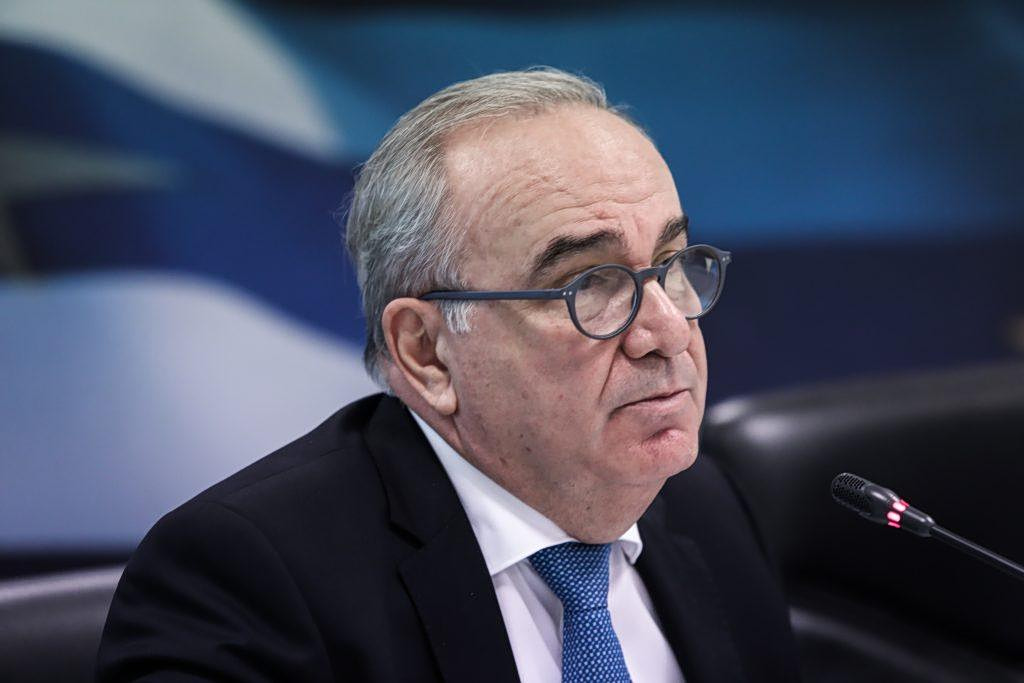
Alternate Minister of Economy and Finance Nikos Papathanasis said 204 milestones — or 53% of the total — have been achieved so far, with preparations underway for the eighth payment request. The update underscores both the progress made under Greece’s national recovery plan, known as “Greece 2.0,” and the challenge of delivering the remaining reforms and investments within the existing time frame.
Since the launch of the program, Greece has received €23.4 billion, equivalent to 65% of its total allocation. Following a recently submitted double payment request of €1.17 billion, total disbursements are expected to reach €24.57 billion, or more than 68% of the overall budget.
The latest request is smaller than previous ones. Of the €1.17 billion, €883 million relates to grants tied to the seventh payment installment, while €294 million concerns loans linked to the sixth installment. Two additional payment requests — the eighth and ninth — remain pending this year.
In 2025 alone, Greece submitted two payment requests totaling €3.27 billion, while disbursements this year have reached €5.2 billion. The country continues to rank among the leading EU member states in absorbing Recovery Fund resources, according to government officials.
The RRF has been a central pillar of Greece’s post-pandemic growth strategy, channeling significant resources into small and medium-sized enterprises. Grants to SMEs have reached €1.61 billion, while loans total €3.59 billion. Among the active programs financed through the fund are a nationwide preventive health screening initiative, housing loan schemes including “My Home II,” smart infrastructure upgrades and digital education programs targeting older adults and people with disabilities.
Still, questions remain over whether all available funds will ultimately be absorbed before the August deadline.
Papathanasis said the government’s objective is to ensure that “not a single euro” is lost. He argued that Greece has emerged as a pillar of political, geopolitical, economic and social stability at a time of broader uncertainty in Europe and globally. According to the minister, reform-driven fiscal policy and steady implementation of investment programs have supported growth rates that exceed the European average and have contributed to job creation.
Beyond the Recovery Fund, the government is also advancing public investment plans. The 2025 Public Investment Budget of €14.6 billion has been fully executed, Papathanasis said, with available resources set to rise to €16.7 billion in 2026. A new National Development Program for 2026–2030 has been approved with a total budget of €16.6 billion, alongside an estimated €5.8 billion to complete projects carried over from the 2021–2025 cycle. A revised institutional framework aims to streamline the management of these funds.
On the EU’s broader structural funds, Greece closed the 2014–2020 programming period without losing resources. In the current 2021–2027 cycle, the country ranks fourth in the European absorption table, with most programs progressing according to target. Projects include major infrastructure works such as a high-pressure natural gas pipeline to Western Macedonia and the Patras–Pyrgos highway, as well as social and business support initiatives.
Under the Just Transition Development Program, which supports regions moving away from traditional energy production, calls for proposals now cover 92% of the €1.6 billion budget. Approved projects account for 64% of the total, with 41% legally committed.
The Hellenic Development Bank has also expanded its role. Loan approvals to SMEs in 2025 reached €2.9 billion across more than 16,500 loans, with 90% directed to companies employing fewer than 50 people and generating less than €10 million in annual turnover. The “My Home II” housing program reached €1 billion in contracted agreements in January and now totals €1.5 billion in approvals, supporting more than 12,000 families.
Meanwhile, Greece’s venture capital and private equity ecosystem has grown to 42 funds managing €2.75 billion in combined public and private capital. Investments in innovative entrepreneurship reached €732.2 million in 2025, bringing the total ecosystem value to more than €10 billion.