Greeks still love their coffee, but how and where they drink it is changing. That shift is now the main force reshaping the coffee market, according to NielsenIQ’s global Consumer Outlook 2026 survey.
Away from home, coffee remains a favorite. Cafés and coffee chains account for 74.2% of out-of-home preferences, and coffee is closing in on beer as the top product people consume when they’re out.
Economic pressure is starting to bite, though. Two in three consumers plan to eat out less, and nearly half (45.7%) say they’ll cut back on café visits.
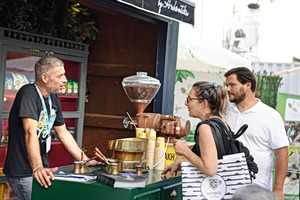
For now, 43% still drink coffee out once or twice a week, according to NIQ’s OPUS Lite Greece survey. Nearly 90% of them do so at a café, with coffee chains drawing 44.3% and traditional kafeneia 15.5%. Wherever they go, 74% order hot or iced coffee.
Supermarkets Tell a Different Story
On store shelves, coffee is booming. In organized retail, sales are up 10.1% year to date, roughly double the 5.5% growth across the 171 consumer goods categories NIQ tracks. Coffee now ranks third among all categories, behind only cheese and milk, and the two best-selling products out of roughly 100,000 in Greek supermarkets are both coffees.
Retail coffee sales have grown steadily since 2019, rising at an average of 6.5% a year from 2018 to 2025. They rose 13.7% last year, and have already have risen by 8.9% through July of this year.
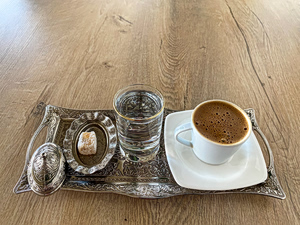
At home, Greek coffee still leads, followed by instant and filter. Instant has regained ground over the past three years after losses during the pandemic, while filter coffee’s pandemic boost proved short-lived. Espresso in all its forms keeps growing, and capsules now make up 7.6% of volume despite their higher price.
Ready-to-drink coffee, fueled by demand for grab-and-go options, reached €16.8 million in sales in 2025, up 6.3%. Most of it is sold through small shops such as mini markets, bakeries and kiosks.
Four Kinds of Home Coffee Drinker
Home brewing has also created a growing market for machines and accessories. NIQ identifies four types of buyers, each with a distinct lifestyle:
The convenience buyer wants a good cup fast, with no fuss, and favors single-serve or fully automatic machines.
The café-at-home buyer wants to recreate the coffee shop experience, with variety and personalization, often through machines with milk systems or advanced espresso setups.
The ritual buyer sees coffee as a daily ceremony, values authenticity and craft, and prefers semi-automatic machines, moka pots and traditional methods.
The premium lifestyle buyer treats the machine as part of a lifestyle statement, expecting top-tier design, technology and quality in every cup.