
 Μake us preferred on Google
The U.S. is preparing to raise tariffs on China and dozens of other countries that the Trump administration argues are harming American companies by supporting their own domestic industrial production, according to people familiar with the plans.
U.S. Trade Representative Jamieson Greer as soon as this week is expected to unveil the results of a monthslong tariff investigation into the industrial subsidies of China, the European Union and 14 other nations, said the people, who warned the timing could change.
Greer has said those subsidies and other governmental supports have created excess industrial capacity in the targeted economies, allowing their firms to flood global markets with cheaper goods, undermining U.S. producers.
USTR declined to comment. The White House didn’t respond to requests for comment.
Unveiling the USTR investigation this week could help divert attention from the continuing controversy surrounding Nvidia Chief Executive Jensen Huang and what the U.S. government knew about his company’s alleged smuggling of advanced AI chips to China. Lawmakers in both parties have questioned the administration’s stance toward Beijing as a result of the scandal.
The USTR announcement will likely mean higher tariffs for dozens of countries, including China, Japan, South Korea and the EU’s 27 member nations. The new tariffs will cover most products exported from the nations, though they will likely exclude some industrial goods like steel, aluminum and automobiles that are tariffed under a separate national-security authority.
The final tariff rates are still unclear, but administration officials have repeatedly said they intend to impose tariffs similar to those Trump set in 2025, before the Supreme Court threw out his first batch of levies in February 2026.
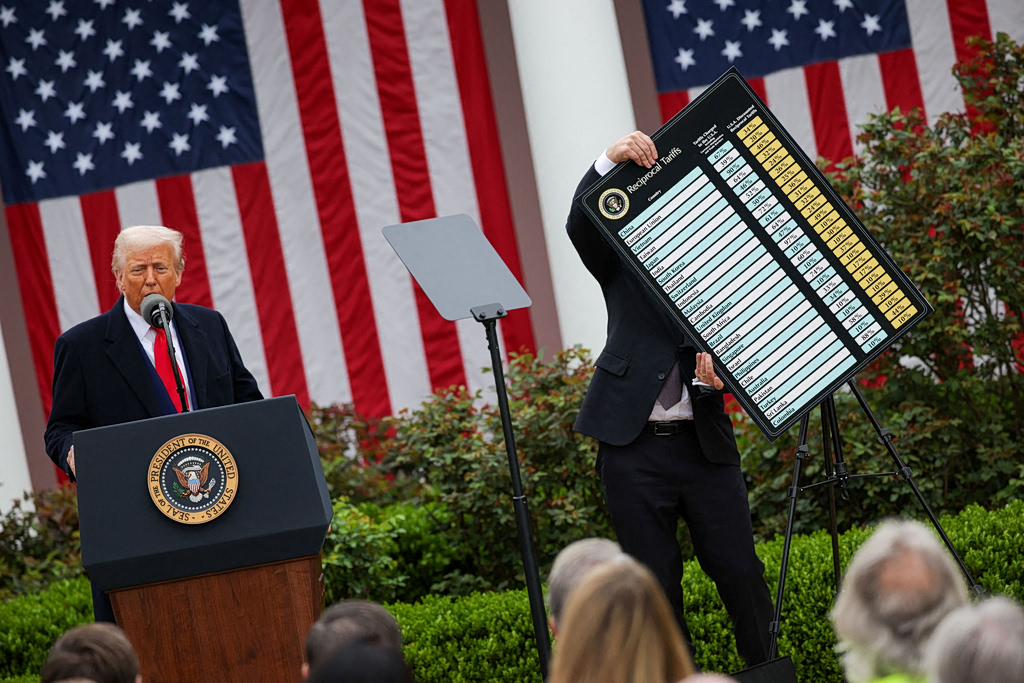
U.S. Secretary of Commerce Howard Lutnick holds a chart as U.S. President Donald Trump delivers remarks on tariffs in the Rose Garden at the White House in Washington, D.C., U.S., April 2, 2025. REUTERS/Carlos Barria/File Photo
Nations that came to trade agreements with the Trump administration, like Japan, the EU and others, will likely see their overall tariff rate reflect the pacts they signed before the Supreme Court decision, said the people familiar with the plans. That means the EU, Japan and South Korea will likely face 15% tariffs or lower, while other nations like Vietnam and India could see higher tariffs based on their deals with Trump.
China is likely to receive a higher tariff than many of the other nations, the people said, as Trump officials have said its subsidies are particularly extensive and disruptive to the global economy. The administration could also include language that allows it to increase the tariffs on nations if their industrial overcapacity worsens, or if they don’t make policy changes in future negotiations with the U.S., some of the people added.
The new tariffs will likely be added to levies from a separate tariff action, unveiled in July, that sought to penalize nations for not blocking the trade of goods produced with forced labor . That action set tariffs between 10% and 12.5% for a group of 60 economies, but is subject to a court challenge.