 Μake us preferred on Google
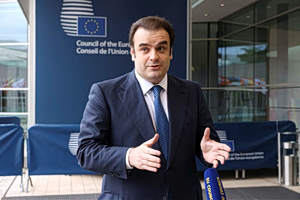
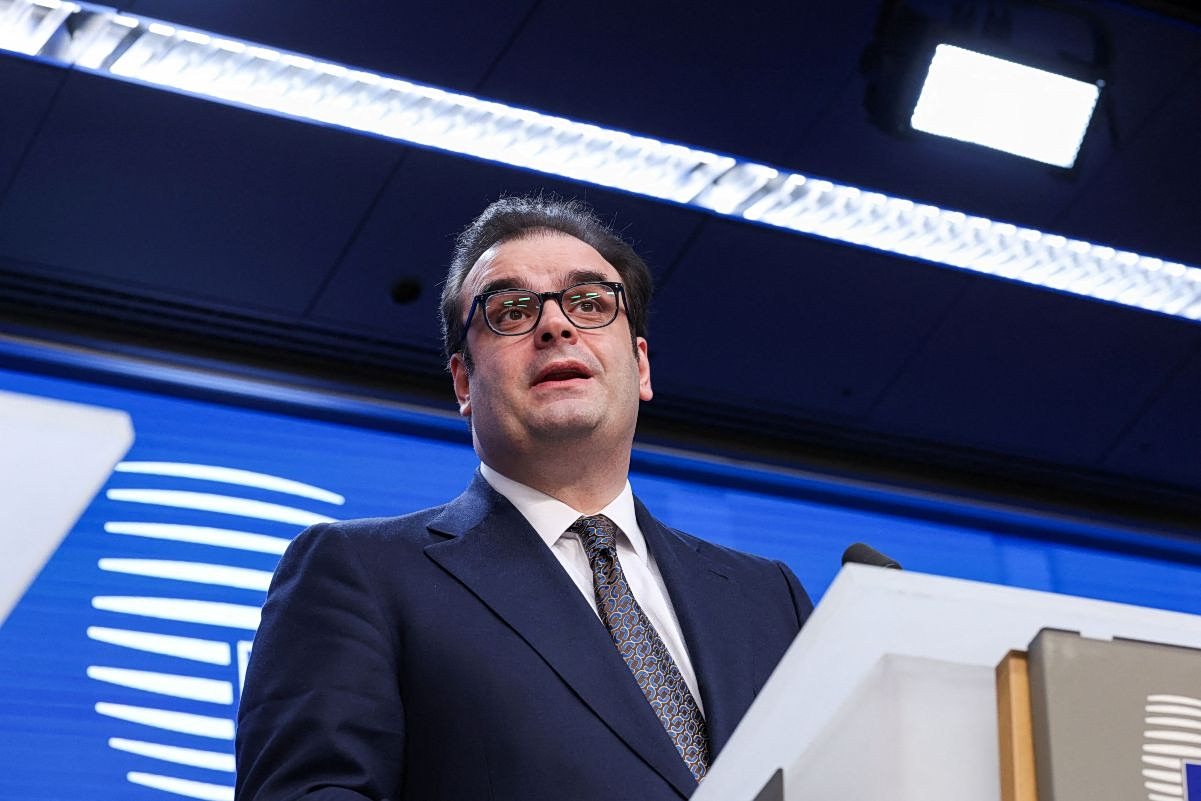
Greece’s Minister of National Economy and Finance and Eurogroup President Kyriakos Pierrakakis said investment in technology is the precondition for economic growth. He was speaking at the Digital Economy Forum 2026, “Building Intelligence,” organized by the Federation of Hellenic Information Technology and Communications Enterprises (SEPE).
“I may be returning in a different capacity, but I carry the same conviction: technology is the force that changes how the state works, how the economy grows and how society evolves,” he said.
Until recently, he noted, the Greek state resembled a collection of small fiefdoms that worked in isolation. When the Digital Governance Ministry was created in 2019, no one had treated the state as a single system. Gov.gr changed how citizens relate to the state. The vaccination platform, built largely by Greek engineers, then lifted the nation’s collective self-confidence, which he called perhaps the era’s most important legacy.
As finance minister, he now sees the results in the budget. Digitalizing the tax authority, e-invoicing and linking cash registers to card terminals have sharply reduced tax evasion. That made room for a €2.2 billion package for 2027. It includes cuts to taxes and social security contributions, support for pensioners and civil servants, and relief for debtors. “Technology is not only a tool of efficiency,” he said. “It is a tool of social justice.”
Greece lost about 25% of its GDP during the crisis decade, and he argued that the gains from recovery must be shared just as widely. Growth is projected at 2.3% in 2027, against 1.2% for the eurozone. That would be the seventh straight year Greece outpaces the bloc. Investment has risen from 11% of GDP in 2019 to 18.6%, approaching the EU average of 21%. Public debt is set to fall from 146.1% of GDP in 2025 to 128.8% in 2027, which he called the fastest reduction in the world. After two decades, Greece will no longer carry Europe’s highest debt ratio.
Still, real convergence with Europe requires a productivity revolution, and AI may be the greatest opportunity yet to achieve one. He identified five global challenges:
• governance that keeps pace with the technology
• spreading productivity gains across the whole economy
• preventing inequality
• protecting financial stability, as huge AI investment needs could push up the global cost of capital
• cybersecurity
The real question, he said, is not who will dominate AI but how humanity will benefit from it.
He set out four pillars for “building intelligence”:
• Infrastructure: new data centers, including a 23% public stake in Data4 Greece, together with the Pharos AI Factory and the Daedalus supercomputer.
• A smarter state: one that anticipates citizens’ needs rather than simply responding to them.
• Capital: €29.3 billion in Recovery Fund projects, a record €11 billion public investment program and a €1.5 billion lending scheme for small businesses. He also highlighted a Greek proposal for coordinated EU-wide 6G spectrum auctions, expected to raise €12–15 billion for strategic technology investment. The proposal, modeled on Greece’s 2020 5G auction, is now part of the EU’s 2028–2034 budget negotiations.
• People: the challenge is to teach children to think critically alongside AI, not merely to use it. He added that the young Greeks now returning home should find an ecosystem worthy of their ambitions.
“Growth will only be sustainable,” he concluded, “when it includes the people, regions and businesses that are left out today.”