Greece is entering the final stage of consultations over its 2026 minimum wage, with a new increase scheduled to take effect on April 1.
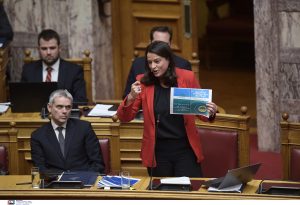
In the coming days, proposals submitted by social partners and research institutes are expected to be formally filed with the Ministry of Labor. Labor Minister Niki Kerameus will then present her recommendation to the Cabinet at the end of March, setting the stage for the government’s final decision.
At this point, there is broad agreement on one key issue: the Greek economy can withstand another increase next year. The debate now centers on the size of that adjustment.
A 4% Increase Emerges as the Baseline
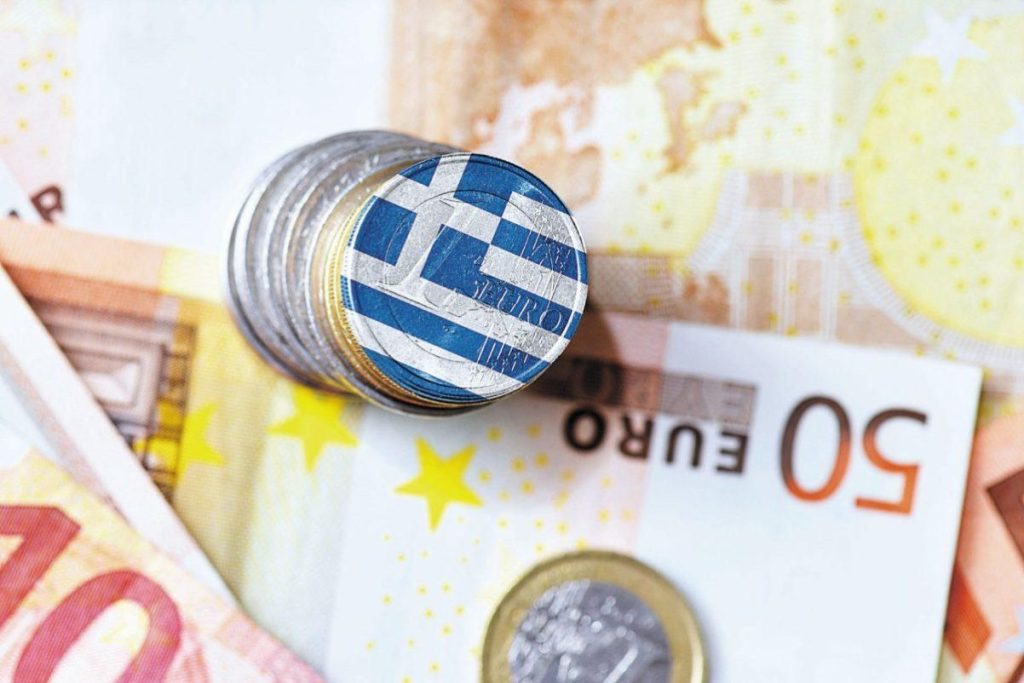
Most stakeholders are converging around a raise of roughly 4%, which would translate into an increase of about 35 euros per month. If adopted, the gross monthly minimum wage would rise to approximately 915 euros.
That figure also fits within the government’s broader roadmap. Officials have set a target of 950 euros for 2027, while several senior government figures have recently suggested the minimum wage could even reach 1,000 euros by then.
The 2027 increase will be the last under the current consultation-based system. Beginning in 2028, annual adjustments will be determined by a mathematical formula that takes into account both economic performance and inflation, shifting the process to a more rules-based framework.
How Key Institutions See It
Although there is general alignment around a moderate increase, individual institutions are emphasizing different risks and priorities.
The Foundation for Economic and Industrial Research (IOBE) recommends what it calls as a ‘prudent’ increase” of between 2.5% and 3.5%, anchored mainly to inflation and expected productivity growth. It argues that the minimum wage should not serve as a broad tool for boosting wages across the economy, particularly at a time when maintaining competitiveness remains crucial.
The Bank of Greece takes a similar but slightly more flexible view, seeing room for an increase of up to 4% as of April 1, 2026, provided inflation continues to ease. The central bank also highlights the spillover effect of minimum wage hikes: for every 1 percentage point increase in the minimum wage, the average wage tends to rise by 0.55 percentage points. At the same time, it cautions that overly aggressive increases could fuel inflation or encourage undeclared work.
The Center of Planning and Economic Research (KEPE) sets the upper bound somewhat higher, proposing a range of 3.5% to 5%. However, it notes that Greece’s minimum wage is already relatively high compared with the median wage and warns that increases above 4% could weigh on unit labor costs, particularly for small businesses.
In the tourism sector, the Institute of the Greek Tourism Confederation (INSETE) also supports a 4% increase. Such a move, it argues, would take into consideration the country’s economic resilience as well as the need to preserve competitiveness in labor-intensive industries like tourism.
Employers Seek Safeguards
Employer associations — including the Hellenic Confederation of Professionals, Craftsmen and Merchants (GSEVEE), the Hellenic Confederation of Commerce and Entrepreneurship (ESEE), and the Association of Industries of Greece (SVE) — say they accept that an increase is likely, but argue it must be linked to productivity and inflation.
They are also calling for offsetting measures to prevent higher labor costs from driving up production expenses.
Among their proposals: reducing non-wage labor costs, abolishing the business levy, decoupling the minimum wage from presumptive taxation rules, cutting social security contributions, offering tax relief and subsidizing energy costs. ESEE has also renewed its call to reinstate the National General Collective Labor Agreement.
Labor representatives, however, are taking a markedly different position. The Labor Institute of the General Confederation of Greek Workers (INE-GSEE) is calling for the minimum wage to reach 1,052 euros; well above the range currently under discussion by most other institutions.
source: ot.gr