
 Μake us preferred on Google
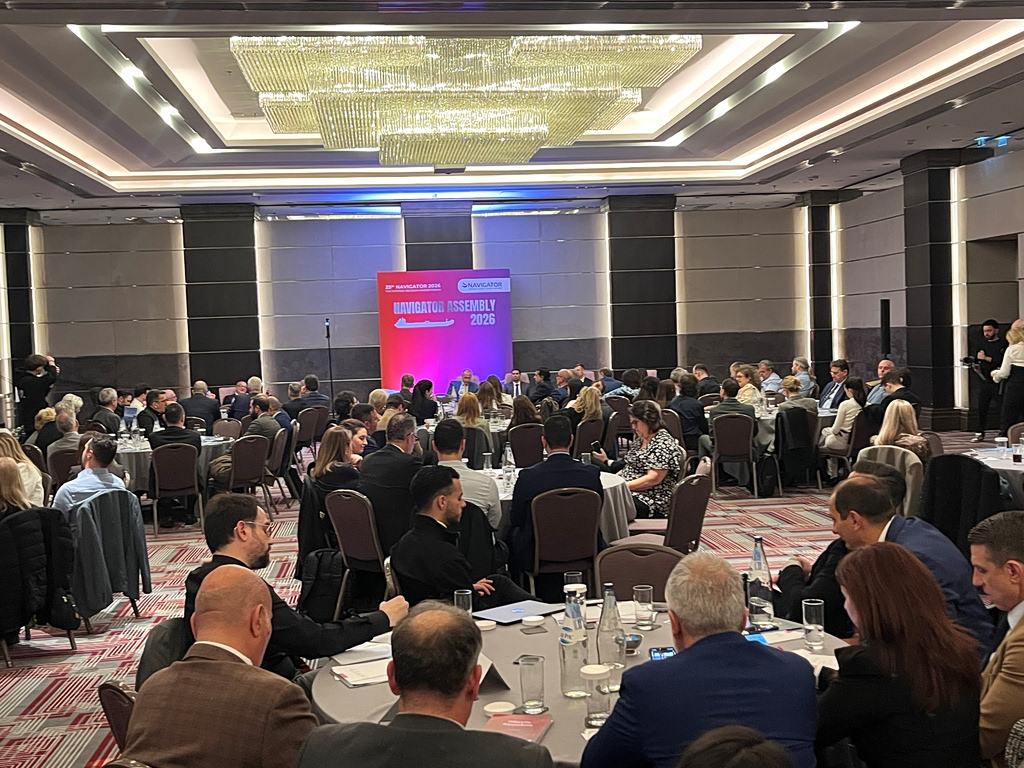
 The Navigator Assembly was successfully held on Tuesday, March 10, 2026, at the Grand Hyatt Athens, bringing together 309 representatives from shipowning and ship management companies, maritime service providers, 15 Embassies and 18 maritime organizations representing the core of the Greek shipping community.
This year’s event held particular significance as 2025 marks the 25th anniversary of the NAVIGATOR – The Shipping Decision Makers Forum, celebrating nearly three decades of dialogue, innovation and thought leadership in the maritime industry.
Participants were welcomed by Danae Bezantakou, CEO of Navigator Shipping Consultants, who thanked the more than 10,000 participants who have supported the forum over the past 25 years, making it one of the oldest privately initiated maritime conferences in Greece, as well as the Greek shipping community for its continued trust and support.
For 35 years, Navigator Shipping Consultants has been providing reliable towing and port agency services through its worldwide network, contributing to the smooth operation of ports and global trade routes. This year’s Assembly focused on critical challenges and opportunities shaping the future of shipping, including sustainability, technological transformation, education and geopolitical resilience, while reaffirming the importance of collaboration, innovation and investing in the next generation of maritime professionals.
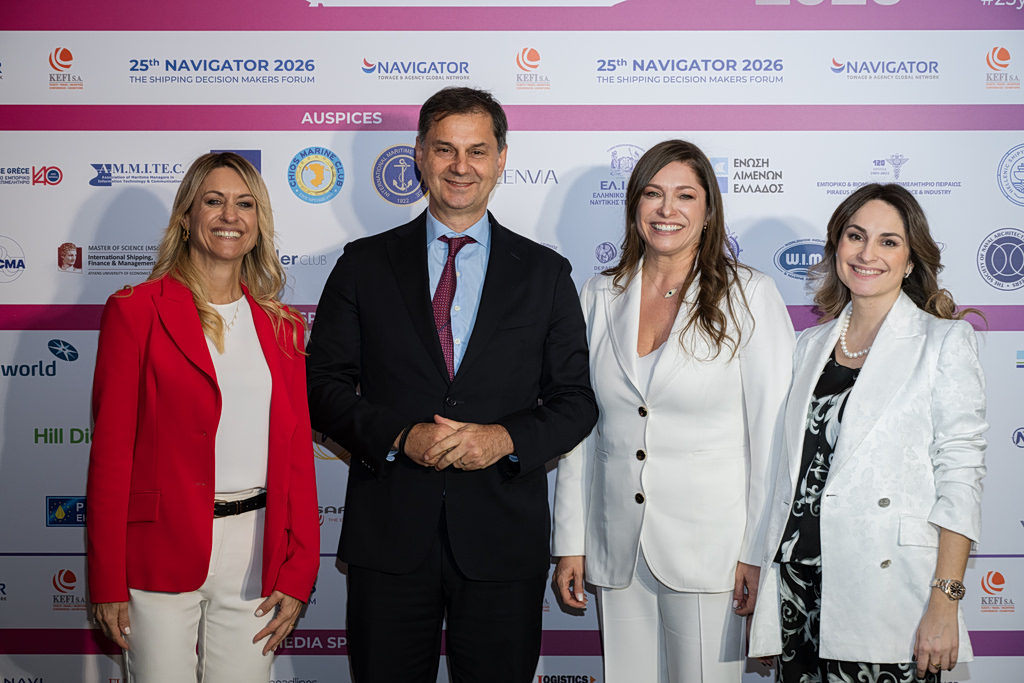
Opening remarks were also delivered by Deputy Minister of Foreign Affairs Haris Theoharis, President of the Hellenic Chamber of Shipping George Alexandratos, and President of the Hellenic Shipbrokers Association John Cotzias.
The discussions focused on three key thematic pillars:
Decarbonization and ESG
The energy transition of shipping represents one of the sector’s greatest challenges, as geopolitical tensions and instability in energy markets continue to drive fuel prices higher and affect the availability and development of alternative fuels such as biofuels. At the same time, approximately 95% of the global fleet still operates on conventional fuels, while the transition to Net Zero is expected to require investments of up to $2 trillion.
Participants highlighted that ESG is rapidly evolving from a regulatory compliance tool into a key strategic pillar for shipping companies. For the first time, representatives from the banking sector also took part in the discussion, emphasizing the importance of the meaningful integration of ESG principles. They stressed that the green transition should not become a simple “box-ticking exercise”, but should instead be based on constructive dialogue among all stakeholders.
Investors and financial institutions are increasingly demanding greater transparency, incorporating ESG indicators into their financing decisions. Enhanced transparency is expected to create new opportunities for access to capital for the shipping industry in the coming years. At the same time, participants agreed on the necessity of the green transition, noting that it must proceed in a coordinated and well-planned manner, without undermining the competitiveness of businesses.
However, the greatest challenge remains the active participation of the shipping industry in shaping legislative and regulatory frameworks, in order to ensure that the energy transition is implemented smoothly, in line with market principles and with full recognition of the maritime industry’s critical role in global trade.

Smart Shipping & the Human Element
Despite the rapid advancement of technology, seamanship, experience and human judgment remain at the core of safe and efficient shipping. With regards to education and technology, a particularly constructive dialogue took place, highlighting the need for more targeted training and greater use of technology and artificial intelligence, always in combination with the human element.
The discussion emphasized that while artificial intelligence, telemetry and digital platforms can process data and enhance safety, the full automation of ships remains a distant prospect. Key topics included crew education and training, mental health, the management of multinational crews and intergenerational collaboration, allowing the knowledge of experienced seafarers to be combined with the technological skills of younger professionals.
Participants also agreed that experience and seamanship remain fundamental elements both for operations at sea and for shore-based management. Technology should therefore not replace these qualities, but rather support and strengthen them.
The main conclusion was that the future of shipping will rely on a balanced integration of the human element and digital technology, ensuring safety, efficiency and sustainability across the industry.
Geopolitical Developments and Shipping
Recent geopolitical developments — from the conflicts in Ukraine and the Middle East to tensions in the Red Sea and the Persian Gulf — highlight the strategic importance of shipping for the global economy.
With 90% of global trade transported by sea, and available shipping capacity reduced by up to 22% in certain regions, the protection of seafarers, the safety of vessels and the effective management of geopolitical risks have become critical priorities.Shipping is therefore not only a key industry, but a strategic pillar for Europe and the global economy.
The Navigator Assembly 2026 highlighted the need for pragmatic and gradual solutions, the smart use of technology, continuous education and stronger cooperation within the maritime community — while underlining the importance of ongoing dialogue among leaders of the world’s leading shipping nation.
The conclusions and key insights of this year’s discussions will be presented on Tuesday, October 13, 2026, at the Stavros Niarchos Foundation Cultural Center (SNFCC) during the 25th Navigator 2026 – The Shipping Decision Makers Forum.