Would you pay $89 for a single strawberry? What about $120 for a melon?
A Japanese startup thinks you might—and it’s betting on a growing appetite for ultra-premium fruit far beyond Japan’s borders.
Meet Ikigai Fruits, a new online retailer bringing meticulously grown produce from small farms across Japan to the global stage. Launched in 2023 and based in Tokyo, the company offers boxes of rare persimmons for $128 and strawberry gift sets that can cost up to $780. This isn’t just about fruit; it’s about craftsmanship, cultural pride, and the pursuit of perfection.
And Ikigai isn’t alone. Japan’s fruit is becoming a viral sensation, captating social media feeds and haute cuisine circles from Los Angeles to New York.
NEWSLETTER TABLE TALK
Never miss a story.
Subscribe now.
The most important news & topics every week in your inbox.
From Sacred Gifts to Social Media Stardom
In Japan and many parts of Asia, fruit isn’t just food—it’s a luxury item, often given as a gift to express gratitude or respect. In 2016, a single bunch of Ruby Roman grapes sold at auction for a jaw-dropping $11,000—about $350 per grape.
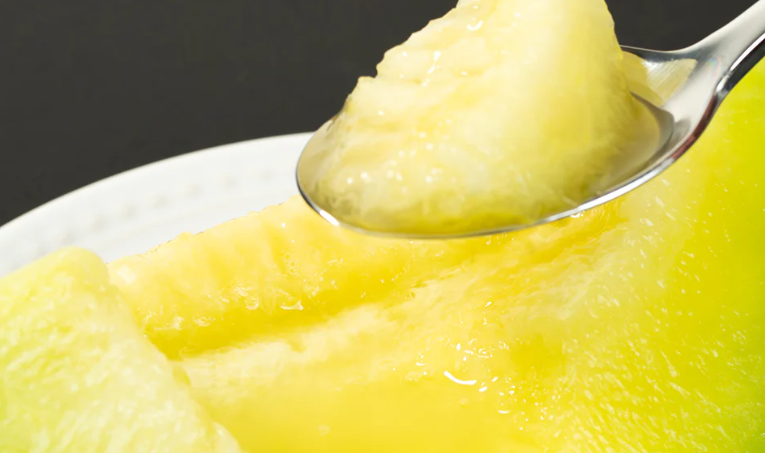
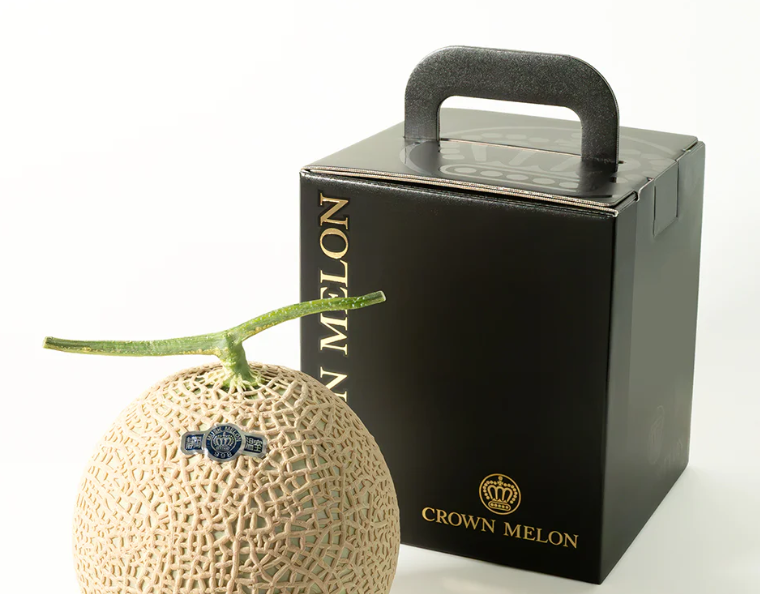
Now, that reverence for fruit is making waves in the U.S. The upscale L.A. grocery chain Erewhon recently went viral for selling individually wrapped Japanese strawberries for $19 each. The elusive Crown Melons—grown in tiny batches—can fetch hundreds of dollars.
Luxury fruit isn’t new, but it’s finding a fresh fan base thanks to foodies and influencers. In fact, American giant Fresh Del Monte debuted a $395 pineapple from Costa Rica last year, after it sold out in China.
Still, it’s Japan’s fruit that holds a mystique unlike any other.
A Fever for Fruit
The demand for high-end Japanese produce has led to a new crop of startups. Ikigai Fruits is among the most ambitious. But it’s not without challenges. Tariffs, unpredictable climates, and the fragility of the product itself make shipping such delicacies a logistical feat.
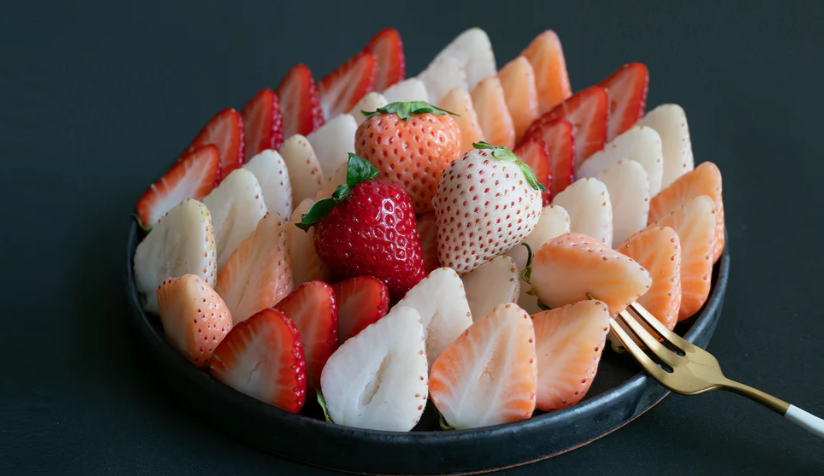
That’s where companies like Oishii have stepped in with a different approach. Based in New Jersey, Oishii recreates Japan’s climate in vertical farms using LED lighting, humidity controls, and even robots. Its strawberries—perfectly sweet, juicy, and blemish-free—have become a hit on Instagram and TikTok. Oishii’s CEO, Hiroki Koga, says, “Anyone can taste the difference immediately.”
Oishii recently launched a more “affordable” strawberry at $8 a box and expanded into cherry tomatoes—$10 for a pack of 11. Koga even suggests bringing strawberries to a dinner party instead of wine: “I guarantee the host will be far more impressed.”
Why Japan Is Betting on Fruit
Japan’s luxury fruit craze isn’t just about indulgence—it’s a lifeline for a struggling farming industry. The country’s agricultural workforce is aging rapidly, and fewer young people are entering the field. According to the Mitsubishi Research Institute, Japan’s agricultural market, valued at $60 billion in 2020, could shrink by more than half by 2050.
To combat this, the Japanese government is pushing exports. “Domestic demand for luxury fruit is shrinking,” says Takahiro Hiraishi, a food industry consultant. “So Japan is turning outward.”
Ikigai exports three main fruits: strawberries, melons, and seasonal satsuma mandarins. They’re planning to expand their offerings, but always with one principle in mind: quality over quantity.
What Is “Ikigai”?
The name “Ikigai” loosely translates to “the joy of being busy” or “a reason for being.” It’s a philosophy of purpose—something that gives your life meaning.
For the farmers behind Ikigai’s fruit, this is their purpose.
“When people ask why our fruit is so special,” the company writes on its website, “it all comes down to the years of dedication and integrity of our farmers. In every conversation with them, the word ‘Ikigai’ keeps coming up. Growing fruit is their Ikigai.”
The Cult of Perfection
Behind each perfectly shaped melon or strawberry lies a level of obsession that borders on artistry.
Japan’s fruit farming tradition is rooted in shokunin culture—the pursuit of mastery through lifelong dedication. Just like sushi chefs who spend years learning to wash rice (as depicted in the documentary Jiro Dreams of Sushi), fruit farmers often train for years before going solo.
Take the prized Yubari King melons: farmers prune each plant to bear just one fruit. The technique, called ichiboku ikka (“one tree, one fruit”), ensures maximum sweetness and density. Some even massage the melons to enhance their quality. In 2019, a pair of these melons fetched $45,000 at auction.
A Michelin Guide—For Fruit
Japan doesn’t just grow luxury fruit—it grades it with the precision of fine wine. Fruits are ranked based on sugar content, size, shape, and appearance. Each region has its own ranking system, with Shizuoka—famous for its melons—using the elite classification Fuji. Only one in 1,000 melons earn that title, and they can easily exceed $300 each.
Strawberries, meanwhile, are even more temperamental. They’re sensitive to sunlight, heat, dryness, and pests. To grow the perfect berry, farmers use controlled greenhouse environments and monitor every variable. Timing the harvest is crucial—leave the fruit on the vine longer, and it gets sweeter. But fully ripe strawberries are so delicate that even a tiny bruise can cause mold.
Each berry is inspected, weighed, and gently packaged by hand. It’s labor-intensive, and it shows in the price.
Getting Fruit Across the Ocean
Shipping fruit of this caliber is no small feat. Asayama Haruyuki, Ikigai’s founder, calls it “a major logistical challenge.”
To preserve freshness, fruits are packed in individual boxes with ice packs and flown in refrigerated cargo planes. Even then, the journey from farm to consumer takes one to two weeks.
Still, demand is growing. In New York, these exquisite fruits are starting to show up at boutique grocers and private events.
A Taste of Japan, a Philosophy of Purpose
For Hiroki Koga of Oishii, the dream was simple: recreate the taste of the strawberries he grew up with in Japan. At Oishii’s facility in New Jersey, he simulates the “perfect day” for a strawberry: precise lighting, ideal humidity, a team of farmers, bees, and robots—all working in harmony.
The result? Fruit that doesn’t just taste better—it tells a story.
In a world of fast food and mass production, Japan’s luxury fruit movement is a reminder of what’s possible when care, culture, and craftsmanship come together. And for a growing number of consumers, that might just be worth $120 a melon.