On the sun-kissed Cycladic island of Milos, summer never truly ends. Its essence is captured in jars of deep crimson, filled with a fragrant, thick tomato paste that tastes like sunshine itself.
This isn’t your average tomato product. In Milos, they make peltes – a traditional sun-dried tomato paste that’s as much a culinary staple as it is a cultural symbol. The locals sometimes call it “the juice of the tomato,” but it’s so much more than that: it’s the distilled memory of an Aegean summer, preserved to bring warmth to the coldest winter dish.
Bottling the Sun
“The tomato paste is our winter gold,” says chef Vassilis Papikinos, owner of the beloved Alevromylos restaurant on Milos and a connoisseur of the island’s tomato tradition. “The most precious thing a household could have was a jar of peltes.”

Tomatoes have been grown on Milos since around 1880. The variety known as pomodori—hardy, thick-skinned tomatoes often called “Russian tomatoes”—thrives in the arid, sandy soils of areas like Zephyria, Phylakopi-Pachaina, Provatas, and Perivolia. At night, moisture drifts down from the surrounding hills, cooling the plants and helping them survive the harsh summer sun.
After harvesting, the tomatoes are crushed and strained to remove seeds and skins. The resulting juice is generously salted—often with sea salt from Milos’s own salt flats—and poured into ceramic jars. Then begins the real magic: stirred daily and left under the Aegean sun for one to two weeks, depending on the humidity and month. Gradually, the juice thickens into a rich, concentrated paste the color of late-summer sunsets.
“Every rooftop in Milos had a jar in summer,” recalls Vassilis. “We covered it with mesh to keep insects out but let the air in, and someone had to stir it every single day.”
A Taste of Tradition
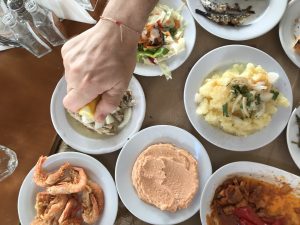
In Milos, tomato paste isn’t just a pantry item—it’s a way of life. Locals grew up eating slices of country bread drizzled with olive oil and tomato juice. It was the snack of schoolchildren, farmers, builders, and miners alike. One of the island’s most beloved meze dishes, schizakia, is made of toasted bread topped with tomato paste, olive oil, and garlic.
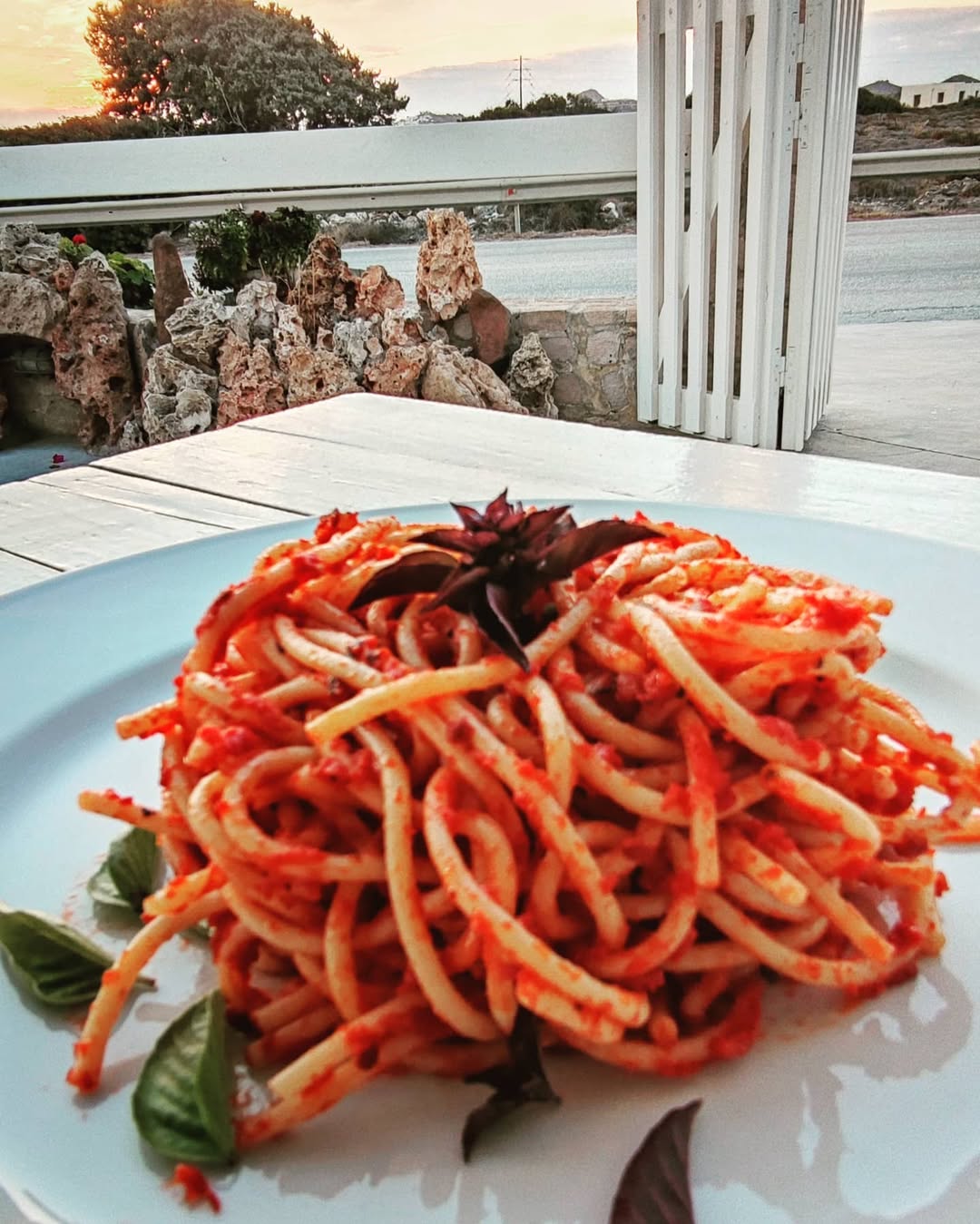
And there are countless ways Milos puts its peltes to delicious use:
- Bouleria: poached eggs with tomato paste and local cheese
- Fried eggplant: topped with tomato, parsley, and garlic sauce
- Braised broad beans
- Cuttlefish stewed with bay leaves and tomato paste
- Black-eyed peas with handmade pasta known as matsi
- Garlic lasagna with tomato paste, or skordolazana
- Goat or pork roasted with tomato paste
Even the most modest ingredients are transformed with peltes. Small fish in October, wild sea snails stewed with onions, or even pseftosoupa—a humble soup of water, olive oil, tomato paste, and a few pieces of pasta—become soul-warming meals.
For locals like Vassilis, peltes isn’t just food—it’s memory, identity, and ritual. “Tomato paste is the most Milos thing there is,” he says with conviction.
Recipe: Milos-Style Tomato-Braised Rooster
By Chef Vassilis Papikinos
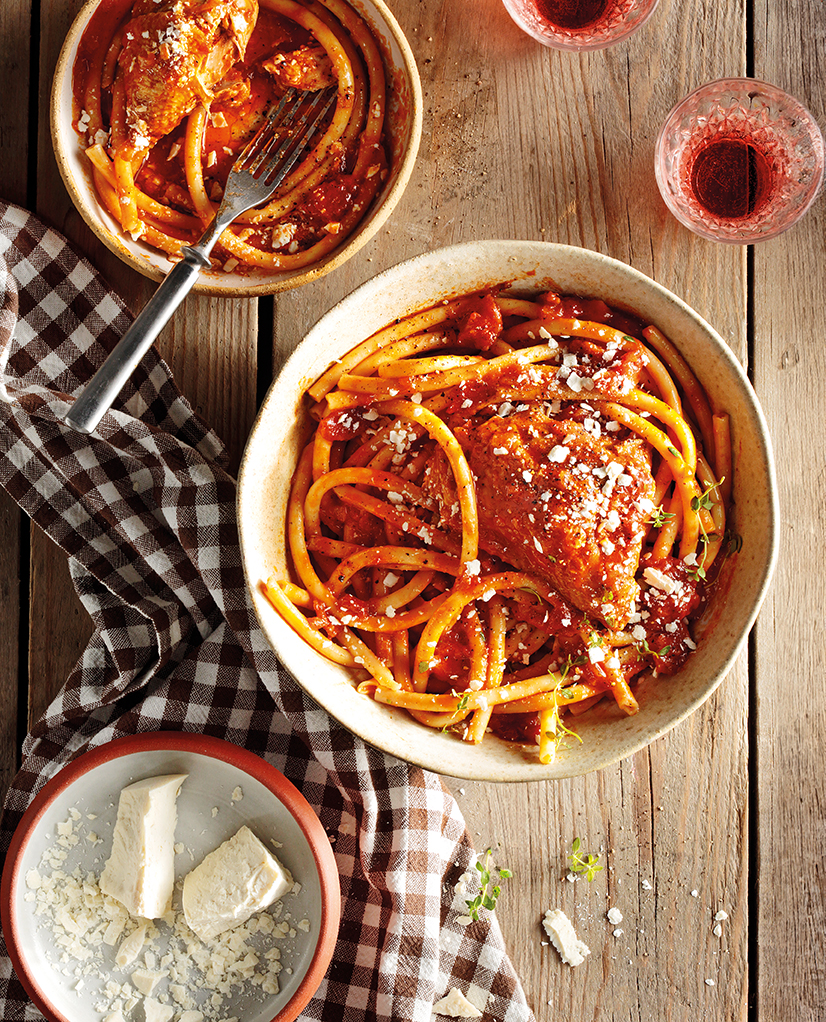
This is a classic island dish where the depth of Milos’s sun-dried tomato paste brings a humble rooster to life. Simple, bold, and deeply satisfying.
Prep Time: 10 minutes
Cooking Time: 1 hour 15 minutes
Difficulty: Easy
Serves: 6–8
Ingredients:
- 1 rooster (approx. 2.5 kg / 5.5 lbs), cut into portions
- 2 medium onions, finely chopped
- 4 garlic cloves, finely chopped
- 3 tbsp tomato paste (preferably sun-dried, Milos-style)
- ½ cup extra virgin olive oil
- 4 bay leaves
- 1 small stick of cinnamon
- 6 allspice berries
- 1 glass of red wine
- Salt and freshly ground pepper to taste
Instructions:
- In a large pot over high heat, warm the olive oil and brown the rooster pieces on all sides until golden—about 5 minutes.
- Add the chopped onions and sauté for another 2 minutes.
- Stir in the garlic and tomato paste and cook for another minute.
- Deglaze the pan with red wine. Once the alcohol has evaporated, reduce the heat.
- Add just enough water to cover the rooster. Toss in the bay leaves, cinnamon, and allspice.
- Simmer gently for about 60 minutes, or until the meat is tender. Note: if you’re using a free-range or older bird (*known locally as an alianaris rooster), it may take longer to soften.
Serve with:
Golden fried potatoes or thick pasta (ideally macaroni with a hole in the center – a local favorite).