 Μake us preferred on Google
 During the long—by historical standards—period in which Europe enjoyed its peace, wars elsewhere in the world were not called wars. They were almost invisible, and until they disappeared completely from our field of vision, they were described as “regional conflicts.” Some, typically at the United Nations, worked toward their “resolution,” but usually without success. The wars that were not called wars continued with all the brutality made possible by a lack of resources and means. Child soldiers with Kalashnikovs shed their blood, yet not even the most harrowing image from the front lines disturbed the veil of our carelessness. At most, a theorist would lift, in a text written in French, the burden of Western guilt and its colonial past. But what could be done—after all, not everyone was a colonialist or a ruthless exploiter. Not even us Greeks, who as a small nation turn our inability to expand and dominate into a moral advantage. Even the Americans, who were immensely powerful, were well-versed in “dirty work” and held the status of the “world’s policeman,” watching the world from afar while chewing on their snacks.
Wars were only called wars when they knocked on our door and, along with it, on our wallet—something that reminds us that the euphemism of “regional conflicts” is not merely a matter of semantics but has deeper layers of meaning. One such layer suggests that war is only what activates within human nature the sense of threat and awakens insecurity. You are not exactly afraid that a bomb will suddenly fall on your head. What frightens you is the possibility of an undefined involvement, and even more persistently, the impact on your peaceful everyday life.
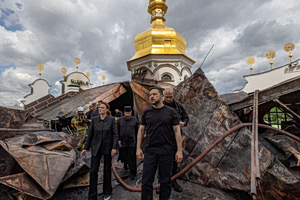
Yet even these wars become invisible. The war in Ukraine began with shock, but as it continues, it is increasingly forgotten. Not its brutality—which, in any case, here in our region has not produced much sensitivity among the professionals of the field—but its very existence. For some time now, it is as if it has vanished. A little longer and it will be downgraded to a “regional conflict” or “hot spot,” whenever someone remembers it.
Paradoxically, according to logic—or less paradoxically, according to our emotional nature—the war in the Middle East seemed destined to follow the same path. Why? Because from the invisible wars of the so-called periphery to those at the supposed centers of the world, the inherent flaw of wars is their duration. We all know when they begin. No one, however—including superpowers that promise “walkovers” in the backyards of the weak—knows when they will end.
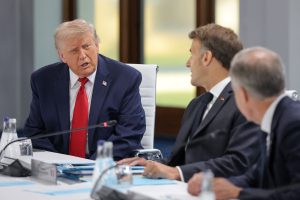
In short, Donald Trump was caught out just as Vladimir Putin was. This only serves to vindicate those, from historian Yuval Noah Harari to Xi Jinping and Narendra Modi, who have argued that “in the 21st century, war is a completely outdated means of resolving disputes.” Not because humanity has reached a higher stage of evolution, but because once you get entangled, you cannot easily extricate yourself. Simply put, it is not worth it.
While Putin hides, not to avoid a bomb falling on his head but rather an entire swarm of drones, Trump sought and found an exit in a humiliating capitulation, which he will attempt to disguise in the way we have come to expect from him, without causing any particular surprise. “I ended a war started by others, the tenth one in a row.” Humiliation as achievement.
Who cares? The shock of war quickly gave way to anxiety over personal finances, and since we did not end up rationing fuel or searching for canisters in classifieds, we can rest easy. And rest so comfortably that we even begin to feel optimistic that along with the war, Trumpism too is slowly coming to an end.
This is not written only by a hopeless optimist; it is also dictated by our wonderfully base human nature. Who among the J.D. Vances in the court of the man who would be king would be willing to inherit a total failure?