 Μake us preferred on Google
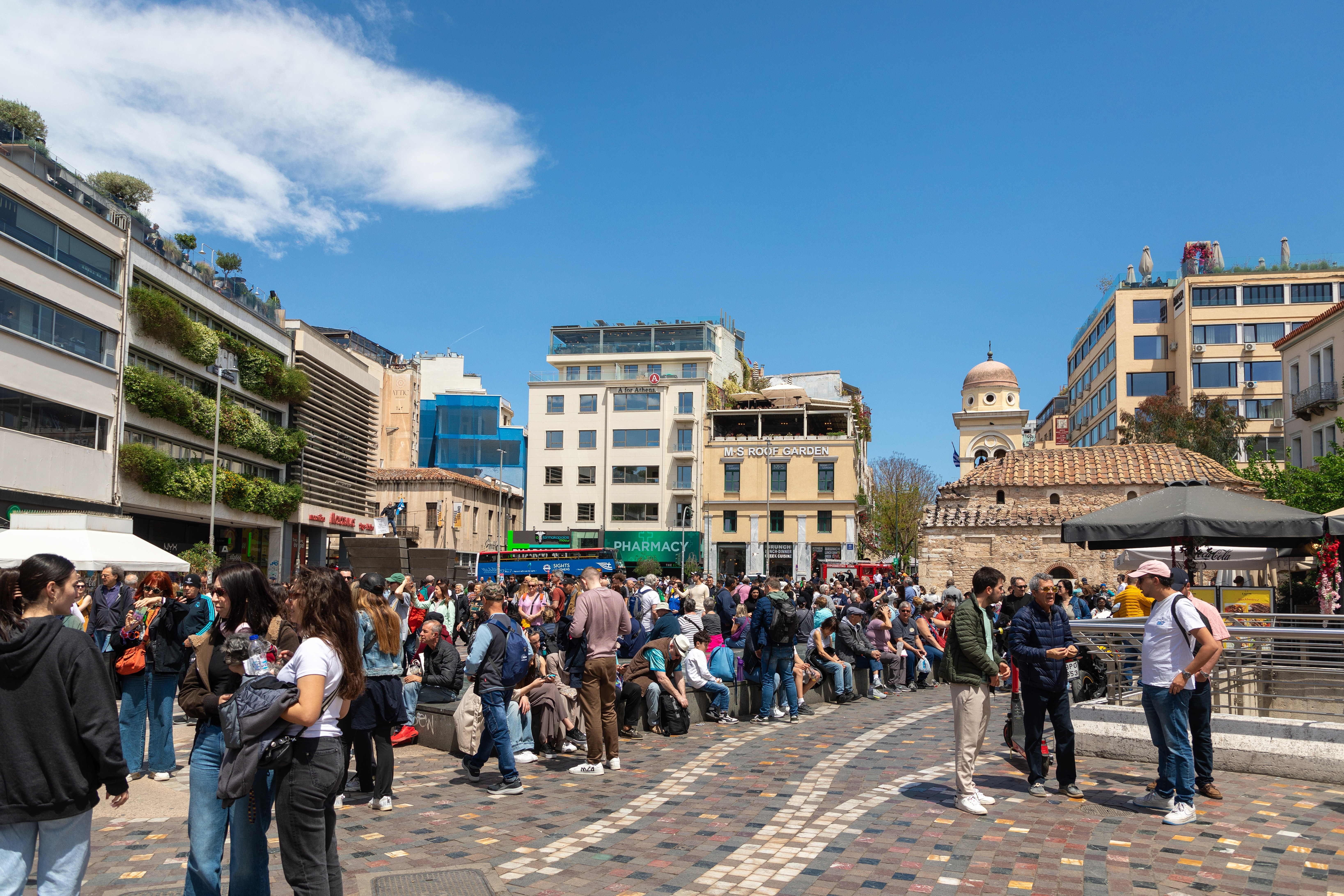
 Greece is seeing increased tourist traffic this year, but the rise in arrivals is not translating into a comparable boost in revenue for businesses and the wider economy.
Despite higher passenger numbers at Greek airports, retail stores and restaurants are not seeing the same increase in turnover. According to visitors, high prices are prompting them to make more cautious choices and limit their spending during their trips.
Where foreign tourists spend their money
Foreign visitors to Greece spend an average of €485 per person, with most of that money going toward accommodation and basic daily expenses.
About €218 is spent on accommodation, while another €145 goes toward food.
Domestic transportation accounts for approximately €58 per visitor, while just €43 is spent on souvenirs and other purchases.
Spending on cultural services is even lower, at approximately €21 per visitor.
The figures point to a shift in tourists’ spending habits, with visitors apparently cutting back on non-essential purchases and activities in order to manage the rising cost of their vacations.
Inflation falls to 2.7% in July
At the same time, there are signs that inflationary pressures are beginning to ease.
According to Eurostat, Greece’s inflation rate fell to 2.7% in July, down from 3.9% in June.
The decline came during the peak of the country’s tourism season. However, the overall level of prices continues to influence the choices made by both visitors and businesses.
Supermarket prices remain a focus
The Greek Ministry of Development has also highlighted a voluntary initiative aimed at reducing prices on essential goods in supermarkets.
Announcements on the initiative are expected on Aug. 31, with attention focused on whether any reductions will ultimately be reflected in consumers’ everyday spending.
For the Greek economy, the key question remains whether the strong tourism season will translate into a corresponding increase in consumer spending across the domestic market.