In contemporary Greece, political expression is marked by persistent outrage. Citizens protest, mobilize online, and engage in public denunciation. This activity conveys energy and engagement, yet George Orwell identified a central feature of modern power that remains relevant: political systems rarely fear anger itself. They fear awareness. Anger can be managed, channeled, and eventually exhausted. Awareness—understood as sustained comprehension of institutional and economic realities—cannot be so easily contained. When emotional expression is mistaken for resistance, dissent risks becoming performative rather than transformative.
This dynamic is evident in much of Greek political culture. Protest is visible and often intense, yet rarely disruptive in structural terms. Demonstrations tend to follow familiar patterns; political parties absorb dissent, media frame it predictably, and institutions endure it. Citizens feel politically present, even morally engaged, while decision-making structures remain largely unaffected. Orwell warned that when language and symbols are carefully managed, citizens may experience a sense of freedom while operating entirely within predefined limits. In this sense, the most compliant citizen is not the disengaged one, but the one whose outrage remains politically inconsequential.
Education and civic culture contribute to this pattern. An emphasis on memorization over analytical reasoning and on affiliation over scepticism produces citizens capable of repeating narratives but less equipped to interrogate them. Protest thus becomes expressive rather than strategic, with emotion displacing institutional understanding. The outcome is not passivity but inefficiency: high levels of mobilisation with limited policy impact. In Greece, where economic and financial literacy remains comparatively low, insufficient familiarity with fiscal and institutional mechanisms further weakens the capacity of citizens to translate dissent into accountability.
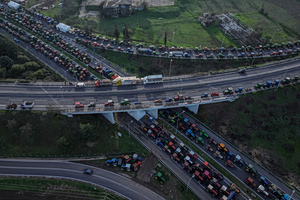
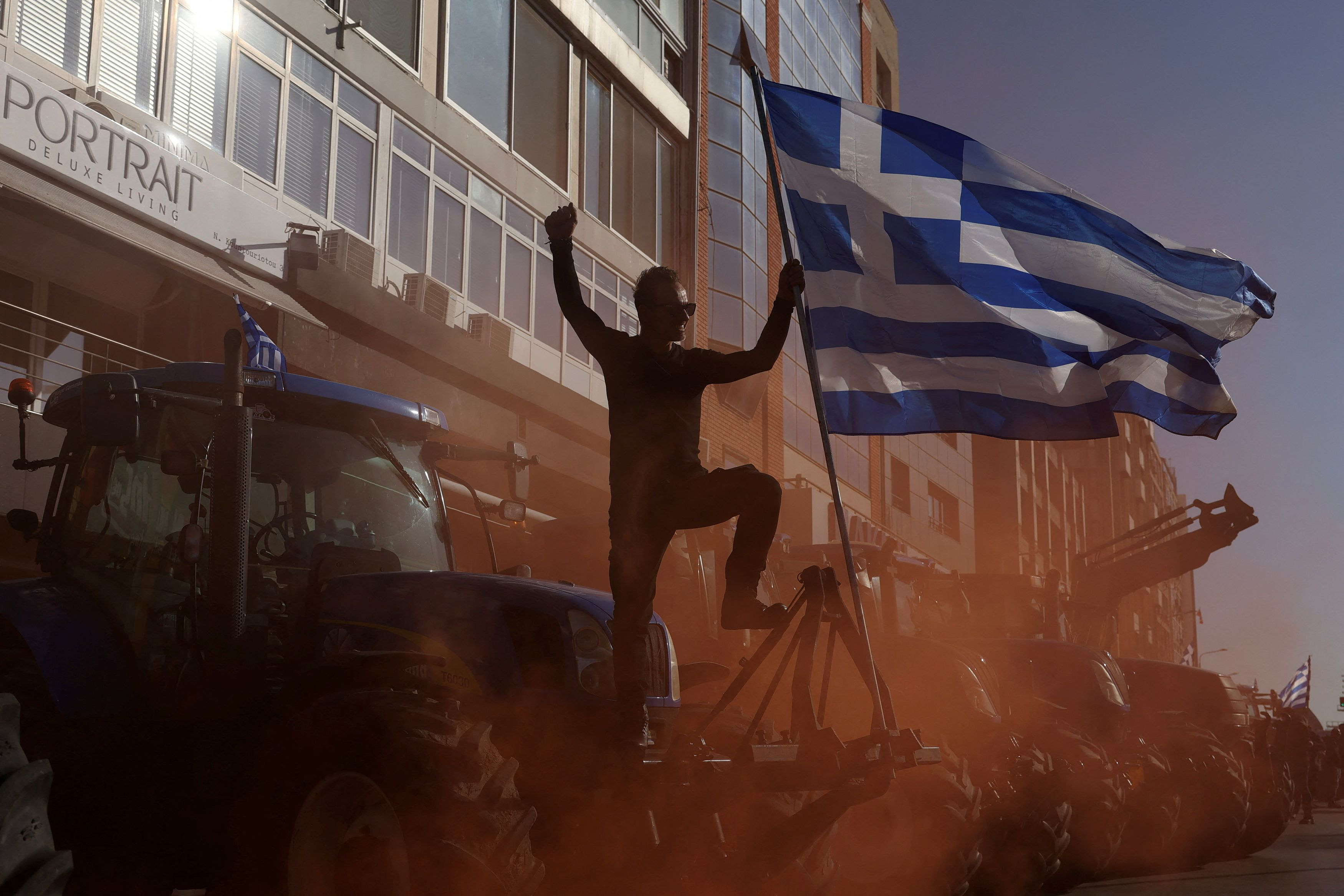
Recent developments illustrate these dynamics. Greek farmers have entered a third consecutive week of demonstrations, declining to negotiate without concrete proposals and refusing to disperse without progress. Their demands—including payment of outstanding subsidies, tax-free fuel, debt restructuring, and infrastructure commitments—are substantive. To Vima highlights that these protests also reveal chronic structural weaknesses in Greek agriculture, where inefficiencies, low productivity, and mismanaged subsidy programs such as OPEKEPE persist. Temporary concessions often replace genuine reform, while public debate is dominated by slogans and blame rather than substantive discussion.
That protests can function differently is not merely theoretical. I witnessed this in Australia in 1985, when approximately 45,000 farmers gathered outside Parliament House in Canberra to oppose proposed fuel and production taxes. It was one of the largest rural demonstrations in the nation’s history, notable not for theatrical anger but for its organization and clarity of purpose. The demands were concrete and clearly linked to production realities, which made them difficult for policymakers to dismiss as mere populism.
The mobilization was disciplined, economically literate, and strategically targeted. Protest leaders understood the fiscal mechanisms they were challenging and framed their case in terms of national productivity, food security, and regional viability rather than grievance alone. As a result, the demonstration compelled sustained political engagement, forced the government to publicly justify its policies, and altered the policy agenda. It contributed directly to meaningful reforms in agricultural taxation and rural support and helped accelerate other long-delayed adjustments in the relationship between the state and primary producers. Its effectiveness lay not in symbolism or emotional release, but in informed pressure that engaged institutions on their own terms and made inaction politically and economically costly.
For the Greek-Australian diaspora, these experiences carry a particular relevance. Diaspora communities are uniquely positioned to translate lessons from functioning civic systems into constructive pressure on Greece itself—through advocacy, public discourse, and engagement with European and international institutions. The Australian case demonstrates that when protest is informed, persistent, and institutionally focused, it can move beyond symbolism and become a force for reform. Applying similar standards of strategic pressure, rather than emotional spectacle, is essential if Greece is to follow a comparable path toward accountability and effective governance.
The challenge for Greece, therefore, is not insufficient civic engagement but limited strategic capacity. Predictable protest is manageable; symbolic mobilization is institutionally safe. When citizens experience dissent as an end in itself rather than a means to reform, protest risks reinforcing stability rather than challenging it. Democratic renewal will not be achieved through increased intensity alone. It requires citizens capable of understanding the systems they seek to influence, organizing beyond episodic mobilization, and sustaining pressure over time. Awareness must inform action, and strategy must guide mobilization. Without this, outrage will continue to function as a temporary outlet rather than a driver of institutional accountability.
Finally, there is a tendency in Greece to interpret critiques of this kind as an implicit alignment and endorsement with particular political parties, even though an analysis is non-partisan. It challenges the broader assumption that civic responsibility can be reduced to party affiliation. The task facing Greek civil society is not to change political allegiances, but to elevate the quality of participation itself—replacing symbolic protest with informed engagement, and episodic mobilization with sustained accountability. Greece does not lack civic energy; it lacks the institutional mechanisms and civic literacy necessary to convert that energy into durable reform.
*Dr Steve Bakalis is an economist with interests in political economy, social justice, and public administration, having collaborated with La Trobe University, the University of Melbourne, Victoria University, and universities in the Asia-Pacific region and the Arabian Gulf.