 Μake us preferred on Google
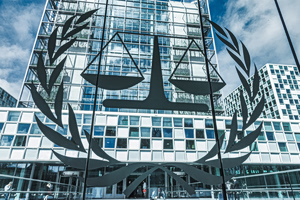
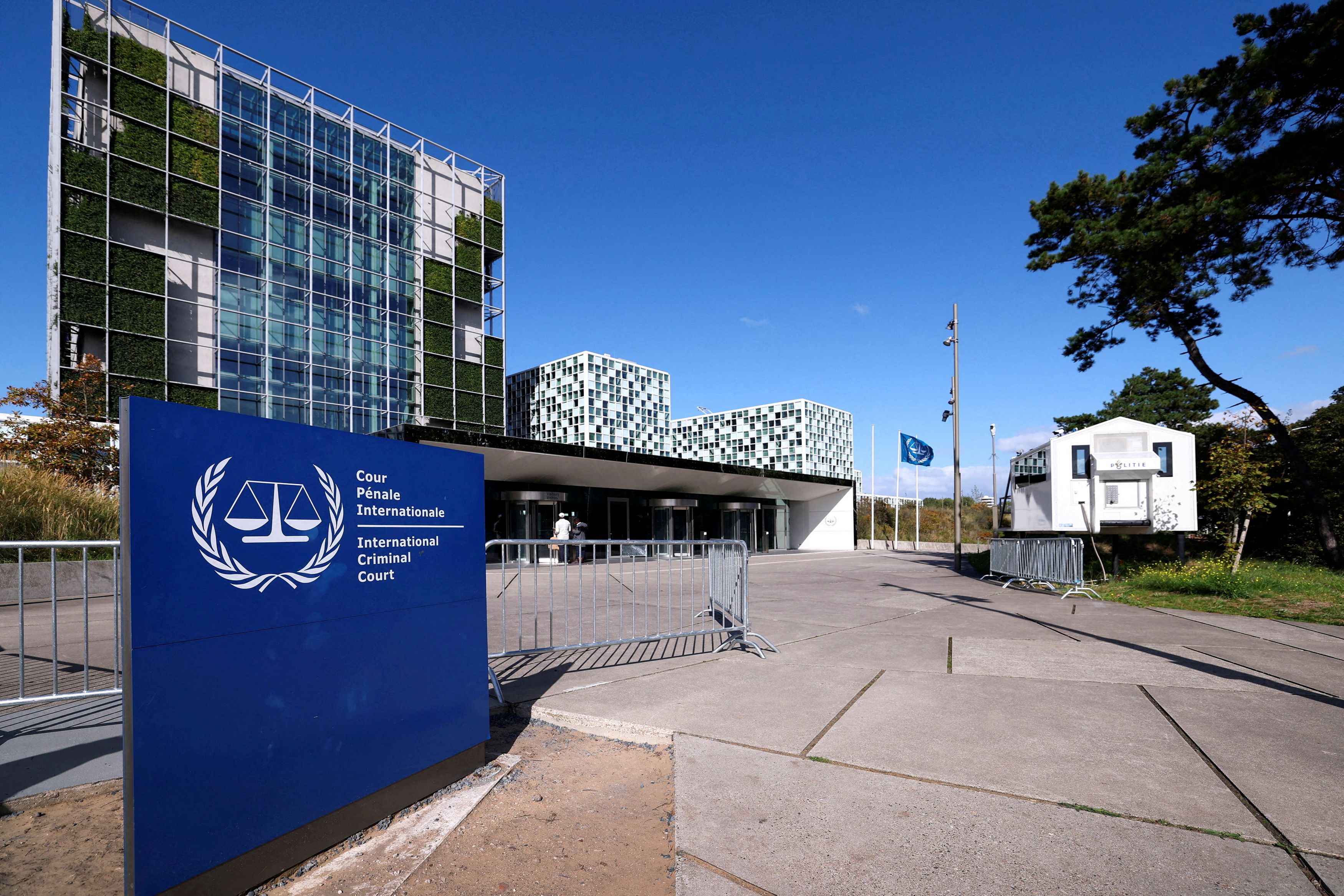
 On August 18, 2026, the U.S. Secretary of State, Marco Rubio, announced new designations for sanctions against the President of the International Criminal Court (hereinafter “ICC”), Tomoko Akane (Japan), and the Senior Trial Lawyer at the Office of the Prosecutor, Abdoulaye Seye (Senegal). As a result, nearly two years into the second Trump Administration, half of the judges, both of the two Deputy Prosecutors and several staff members of the ICC have been targeted with sanctions, causing major difficulties both for the targeted individuals and for the administration of the Court as a whole. In response, the ICC characterized these sanctions as “a flagrant attack against the independence of an impartial judicial institution which operates pursuant to the mandate conferred by its States Parties.”
The Enduring U.S. Hostility Toward the ICC.
The current volatile relationship between the United States and the ICC is nothing new. U.S. aggression toward the Court began immediately after the signing of its Statute in 1998. The Statute of the ICC, also known as the Rome Statute, was signed by then-U.S. President Bill Clinton but has never been ratified. By refraining from ratifying the Rome Statute, the United States has – in principle – neither legal obligations nor rights under the Statute. In other terms, the United States maintains the position that, as long as it has not expressly consented to the jurisdiction of the Court, its nationals shall not be prosecuted by the ICC for alleged crimes. In this respect, the Congress passed the American Service Members Protection Act (ASPA), in 2002, commonly known as “Hague Invasion Act”, purporting to shield U.S. officials from any potential prosecution by the ICC.
The passage of time did not change the U.S. perception of ICC or of the valuable mandate it has undertaken. The U.S. stance described above remained intact across several successive – both blue and red – administrations. Maybe the Democratic administrations under Obama and Biden were more cooperative and less hostile against the ICC, yet always keeping the red lines their predecessors had drawn in place. For instance, these administrations raised strong objections to the exercise of the Court’s jurisdiction over U.S. or Israeli officials. Trump’s rise to power marked the start of a new series of threats against the ICC. Sanctions and travel bans were eventually imposed during the First Trump Administration, targeting ICC members, such as Prosecutor Fatou Bensouda. Continuing from where he left off, Trump, during his second presidential term, has so far sanctioned a handful of ICC members, including its President, nine judges and Prosecutors. Travel bans, asset freezes, cancelled credit cards, loss of access to digital platforms are some of the hardships sanctioned individuals are facing.
The U.S. hostile posture toward the ICC can be explained, by considering its involvement in wars that could potentially constitute the subject matter of an ICC investigation. This became evident in 2020, when the ICC authorized investigation for alleged war crimes in Afghanistan, including potential crimes committed by U.S. officials. The United States then viewed this investigation as a direct infringement on its national sovereignty, despite the existence of legal basis of jurisdiction. In particular, according to Article 12(2)(a) of the Statute, the Court can exercise jurisdiction over nationals irrespective of nationality, (including nationals of non-member states such as Americans, or Israelis) when alleged war crimes occurred in the territory of state-member, like Afghanistan. This is the case with the war in Gaza as well.
Overall, in dismantling the Court and undermining its functions, the United States seeks first to cause distrust and spread it across the global landscape, so that smaller states can take the first step by withdrawing from the Court. (see Chad, Venezuela, Burkina Faso, Mali and Niger). The United States are conscious that the plan to dismantle the ICC needs support from other countries. Thus, deploying aggressive rhetoric would help obtaining the support of those who know that could be investigated or even prosecuted by the ICC.
The Dynamics of International Criminal Justice.
International criminal justice has long aspired to free itself from politics. To some degree, this aspiration can be said to have been achieved through the transition from ad hoc courts and tribunals, such as the Nurnberg and Tokyo trials, the International Criminal Tribunals for the Former Yugoslavia and Rwanda, to a permanent international institution: the ICC. Permanence reduces the likelihood of delivering “victors’ justice”, as occurred at the Nurnberg trials, yet the question of political dependencies still remains unresolved. International justice is still facing the challenge of securing its autonomy from the power that gives it authority, and this applies to the ICC in particular.
In this respect, we must not lose touch with reality. The ICC, like previous ad hoc international criminal courts, is the result of political dynamics and this can be confirmed by the difficult negotiations that preceded the adoption of its Statute. It was the will of states, including the United States, and at the end, state sovereignty that designed these judicial mechanisms which now “infringe upon national sovereignty”. As M. Cherif Bassiouni, the Godfather of international criminal law, had aptly observed: “The new style with which governments address issues of international criminal justice is not to openly challenge international criminal justice but to achieve political goals by bureaucratic and financial means”. In our age, however, it seems that political goals are achieved not only through financial means, but also through openly challenging global justice.
Concluding, American aggression against the ICC – the only permanent international institution (emphasis added) capable of holding the gravest war criminals accountable for their actions or omissions – shall be denounced without further discussion. But actions speak louder than words. It is a demand of our times that, amid these threats, state-parties to the ICC stand firm in the pursuit of global justice by encouraging other states to join the Court.
BIO: Thrasyvoulos-Christos Kosmidis is Undergraduate Student at the Faculty of Law of the National and Kapodistrian University of Athens. He is Co-Founder and Director of the Student Association for Public and International Law of Athens Law School. He was also member of the team representing the University of Athens at the Philip C. Jessup Moot Court Competition 2026, the oldest and biggest moot court competition in the world, securing the 6th place internationall in the written memorials.