 Μake us preferred on Google
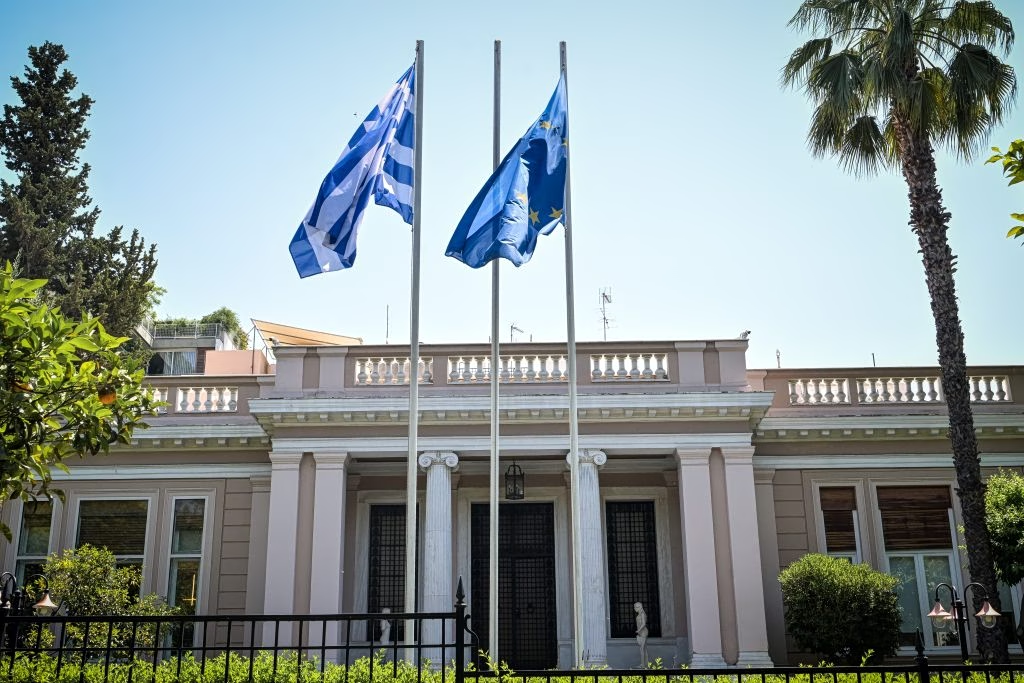
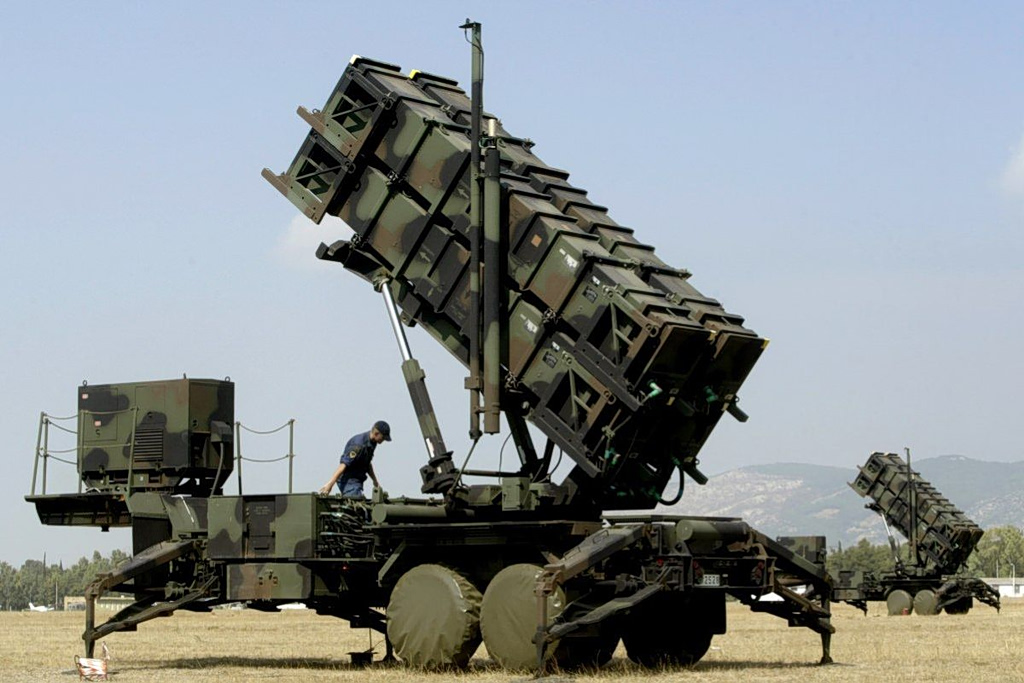
 Greece is set to sign five contracts with Israel on Monday for the development of the “Achilles Shield,” a multilayered defense architecture that Athens says will reshape the country’s air defenses and integrate capabilities across land, sea, air, cyberspace and space.
The final agreements will be signed in Tel Aviv on Monday in the presence of a large Israeli delegation, reflecting the importance attached to the program. The overall cost is expected to exceed 3 billion euros, with the complete system scheduled to be ready by June 2029.
The Israeli side is expected to deliver the system’s individual components gradually, allowing the Greek Armed Forces to begin preliminary familiarization and preparatory work.
For Greece, the immediate priority is the counter-UAS system, or anti-drone “dome,” which is included in one of the five contracts. The system is intended to form part of a fully networked defense architecture.
A five-layer defense architecture
Greek Defense Minister Nikos Dendias described the Achilles Shield to To Vima as a key part of the Armed Forces’ transformation under the country’s “Agenda 2030” defense reform program.
“The ‘Achilles Shield’ is an important link in the reform of the Armed Forces and a necessary response to the geopolitical and technological challenges of our time,” Dendias said.
The name refers to the shield of the Homeric hero Achilles, which, according to Dendias, consisted of five layers. Greece’s modern defense architecture similarly consists of five domains: sea, land, air, cyberspace and space.
The system is designed to move beyond a collection of individual weapons systems toward an integrated deterrence architecture. Ships, aircraft, ground systems, autonomous platforms and satellites equipped with sensors would be connected through a common network.
At the center of the architecture will be an integrated Command and Control system capable of prioritizing and assessing threats and recommending the most effective response.
Dendias said the system would allow Greece’s new naval vessels and fourth-and-a-half- and fifth-generation aircraft to take on a broader deterrence role rather than being limited to the defense of the Aegean.
Space to become part of the system
The Achilles Shield will also include a satellite component.
Greece is hosting one of two nodes of the European GOVSATCOM program for secure government satellite communications. Dendias said this highlights Greece’s strategic and geopolitical role as a pillar of security and stability for the European Union.
The country has also acquired a fleet of microsatellites and is preparing for its first large geostationary satellite.
According to Dendias, satellite communications represent an additional dimension of the Achilles Shield and extend Greece’s integrated defense approach into space, which he said is becoming increasingly important for modern defense.
Greece moves ahead with naval upgrades
The Achilles Shield deal comes as Greece also advances several major naval procurement programs.
The Greek Defense Ministry said last week that an intergovernmental implementing agreement with Italy for two Bergamini-class FREMM frigates will be signed in Rome on September 8. Greece is acquiring the vessels from the Italian Navy.
The Carlo Bergamini is expected to arrive in the first half of 2028, followed by the Virginio Fasan during the same period in 2029, assuming the current schedule holds.
Both ships will be upgraded to make them as operationally similar as possible to Greece’s French-built Belharra frigates. Greece is also considering acquiring two additional ships of the same class.
As for the Belharra frigates, the second vessel, Nearchos, is still scheduled for delivery on October 30. The third, Formion, is expected to be delivered to the Greek Navy before the end of the year but will remain in France for about three months for modifications designed to enhance its capabilities.
All four frigates are also due to receive additional Standard 2+++ upgrades requested by Greece. The work on all four vessels is expected to be completed by March 2030.
F-16 upgrade decision expected
Greece is also awaiting a response from Washington toward the end of September on a plan to upgrade 38 F-16 Block 50 aircraft to the Viper configuration.
The expected Letter of Offer and Acceptance would result in a standardized Greek fleet of 120 F-16 aircraft in the Viper configuration.
The procurement activity is being closely watched by Turkey, while Athens has also increased its defense contacts with Israel.
Closer Greece-Israel defense ties
Chief of the Hellenic National Defence General Staff Dimitrios Houpis traveled to Israel on August 19, where he met with his Israeli counterpart, General Eyal Zamir, and Yair Kulas, head of Israel’s Directorate of International Defense Cooperation.
Houpis also met in Athens last week with Israel’s new ambassador to Greece, Pninat Yanai, with defense cooperation and security in the Eastern Mediterranean at the center of the discussions.
The increased activity comes amid heightened Greek-Turkish tensions in the Aegean and broader regional developments.
According to a report by Nordic Monitor cited by To Vima, Turkish Defense Minister Yasar Guler said in an August 10 letter to a Turkish parliamentarian that preparations concerning a possible “crisis, tension and war” in the region surrounding Turkey were continuing in close coordination among relevant state institutions.
The report said Guler also linked Turkey’s emergency planning to its monitoring of Israeli-Greek military cooperation and developments affecting Turkish security and interests in the Aegean and Eastern Mediterranean.
Strengthening Greece’s defense industry
Dendias said the Achilles Shield is also linked to another central objective of the Agenda 2030 program: creating a modern defense innovation ecosystem and strengthening Greece’s domestic defense industry.
Under the approach outlined by the minister, Greek defense companies should participate in at least 25% of all defense procurement programs.
Athens also places particular emphasis on technology transfer and production within the Greek defense ecosystem, as well as access to the source code of the systems being acquired.
“The goal is clear,” Dendias said. “Greece should not remain a passive buyer and user of defense systems.”
Instead, he said, Greece should participate actively in their design, production and development, strengthening domestic expertise.
“The ‘Achilles Shield’ is a new approach to the use of weapons systems, with a holistic dimension,” Dendias said. “It reflects the new reality of the ‘Agenda 2030’ and a different approach to the country’s defense.”